
31 Days of Oscar update

Time for an update on the 31 Days of Oscar blogathon (full rundown at the original post). We’re a little more than a couple of weeks out from the first deadline. Publish your post and email me the link by any one of the following dates: January 31, February 7, February 14, February 21 and February 28.

The nominations were announced on Jan. 10, providing as much fodder for blog posts as any other’s, maybe more. Right away, I was aware of what I consider to be one major snub: Ben Affleck for Argo, and now that I’ve seen Zero Dark Thirty, I think Kathryn Bigelow was snubbed as well. Of course, the format of the Best Picture nominations, where 5-10 movies are tapped, virtually guarantees that there will be snubs. Is the Academy crazy, or crazy like a fox? Sounds like an idea for a blog post, speaking of which here’s some topic prompts (new ones at the end of the list):

  • Is there a film, performance or art or technical work the non-nomination of which you feel is a crime? Tell us about it.
  • Sometimes the Oscar seems to hinder, not help, someone’s career, including but not limited to the “Best Supporting Actress Curse.” Discuss.
  • Special Achievement Awards and Board of Governors’ Honorary Oscars…do you dare go there? Who should have gotten a competitive Oscar, and/or who might win an honorary Oscar the future?
  • Spotlight on sound editing and sound mixing, or any other unfairly neglected award.
  • Your favorite/the most influential Best Costume winners/nominees/should-have-beens through the years, or just focus on one.
  • Short films are often given short shrift…throw some love on your favorite.
  • Cinematography and editing vs.directing…the auteur theory, etc. Discuss, using Oscar-winning examples.
  • The Oscars still create the most hoopla, but should we be paying more attention to other awards, such as the Golden Globes or (fill in the blank)?

NEW:

  • The Academy’s rules for selection of the Best Picture dictate that any film receiving 5 percent or more of first place votes is nominated, so that a minimum of 5 and a maximum of 10 are in the running each year. This year there are 9 nominees, but there are still only 5 Best Director nods. Discuss the implications and ramifications of this set-up.
  • Judi Dench famously won a Oscar for her 6 flawless minutes in Shakespeare in Love. If there was an Oscar for cameos, who would be nominated, and who would win?
  • It’s generally accepted that actors and directors, and possibly other filmmakers, may receive an Oscar for a previous year’s, or an entire career’s, work, sometimes referred to as a “cumulative Oscar.” Do you think this is legit or totally unfair? Discuss.
  • Academy…why so serious? Certain genres are overlooked every year, generally speaking comedy, adventure, and science fiction are rarely given nods. Is this due to the overall age of the Academy, or other factor(s)?
  • Final Oscar ballots aren’t due until the Tuesday before Oscar Sunday; this year that is Feb. 19. Any answer to this question is likely to be pure speculation but: Do the other awards influence voting?
  • As reported last year, the Academy is overwhelmingly white, male and over the age of 60. Only 2% of the Academy is under the age of 40. Discuss.

If you’d like to participate, leave me a comment or email me at paula.guthat[at]gmail.com. So far our Oscar bloggers, in addition to myself, Kellee at Outspoken & Freckled, and Aurora of Once Upon A Screen are…

Fernando – Committed to Celluloid
R. A. Kerr – Silver Screenings
Ruth – Flix Chatter
Lê – Critica Retro
Kevin aka “Jack Deth”
Paddy – Caftan Woman
Vanessa – Black & White All Over
Iba – I luv cinema
Le0pard13 – It Rains, You Get Wet
Joel – Joel’s Classic Film Passion
Lindsey – The Motion Pictures
The Gal herself – One Gals’ Musings
Paul – Lasso The Movies
Ivan – Thrilling Days of Yesteryear 
Jessica – Comet Over Hollywood
Kay – Movie Star Makeover
The Lady Eve – The Lady Eve’s Reel Life
Kimberly – GlamAmor


Announcing the 31 Days of Oscar Blogathon

The envelope please…

The winners, the losers, the snubs, the back stories, the gossip, the players, the games…this time it’s all about Oscar!

We’re back! Myself, Kellee (@IrishJayhawk66) of Outspoken and Freckled, and Aurora (@CitizenScreen) of Once Upon a Screen are hosting a new, mammoth blogathon event that coincides with Turner Classic Movies’ 31 Days of Oscar, February 1 to March 3, 2013. It’ll be a month filled with fabulous tales and screen wonders.

But this one is not just for classic film fare; we want to see and hear it all from the golden man’s more than eighty-year history, up to and including this year’s nominees. And you don’t have to stick to just Best Picture or acting winners. Posts about nominees or winners in all the other categories…Original Screenplay, Costume Design, Cinematography, etc….are more than welcome.

The details:

Let us know what you’ll be writing about by email [paula.guthat[at]gmail.com] or leave us a comment.

Submit links to as many posts as you would like by email or by comments in time for any of the following due dates throughout the month. Submissions should include as much information about you as possible: First name, Twitter username, link(s) to your site(s) and email address.

January 31
February 7
February 14
February 21
February 28

We’ll promote entries for an entire week after each due date. If you have a preferred promotion date, please make a note of that as well.  However, we welcome all submissions by any of the dates specified. Don’t forget to include your Twitter handle if you have one.

This is the banner I created for the blogathon. We encourage you display it on your site to help promote this event and cannot wait to hear from you. Happy blogging!

31-Days-450x300

UPDATE: I have so many ideas for this blogathon, far more than I could ever tackle myself, so I offer these as topics for posts or inspiration thereof:

  • Is there a film, performance or art or technical work the non-nomination of which you feel is a crime? Tell us about it.
  • Sometimes the Oscar seems to hinder, not help, someone’s career, including but not limited to the “Best Supporting Actress Curse.” Discuss.
  • Special Achievement Awards and Board of Governors’ Honorary Oscars…do you dare go there? Who should have gotten a competitive Oscar, and/or who might win in the future?
  • Spotlight on sound editing and sound mixing, or any other unfairly neglected award.
  • Your favorite/the most influential Best Costume winners/nominees/should-have-beens through the years, or just focus on one.
  • Short films are often given short shrift…throw some love on your favorite.
  • Cinematography and editing vs.directing…the auteur theory, etc. Discuss, using Oscar-winning examples.
  • The Oscars still create the most hoopla, but should we be paying more attention to other awards, such as the Golden Globes or (fill in the blank)?

That’s all for now…I will add more when I think of them.

Universal horror at the Redford Theatre

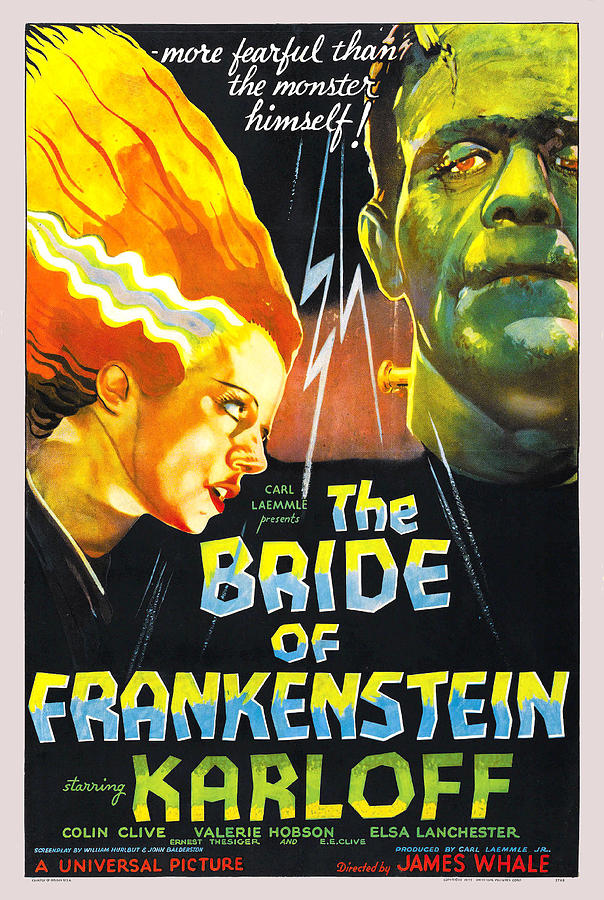
On Saturday, October 20th, Detroit’s Redford Theatre is showing a Universal Studios horror double feature: The Bride of Frankenstein (1935) and Frankenstein Meets the Wolfman (1943).

Poster of The Bride of FrankensteinIn Bride, a sequel to the wildly successful Frankenstein (1931), Boris Karloff returns as the Monster and Colin Clive reprises his role as Dr. Henry Frankenstein. This installment of one of the first horror movie franchises sees Dr. Frankenstein forced by another mad scientist to make a match for the Monster, with scary and sad results.

By 1943 Karloff had given up the mantle of the Monster, so Universal passed it to another one of their horror icons, Bela Lugosi. It seems as if the studio felt that one creature was good, but two was even better. So the film has the Monster facing off against the Wolfman, played by Lon Chaney Jr.

Seeing these two excellent examples of Universal horror classics is particularly appropriate this Halloween season as 2012 is the studio’s 100th birthday. And while you can see these movies at home (The Bride of Frankenstein is included on the newly released Universal Classic Monsters: The Essential Collection box set), seeing them on a big screen, like the Redford’s, adds much to the experience. Why not see these films as they were seen when they were first released —in a movie palace?

Universal Studios Backlot Blogathon: DRACULA (Spanish version, 1931)

In which I explain how the Spanish-language version of Dracula led to American Pie. This post is part of the Universal Backlot Blogathon, hosted by Kristen at Journeys in Classic Film.

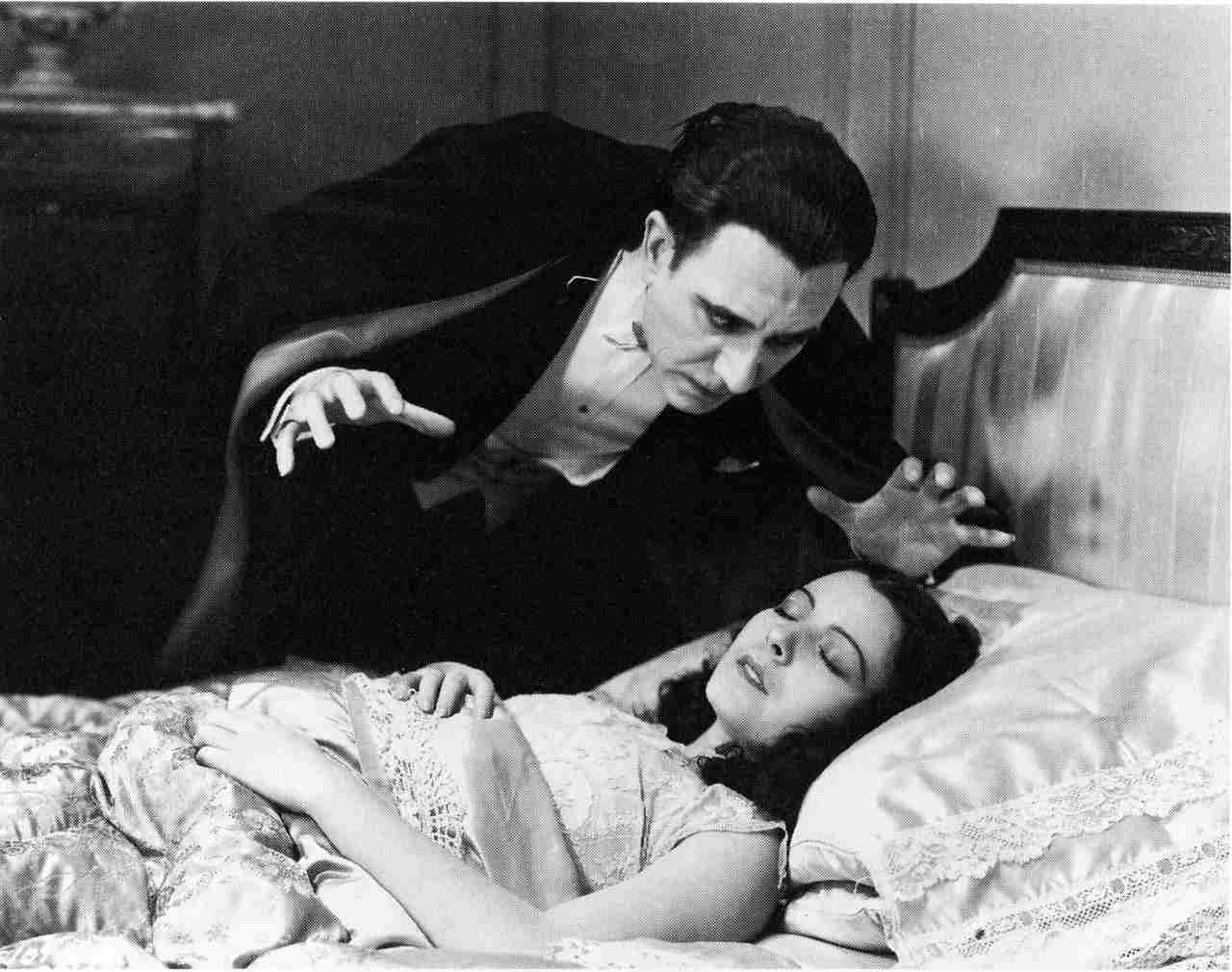
It seems to me that most film fans are familiar with Universal’s 1931 version of Dracula. Starring Bela Lugosi in the role that made him a star, it’s still a popular choice at Halloween, and it’s still capable of creeping you out. However, many are unaware of, and fewer still have seen, Universal’s Drácula, a Spanish-language version, also from 1931. Instead of Lugosi in the title role and Helen Chandler as Mina, en el versión español there are Carlos Villarias and 21-year-old Lupita Tovar as Eva (like Mina, but, as we’ll see, different). While Tod Browning shot the English version during the day, George Melford helmed the Spanish version by night on the same sets. The two productions also shared some of the same crew, who were able to learn from any mishaps or discoveries that occurred during the day. Browning’s version began filming on September 29, 1931; Melford’s on October 23.

Drácula (Carlos Villarias) menaces Eva (Lupita Tovar) in Universal’s Spanish-language version of DRACULA (1931).

The Depression had taken a slice of Universal’s profit pie, and, with the advent of sound, producing films for the once-lucrative foreign markets had gotten more expensive. A silent film could play anywhere in the world with an update to the titles, but effective dubbing was in the future. From The Vampire Book:

Universal’s Czechoslovakian-born executive Paul Kohner suggested a solution to the studio’s head, Carl Laemmle, Jr.: shoot foreign language versions of motion pictures simultaneously with the English versions, thus cutting costs by using the sets more than once. Kohner also argued that salaries for foreign actors and actresses were far less than those of Americans. Laemmle appointed Kohner head of foreign productions. The first result was a Spanish version of The Cat Creeps, a talkie remake of The Cat and the Canary, which Universal had originally done as a silent film. Released in 1930 as La Voluntad del Muerto, it was an overwhelming success in Mexico and made actress Lupita Tovar a star.
Kohner decided to make a Spanish version of Dracula and moved quickly to secure the youthful Tovar for the lead before she could return to Mexico. He chose Carlos Villarias (or Villar) for the role of Dracula, and secured a capable supporting cast with Barry Norton (“Juan” or Jonathan Harker) , Eduardo Arozamena (Abraham Van Helsing), and Pablo Alvarez Rubio (R. N. Renfield).

Not all was smooth sailing. In 2008, at the age of 98, Tovar recalled the vampire-like hours the Spanish-language cast and crew kept, plus another slight detail…Melford didn’t speak Spanish.

Despite any difficulties during the shoot, the Spanish-language version has everything the English-language version has, and more. The camera shakes off that early-talkie stasis and actually moves, following characters in pans or swooping tracking shots. The lighting is more complicated and the scenes which rely on effects are technically better; for instance, when Dracula appears out of a cloud of smoke. Tovar’s characterization of Eva is more dynamic, and she was given a more realistic wardrobe, than Chandler as Mina.

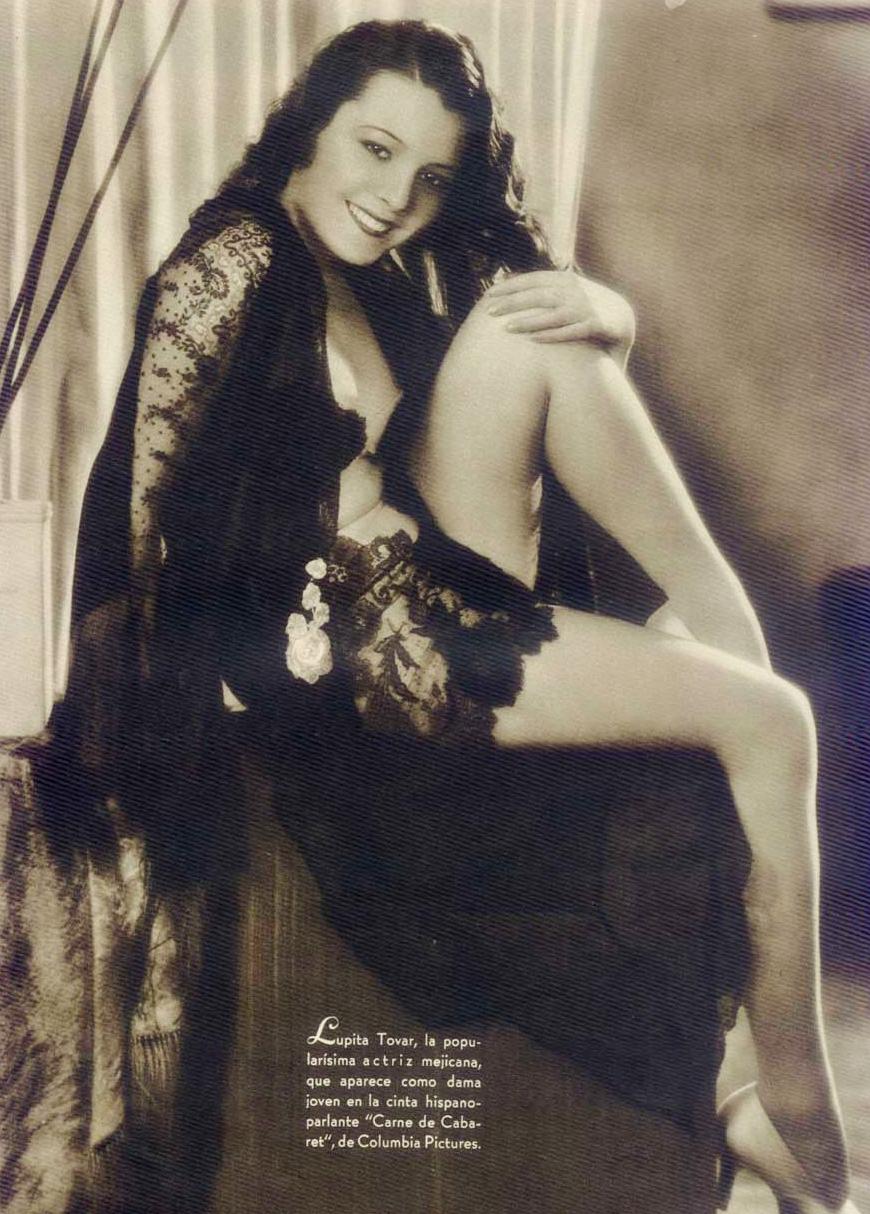
Lupita Tovar, c. 1930.

The only deficiency in Drácula is unfortunately…Dracula himself. Villarias’ performance, especially when compared with Lugosi’s, seems exaggerated and tends to evoke more laughter than fear. When I saw the film on the big screen a couple of years ago, the audience couldn’t help but laugh, during even the most suspenseful and/or horrifying scenes. I guess it could have been just a bunch of people catching the giggles from each other; you can judge for yourself because the whole movie is on YouTube. [Edit: It’s no longer on YouTube, watch for it at your local arthouse.]

Villarias aside, Kohner certainly delivered value for money at Universal. Drácula cost just a tenth of what the English-language version had. Though it disappeared for a while in the mid-twentieth century, a revival in the 1990s returned it to prominence and many critics now rate it more highly than its English-language counterpart.

According to Michael Mallory, writing in Universal Studios Monsters: A Legacy of Horror, Kohner had another motive besides saving money for making Dracula in Spanish: preventing Lupita Tovar from resuming her career in Mexico. Mallory maintains that Kohner was “madly stricken” with Tovar, who wanted to pursue opportunities at home, and that the producer’s thrifty idea was at least in part a scheme concocted to keep the beautiful actress in the U.S. and on the lot. Whether this is true or not, Kohner and Tovar married in 1932 and remained together until Kohner’s death in 1988. Their daughter, Susan Kohner, who played Sarah Jane in Imitation of Life, had two sons — Paul and Chris Weitz, the writer/directors responsible for About a Boy, In Good Company, and yes, American Pie.

MHDL'S Fan Magazine Collection takes you back in movie time

A while back, I happened upon possibly the only site that may be a bigger time suck than tumblr….the Fan Magazine Collection put together by Media History Digital Library (MHDL). This remarkable archive contains full-page scans of magazines that you can browse through or even download to your computer for later consumption.

All’s well at M-G-M “the happy lot:” (L to R) Madge Evans, Robert Montgomery, Marie Dressler, John Gilbert, Anita Page, Joan Crawford and Clark Gable. Photoplay, May 1932.

The star of the show is MHDL’s complete set of Photoplay magazine, comprising all the issues from 1914 until 1940. These magazines are a gold mine for the classic movie fan…in just one issue, I found publicist-approved info like Mary Pickford’s secret for staying slim (hint: skip lunch), Clark Gable’s explanation of some pesky rumors, Myrna Loy and Carole Lombard’s hairdo tips, and addresses for all the stars, plus tons of images. They are also fascinating cultural artifacts, a window into U.S. society’s past concerns (which haven’t actually changed all that much.) This site will occupy more of your time than you probably can spare.

Joan Blondell. Photoplay, May 1932.


One of Photoplay’s interesting and often hilarious features is “The Audience Talks Back,” in which fans air their critiques and grievances. It’s like Twitter…only longer and on paper:

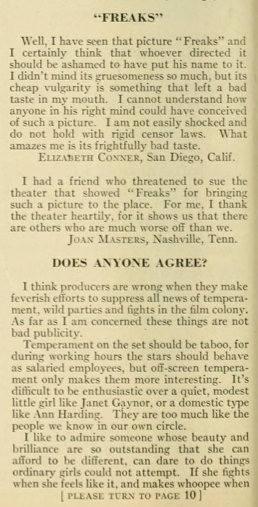
“No matter what the critics write, the audience always has the final word” — Letters to Photoplay, May 1932.


I cannot even imagine the work that went into scanning these, and MHDL has even more collections…for instance, the Early Cinema archive covers several publications from 1904 to 1919. All the collections are listed here. MHDL is a non-profit organization, “dedicated to digitizing collections of classic media periodicals that belong in the public domain for full public access…We have currently scanned over 400,000 pages, and that number is growing.” The scanning is paid for by collectors and donors, so if you see the value in any of this, please support their work — there’s a “Donate” button in the right sidebar.

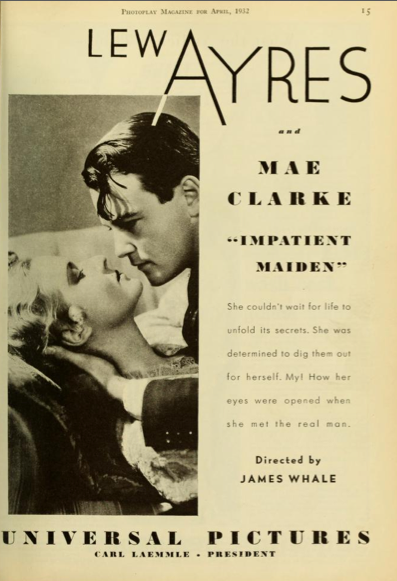
Photoplay, April 1932.

Carol Burnett loves old movies

There’s a few sure things in life, and one is that I’ll watch A Stolen Life, a mistaken-identity melodrama in which Bette Davis plays twins, every time it’s on TCM. A while ago, my friend Tonya from Goosepimply Allover sent me a link to a parody of the film, called “A Swiped Life,” from The Carol Burnett Show. If you’ve  seen the film, you’ll find it hilarious. You can tell Burnett really studied Ms. Davis’ speech patterns and facial expressions…and then way over-emphasized them.

They also did a parody of Double Indemnity, called “Double Calamity.”

And one more…a “tribute” to Fred and Ginger. Roddy McDowall is excellent in the Edward Everett Horton role:


What really strikes me about these spoofs is that, at some point, these movies were well-known enough for jokes and references about them to be understood by enough people that it was a regular feature on a national network TV show. Now with the wide variety of entertainment options, there isn’t any one film, TV show, book or musical act that everyone is familiar with.

Also, even though I’ve enjoyed the occasional episode of Jersey Shore, I can’t help but wish there was something as smart and fun as The Carol Burnett Show on TV now.

UPDATE: In the interests of completism, here is the immortal Carol Burnett Gone With The Wind parody, “Went With The Wind:”

TCM Week – July 30-August 5

Interesting week on TCM. Leslie Howard month wraps up and Summer Under The Stars kicks off with two of my favorites, John Wayne and Myrna Loy. As always, all times are Eastern.

Monday, July 30
9:30 p.m. Island in the Sky (1953)
***TCM PARTY***
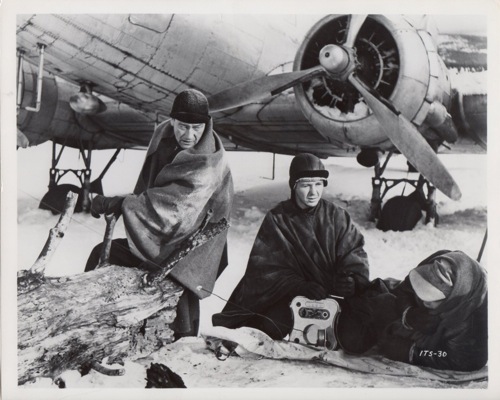
Captain Dooley (John Wayne) is the pilot of a plane that crashes “so far north that the area is barely on the map.” He’s in charge of the stranded crew, which has very limited provisions, only a wood fire for heat and barely any juice for the radio signal. Can the Duke keep everyone alive until they’re rescued? Look for us on Twitter with #TCMParty…watch and tweet along with our guest hosts @biscuitkitten and @ScribeHard.

Tuesday, July 31
Star of the Month: Leslie Howard
8:00 p.m. The Scarlet Pimpernel (1935)
This is one of my favorite Leslie Howard films ever. In the 1790s, an apparently shallow British nobleman, Sir Percy Blakeney (Howard), defies the evil French revolutionary Chauvelin (Raymond Massey) by spiriting his fellow aristocrats away from the guillotine and out of France. Also starring the beautiful Merle Oberon as Lady Marguerite Blakeney and luxuriously produced by Alexander Korda, this is perhaps not the most realistic film ever made about the French Revolution, but it may be the most fun.

Beginning early Wednesday at 1:30 a.m., TCM has booked three mystery films starring Joan Blondell: There’s Always a Woman (1938), co-starring Melvyn Douglas and Mary Astor; The Famous Ferguson Case (1932), directed by Lloyd Bacon; and Miss Pinkerton (1932), with George Brent. I haven’t seen any of these, but Blondell’s sassy presence is enough to get me to set the DVR.

Wednesday, August 1
John Wayne
Summer Under The Stars kicks off today. It’s difficult to go wrong with anything on the schedule…seriously…it’s John Wayne. If you need to start somewhere, and can only DVR one movie today, I recommend Stagecoach (1939), The Searchers (1956) or Rio Bravo (1959).

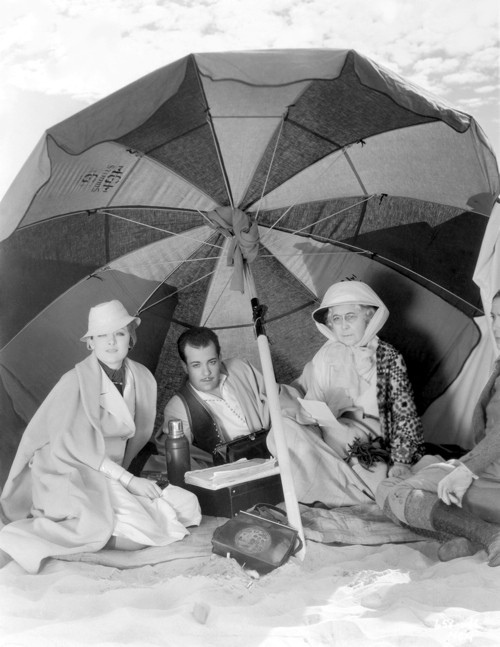
1933: (Left to right) Hollywood stars Myrna Loy (1905 – 1993), Ramon Novarro (1899 – 1968) and Louise Closser Hale relax in the sun during takes for the Metro-Goldwyn-Mayer production THE BARBARIAN. (Photo by Margaret Chute) via doctormacro.com

Thursday, August 2
Myrna Loy
Loy is another favorite of mine who is mostly known today as Nora Charles in The Thin Man series, but she made around 80 films before she became a star in 1934 with the first of those films. So the films she made before that are lesser-known. There’s five of them this morning beginning with The Great Divide (1929) at 6:00 a.m. and including The Naughty Flirt (1931), The Barbarian (1933), When Ladies Meet (1933), and The Prizefighter and the Lady (1933). Then tonight at 8:00 p.m., Loy has a supporting but pivotal role in William Wyler’s The Best Years of Our Lives, one of the best movies ever made. It’s also our ***TCM PARTY*** for tonight. Look for us on Twitter with #TCMParty…watch and tweet along!

Friday, August 3
Johnny Weissmuller
What can I say, a lot of people dig Tarzan pictures. Maybe I’ll check some of them out.

http://youtu.be/TNN4-RBN57k

Saturday, August 4
Marilyn Monroe
The film I haven’t seen today is Clash By Night (1952) and it’s got an interesting director and cast. Directed by Fritz Lang, it stars Barbara Stanwyck, Robert Ryan and Monroe. I’m expecting something in noir, seeing as Lang directed M, The Woman in the Window, Scarlet Street, The Big Heat, etc.

http://youtu.be/o08Taot5dxA

Sunday, August 5
Claude Rains
You can’t really go wrong with anything today either. I say that a lot. If I’m forced to pick, I’ll go with The Invisible Man (1933) and Mr. Skeffington (1944). Did you know that in addition to being a great actor, Rains was an acting teacher? Two of his most famous students were Laurence Olivier and John Gielgud.

TCM Week – July 16-22

TCM has some really intriguing stuff scheduled for this week. Crank up the DVR and let’s go…as usual, all times are Eastern.

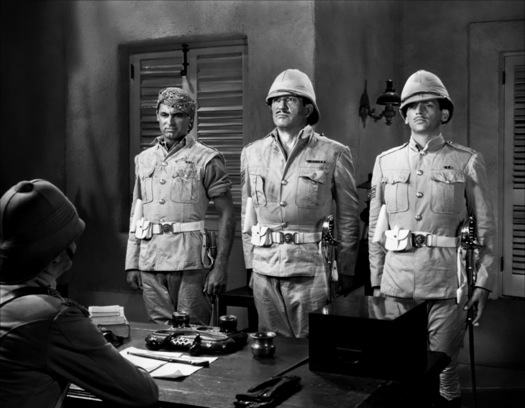
Cary Grant, Victor McLaglen and Douglas Fairbanks, Jr. in GUNGA DIN

Monday, July 16
TCM’s Classic Adventure series continues with a full 24 hours of rip-roaring action. Must-sees include The Charge of the Light Brigade (1936) with Errol Flynn and Olivia de Havilland at 2:00 Eastern; Gunga Din (1939) starring Cary Grant, Douglas Fairbanks Jr. and Victor McLaglen at 4:00 p.m.; and The Thief of Baghdad (1924) with Douglas Fairbanks and Anna May Wong at 3:45 a.m. Tuesday.

Joan Crawford in OUR MODERN MAIDENS

Tuesday, July 17
Today kicks off with a couple of silents, The Sheik (1921) starring Rudolph Valentino, and Our Modern Maidens (1929) with soon-to-be newlyweds Joan Crawford and Douglas Fairbanks, Jr. The latter is the first of a block of eight ’20s and ’30s films directed by Jack Conway. Conway began as an actor in D. W. Griffiths’ Westerns and moved into directing, first at Universal, then at MGM, where he proved to be adept and prolific. He worked cost-effectively in all genres, bringing pictures in on time and within budget, a capability that endeared him to studio honchos Irving Thalberg and Louis B. Mayer. He is probably best known for A Tale of Two Cities (1935), starring Ronald Colman and Elizabeth Allan, and one of my all-time favorites, Libeled Lady (1936). Enjoy his work until George Cukor takes over at 8:00 p.m. tonight.

Star of the Month: Leslie Howard
I am a huge fan of Leslie Howard, but even I have to admit he was horribly miscast in Romeo and Juliet (1936), scheduled for 8:00 p.m. Though the film is gorgeous, Howard, in his forties, and his Juliet, Norma Shearer, in her mid-thirties, are both too old to portray a teenaged couple caught up in their first love. (Shakespearean scholars estimate that a real Romeo would have been 16 or 17 years of age and it’s directly mentioned in the text that Juliet has just turned 13.) But the rest of Howard’s films tonight — A Free Soul and Smilin’ Through, both also with Shearer, and Outward Bound (Howard’s Hollywood debut) and Captured! both with Douglas Fairbanks, Jr. — look pretty interesting.

Wednesday, July 18
Tonight’s block of early Francis Ford Coppola work includes You’re A Big Boy Now at 8:00 p.m., The Rain People at 10:00 p.m., Dementia 13 at 12:00 a.m. Thursday, and Finian’s Rainbow at 1:30 a.m. I wouldn’t recommend Finian’s but I’m keeping an open mind about the rest.

Thursday, July 19
Apparently today’s films have a theme: jail. Whether it’s women behind bars (Caged, House of Women (1962)), escape (House of Numbers) or riot (Inside the Walls of Folsom Prison), TCM has every kind of filmic incarceration one could want during the daytime hours. I’ll be sure to record Ladies They Talk About, which stars Barbara Stanwyck as a gangster’s moll sent up for her role in a bank robbery.

At 8:00 p.m., TCM is featuring The Science of Movie Making, a block co-hosted by sound designer Ben Burtt and visual effects supervisor Craig Barron, both Oscar-winners in their fields, who have chosen films that have inspired them.

Friday, July 20
Stanwyck Pre-codes
***TCM PARTY***
Presumably in honor of Ms. Stanwyck’s 105th birthday (July 16), TCM has scheduled four films she made before enforcement of Hollywood’s Motion Picture Production Code (aka Hays Code) began in 1934. The pre-codes include Shopworn (1932), Ten Cents A Dance (1931), Illicit (1931) and Forbidden (1932). Look for us on Twitter…watch and tweet along with #TCMParty.

Saturday, July 21
To Have and Have Not (1944)
***TCM PARTY***
In Martinique during World War II, a fishing-boat captain (Humphrey Bogart) gets mixed up with the French Resistance and a beautiful saloon singer (Lauren Bacall). This was Bacall’s first film and she was such a natural that screenwriter William Faulkner started adding to her part. The critics said it had “much more character than story” and that it was “confusing and klutzy, the ending is weak, and the secondary characters are poor substitutes for Casablanca‘s (1942) memorable cast of heroes and villains” but I think it’s great. Look for us on Twitter…watch and tweet along with #TCMParty. Guest hosted by @joelrwilliams1.

http://youtu.be/90IxpYZjCOE

Sunday, July 22
If you haven’t seen Christmas in July (1940) at 10:30 a.m., Gentlemen Prefer Blondes (1953) at 2:00 p.m., or The Great Escape (1963) at 8:00 p.m., definitely tune in for those. There’s a silent at 12:30 a.m. Monday, The Mating Call, and at 2:00 a.m. there’s The Leopard (Il gattopardo – 1963), starring Burt Lancaster and Alain Delon. Set in the early 1860s during the turmoil that preceded Italy’s unification, the film follows the slow fall of aristocratic Prince Fabrizio (Lancaster) and the parallel rise of upstart Tancredi (Delon). This film has lavish detail, gorgeously shot, and is unfortunately dubbed (you can’t have everything). It’s also a very poignant film, infused with a sense of nostalgia for a lost time and the inevitability of one generation letting another take over.

Movie Typography: MY MAN GODFREY

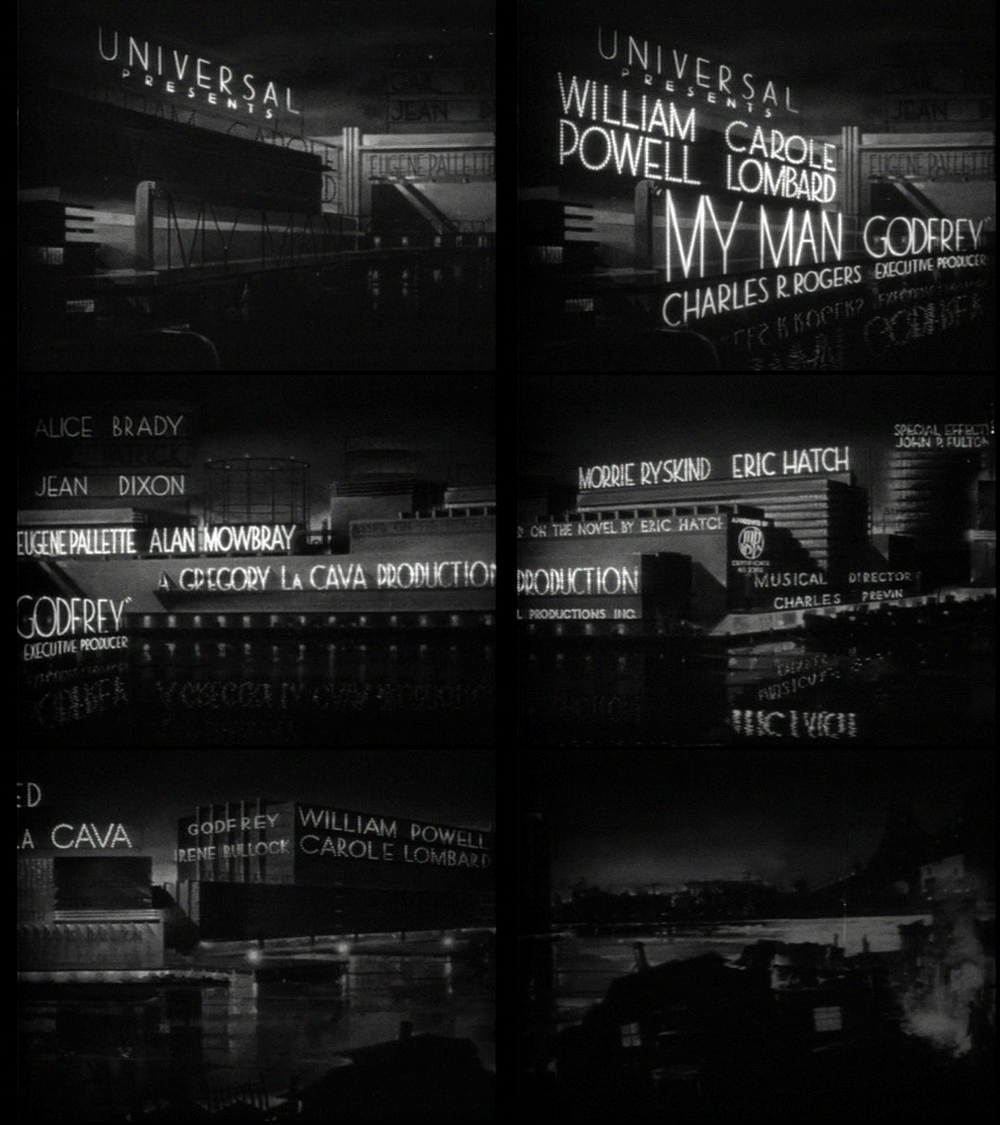
My Man Godfrey (1936) has always been one of my all-time favorite films. The Godfrey of the title is a derelict (William Powell) who, after meeting wealthy and eccentric Irene Bullock (Carole Lombard), is hired as a butler in the zany Bullock household. It’s a really fun hour and a half, and if you haven’t seen it, I highly recommend that you do.

Godfrey‘s opening credits are very distinctive and very well-integrated with the storyline. The names (and titles, if necessary) of the cast and crew are designed like neon signs on buildings near the riverfront. The camera pans right, showing all the names in turn, ending on a painting of the city dump, where Godfrey, along with other “forgotten men,” makes his home. The painting dissolves into the first shot of the film.

Opening credit sequence – MY MAN GODFREY

I’ve included the screencaps below in case anyone wants to get a closer look.

The Godfrey typeface’s geometrical forms and low bars are very typical of the art deco type commonly used in the 1920s and 1930s. After some research, I think the closest you can get today is probably Semplicita Pro by CanadaType. You can “test drive” it here.

TCM Week – June 4-10

Not that anyone noticed that I stopped doing my weekly TCM picks, but there’s a very simple reason. My subscription to Now Playing, the TCM monthly magazine, ran out and I forgot to renew. Evidently I’m quite reliant on it because I missed two months of it and it’s too difficult to do picks without it. Everything is back to normal this month. Just so you know 🙂

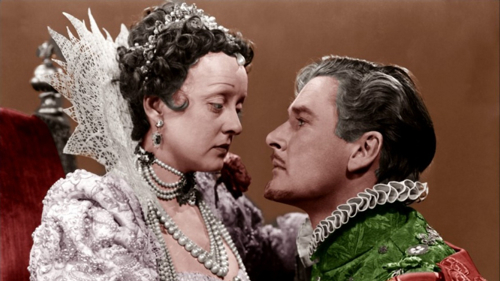
Apparently Bette Davis (as Queen Elizabeth I) slapped Errol Flynn (as the Earl of Essex) so hard during the filming of Elizabeth and Essex that he saw stars.

Monday, June 4
8:00 p.m. The Private Lives of Elizabeth and Essex (1939)
***TCM PARTY***
Possibly in honor of Elizabeth II’s real-life Diamond Jubilee, TCM has two Elizabeth I-related films tonight, the #TCMParty Private Lives at 8:00 and The Virgin Queen (1955) following at 10:00, both with Bette Davis as Britain’s best-loved monarch. (I just conducted a scientific poll via Google search and she is the one royal about whom people have the least bad things to say.) Watching her run a country while trying to keep the Earl of Essex (Errol Flynn) and Walter Raleigh (Richard Todd) in line is quite a treat. Apparently Davis and Flynn were no more well-matched than their characters and feuded during filming to the point of physically injuring each other. Despite this, or because of it, this is a great period drama, with beautiful costumes, sets and lighting. Watch for Herbert Marshall and Joan Collins in Virgin Queen. Watch and tweet along with #TCMParty.

There’s a couple other people in the picture but whatever.

Tuesday, June 5
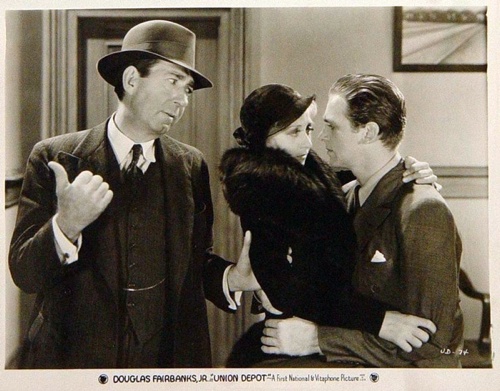
12:45 a.m. (Weds) Union Depot (1932)
A rather racy-sounding pre-code picture chosen for the presence of Joan Blondell and the fact that it takes place in real time, 20+ years before High Noon.

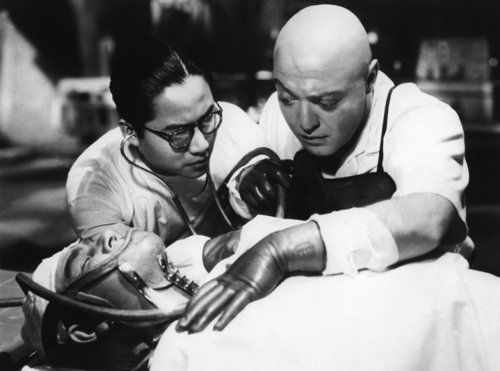
Looks like Orson Welles borrowed heavily from Peter Lorre’s look in Mad Love for the older Charles Foster Kane.

Wednesday, June 6
TCM has scheduled a bunch of 1930s horror films for daytime, several of which —Island of Lost Souls, Mark of the Vampire, The Hunchback of Notre Dame (1939) — have the gorgeous Expressionistic cinematography I love so. I’ve chosen two I’ve not yet seen. Doctor X (1932) at 7:45 a.m. was directed by the versatile Michael Curtiz (Casablanca) and is sung about in “Science Fiction/Double Feature,” the first number in The Rocky Horror Picture Show. Mad Love (1935) at 3:30 p.m. shares a cinematographer, Gregg Toland, and some details with Citizen Kane. This film is one of several based on the novel Les Mains d’Orlac and it will be interesting to compare to The Hands of Orlac (1924), which starred Conrad Veidt as the recipient of the titular evil hands.

Thursday, June 7
8:00 p.m. Jailhouse Rock (1957)
***TCM PARTY***
This is one of the best Elvis Presley movies, along with Loving You and Viva Las Vegas. Unfortunately, it’s also his only his third movie, and he made quite a few more. However, nobody delivers a classic line such as “That ain’t cheap tactics, honey. That’s just the beast in me” better than Elvis. With special #TCMParty guest host @CitizenScreen.Watch and tweet along

Friday, June 8
TCM has scheduled an unofficial block to honor Alexis Smith on her birthday. Born in 1921, this Canadian actress, though not as well-known today as some of her contemporaries, had a career in movies, stage and TV for more than 50 years.
7:45 a.m. Dive Bomber (1941)
Smith had uncredited roles in 12 films before landing this, her first credited role, opposite Errol Flynn and Fred MacMurray as the girl who comes between them in a WWII drama made just before the U.S. entered the war. (Her last film role was in Age of Innocence (1993)).

9:30 a.m. The Constant Nymph (1943)
I won’t even front like I like this movie. I find it very odd and at times ridiculous. Joan Fontaine is supposed to be a teenager who separates her composer cousin (Charles Boyer) from his wife (Smith). (Seriously, am I the only one who thinks this is weird?) By the end of the film, I felt they deserved each other. But I’m going to watch it again just for Smith, as I’ve read this was her breakthrough role which led to her parts in Night and Day (1946) and The Two Mrs. Carrolls (1947).

There’s a great summary of today’s TCM Gothic offerings here, courtesy of Classic Movies Examiner Jennifer Garlen.

Saturday, June 9
5:30 p.m. The Train (1965)
***TCM PARTY***
In the waning days of World War II, a French railway inspector who is also a member of the Resistance (Burt Lancaster…just go with it) is ordered by the Nazi-in-charge (Paul Scofield) to get a train through to Germany no matter what. Which wouldn’t be a big deal, except that nearly every important piece of art left in France is on that train. Directed by John Frankenheimer, this excellent film is an unpredictable chess match that’s as near to an anti-war statement as you’ll get in a WWII picture. Look for us on Twitter with #TCMParty.

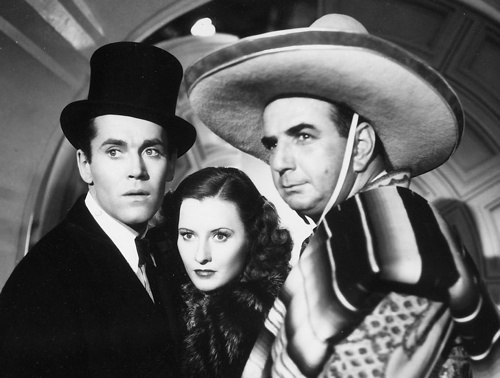
Henry Fonda, Barbara Stanwyck, and someone in a sombrero

midnight The Mad Miss Manton (1938)
The Lady Eve co-stars Barbara Stanwyck and Henry Fonda made this lesser-known comedy three years before Eve. Let’s see…great chemistry in a comedy/mystery with Hattie McDaniel…i’m so there.

Sunday, June 10
JUDY GARLAND’S 90th BIRTHDAY
You can’t really go wrong with anything today.