I am the first to admit that I have been too busy to actually see a good many of the 2013 nominees, but I still like predicting who will win and lamenting who should win but probably won’t. I haven’t read anyone else’s predictions but I do rely heavily on tweet buzz. I estimate a whopping .5% of the Academy are on Twitter, so we’ll see how that goes.
Best Picture — While I’ve seen less than half the nominees in this category, and I suspect that Moonrise Kingdom belongs in it, I’m really happy to see movies from so many different genres get the nod. We’ve got a detective story, a Western, a couple of fantasies, historical drama, a musical, and even a rom-com that shows that two dysfunctional people can have a functional relationship. Not that Silver Linings Playbook is going to win…it looks like that distinction will go to Argo, with which I’m completely happy.
The detective story? Zero Dark Thirty. That’s how I think of it, but sometimes I wonder if I saw the same movie as everyone else. So I’ve really stopped reading anything about it. Yes, it shows torture and that really is bad f*cking news…but it also shows that, whether despite the torture or because of it, terrorist attacks continued. [[Possible spoiler —> Lead agent Maya (Jessica Chastain) gets her initial lead by tricking a suspect. Maya’s boss’s boss George (Mark Strong) sure does get ticked that his team isn’t making more progress. He advocates for more torture and more violence, to no avail. In the end, what does work (in the film anyway) was a methodology worthy of an old episode of Columbo or Agatha Christie’s Miss Marple…cross-checking rediscovered records from Moroccan intelligence. That’s right…bin Laden was found as a result of detective work.]] If this film glorifies torture, then Trainspotting and Requiem for a Dream glorify drugs.
Maybe the reason ZDT is so controversial is because a woman is the lynchpin of the ultimately successful “greatest manhunt in history.” Maybe it’s because Jason Clarke makes Dan, Maya’s colleague who does a lot of torturing, funny and likable, and that makes people uncomfortable (could just be me). Whatever the reason, the controversy surrounding this film has overshadowed its actual merit. There seems to be more outcry against a fictional piece of entertainment than there was against a real-life U.S. policy. Which is sad because it takes a ton of talent to retell a now-familiar story that is more static than dynamic in such an absorbing and visually stunning way. Yet this didn’t even get a nomination for Cinematography.
Actor — Daniel Day Lewis.
Actress — This is between Jessica Chastain and Jennifer Lawrence, with Lawrence winning it. I guess there’s a small chance they’ll cancel each other out and someone else will take home the statuette, but I doubt it. This is Chastain’s second Oscar nomination and sometimes I wonder if she’ll ever win, because her acting seems so effortless and her looks are so timeless. Hopefully those two attributes provide her with a long career.
Supporting Actor — I’d like Christoph Waltz to win but I’m thinking it’s going to be Tommy Lee Jones.
Supporting Actress — Anne Hathaway. I don’t get why there’s so much negativity about her.
Director — Even though I’d rather talk about who isn’t in this category, I have the feeling this is a really close race. Or maybe it works the other way around…the race was so close that not all the worthy could be nominated. At any rate, I predict Steven Spielberg.
Foreign Language Film — I don’t really think there’s any doute about this one...Amour.
Animated Feature — Frankenweenie or Brave. Probably Brave.
Cinematography — I’d like Django Unchained or Skyfall (Bond DP Roger Deakins is a perennial nominee who has never won), but I think Life of Pi.
The winners, the losers, the snubs, the backstories, the gossip, the players and the games… it’s all about Oscar!
The 31 Days of Oscar blogathon, hosted by myself, Aurora of Once Upon A Screen, and Kellee of Outspoken and Freckled, continues. We’ve had two great weeks of submissions covering a wide variety of films from the silent era to this year’s nominees. So if you need more Oscar, you can also check out Week 1 and Week 2.
And now…these are the brilliant Week 3 posts, listed with Twitter handles (where available) so we can all find each other and converse.
Check out my completely random, probably totally wrong 2013 Oscar predictions, including a mini-review of Zero Dark Thirty.
Time for an update on the 31 Days of Oscar blogathon (full rundown at the original post). We’re a little more than a couple of weeks out from the first deadline. Publish your post and email me the link by any one of the following dates: January 31, February 7, February 14, February 21 and February 28.
The nominations were announced on Jan. 10, providing as much fodder for blog posts as any other’s, maybe more. Right away, I was aware of what I consider to be one major snub: Ben Affleck for Argo, and now that I’ve seen Zero Dark Thirty, I think Kathryn Bigelow was snubbed as well. Of course, the format of the Best Picture nominations, where 5-10 movies are tapped, virtually guarantees that there will be snubs. Is the Academy crazy, or crazy like a fox? Sounds like an idea for a blog post, speaking of which here’s some topic prompts (new ones at the end of the list):
Is there a film, performance or art or technical work the non-nomination of which you feel is a crime? Tell us about it.
Sometimes the Oscar seems to hinder, not help, someone’s career, including but not limited to the “Best Supporting Actress Curse.” Discuss.
Spotlight on sound editing and sound mixing, or any other unfairly neglected award.
Your favorite/the most influential Best Costume winners/nominees/should-have-beens through the years, or just focus on one.
Short films are often given short shrift…throw some love on your favorite.
Cinematography and editing vs.directing…the auteur theory, etc. Discuss, using Oscar-winning examples.
The Oscars still create the most hoopla, but should we be paying more attention to other awards, such as the Golden Globes or (fill in the blank)?
NEW:
The Academy’s rules for selection of the Best Picture dictate that any film receiving 5 percent or more of first place votes is nominated, so that a minimum of 5 and a maximum of 10 are in the running each year. This year there are 9 nominees, but there are still only 5 Best Director nods. Discuss the implications and ramifications of this set-up.
Judi Dench famously won a Oscar for her 6 flawless minutes in Shakespeare in Love. If there was an Oscar for cameos, who would be nominated, and who would win?
It’s generally accepted that actors and directors, and possibly other filmmakers, may receive an Oscar for a previous year’s, or an entire career’s, work, sometimes referred to as a “cumulative Oscar.” Do you think this is legit or totally unfair? Discuss.
Academy…why so serious? Certain genres are overlooked every year, generally speaking comedy, adventure, and science fiction are rarely given nods. Is this due to the overall age of the Academy, or other factor(s)?
Final Oscar ballots aren’t due until the Tuesday before Oscar Sunday; this year that is Feb. 19. Any answer to this question is likely to be pure speculation but: Do the other awards influence voting?
The winners, the losers, the snubs, the back stories, the gossip, the players, the games…this time it’s all about Oscar!
We’re back! Myself, Kellee (@IrishJayhawk66) of Outspoken and Freckled, and Aurora (@CitizenScreen) of Once Upon a Screen are hosting a new, mammoth blogathon event that coincides with Turner Classic Movies’ 31 Days of Oscar, February 1 to March 3, 2013. It’ll be a month filled with fabulous tales and screen wonders.
But this one is not just for classic film fare; we want to see and hear it all from the golden man’s more than eighty-year history, up to and including this year’s nominees. And you don’t have to stick to just Best Picture or acting winners. Posts about nominees or winners in all the other categories…Original Screenplay, Costume Design, Cinematography, etc….are more than welcome.
The details:
Let us know what you’ll be writing about by email [paula.guthat[at]gmail.com] or leave us a comment.
Submit links to as many posts as you would like by email or by comments in time for any of the following due dates throughout the month. Submissions should include as much information about you as possible: First name, Twitter username, link(s) to your site(s) and email address.
January 31
February 7
February 14
February 21
February 28
We’ll promote entries for an entire week after each due date. If you have a preferred promotion date, please make a note of that as well. However, we welcome all submissions by any of the dates specified. Don’t forget to include your Twitter handle if you have one.
This is the banner I created for the blogathon. We encourage you display it on your site to help promote this event and cannot wait to hear from you. Happy blogging!
UPDATE: I have so many ideas for this blogathon, far more than I could ever tackle myself, so I offer these as topics for posts or inspiration thereof:
Is there a film, performance or art or technical work the non-nomination of which you feel is a crime? Tell us about it.
Sometimes the Oscar seems to hinder, not help, someone’s career, including but not limited to the “Best Supporting Actress Curse.” Discuss.
Greetings, all and sundry! Being more than a fan and somewhat short of a student of cinema, it is not often that I have been granted the opportunity to wax poetic and in detail about the many building blocks and structures of the fine art of visual storytelling. Directors ride herd and guide projects. Writers, of course. supply the words and the mood. Lead actors are often the heroes and the focus of attention. But what about the myriad other familiar faces in the background?
The faces we recognize either right away, or within a few minutes, after one of their limited number of lines. Not necessarily the fresh-faced, too-young-to-shave kid who gets killed in the last reels of a war film, but the other guy.
The guy who nods sagely to the Sergeant’s or Lieutenant’s words of advice. The kid brother who tries to stop his hot-headed older sibling from seeking revenge on a cattle rustler. The always-smiling Army GI who’s young enough and smart enough to jump at the offer to spend some time off the front lines of the frozen Ardennes forest during the Battle of the Bulge. The quiet blacksmith in a dusty, middle-of-nowhere Texas town. Or one of two twin brothers who sign up for the Marine Corps after Pearl Harbor to fight the “heathen Japanese” in the Pacific islands theater of WWII.
Yeah. That guy! Stocky, Not too tall. Blonde hair. Blue eyes. Sometimes a quick wit, though more often not. A little headstrong. With good hands that can also be fast and righteous. Made for any number of uniforms. Or jeans, a flannel shirt, and a sweat-stained Stetson or baseball cap. You’ve seen him in many films. And remember him fondly in one or two, but can’t place his name. Well, let me tighten up your memory receptors and critique one of his best and most memorable roles.
Richard Jaeckel: Sgt. Bowren. Top Kick of ‘The Dirty Dozen’.
First seen in full Garrison uniform, pistol belt, sidearm and white MP helmet liner. Jaeckel’s Sgt. Bowren brooks little nonsense when lining up twelve diverse convicts for his new boss, Major Reisman (Lee Marvin). Then introducing the good Major to each after the twelve have dressed and covered according to height. Reading names and sentences that range from decades of hard labor to death by hanging. After a failed attempt at close order drill, caused by upstart Victor Franko (John Cassavetes) and an appropriate thumping by the Major. The remainder show a renewed attention to commands. Giving the first glimmers of light to the possibility that the Major may just be able to pull this cockamamie idea off.
Reinforced a bit more as the Major conducts face to face interviews and asks what Bowren thinks. Sgt. Bowren answers the way he thinks the Major wants, And the Major tells him to try again. Bowren replies, ” I think the first chance one of those lovers gets, he’s going to shoot the Major right in the head… sir.”
The two understand each other a bit more. As Bowren later chastises one of his own MPs for an off color remark made to R.T.Jefferson (Jim Brown). An African-American awaiting the gallows for killing a white man who had tried to lynch him. Then responding to a ruckus between the convicts in the prison gym. Brought on by Maggot’s (Telly Savalas) use of the ‘N word’ regarding Jefferson. Only to be delayed by Major Reisman, who explains that those involved are discussing seating arrangements and place settings. Sgt. Bowren picks up on the implied message and starts an impromptu discussion about baseball as the convicts noisily work their aggressions out.
And Sgt. Bowren begins to slowly evolve into the Major’s bodyguard. Official watcher of the convicts during training and off site compound’s layout and construction. As well as taking on the role of Major Reisman’s unofficial enforcer and Executive Officer. Always close by with his hand covering his flap holstered .45 should things get a little tense between the Major and his convicts. Or to add strength to his boss’s directive that the convicts will no longer shave, bathe or have hot food or hot water, courtesy of Victor Franko. Pointing out that the saved time will be devoted to training and sarcastically coming up with the colloquial, ‘Dirty Dozen’.
About the only time Sgt. Bowren falters is when the convicts are sent to another base for parachute training and Pinkley (Donald Sutherland) embarrasses Colonel Everett Dasher Breed (Robert Ryan). West Point graduate and ring knocker during an inspection of his troops. The Colonel wants to know more after three of his biggest and baddest fail to get answers from Wladislaw (Charles Bronson) alone in a latrine. Jefferson and Posey (Clint Walker) intercede. Jefferson breaks one of the goon’s hand and jaw with his helmet. While Wladislaw and Posey
leave the other two unconscious. The explanation for Wladislaw’s bruises? “He slipped on a bar of soap”.
Infuriated, Colonel Breed and a squad of armed paratroopers storm the convicts’ compound and disarm Sgt Bowren at its drop gate, Though he does get some satisfaction after Major Reisman infiltrates the compound. And stops Breed and his men in their tracks with aimed bursts of fire from an M-3 Grease Gun. Bowren unleashes his convicts to get some payback. Admiring their measured use of force and working as a team as paratroop are left muddied, hurt and their weapons piled neatly out of reach. All prelude to a ‘Graduation Party’ for the convicts, a live fire exercise, attached as an independent unit. Whose objective is capturing Colonel Breed and his staff. And their final mission…
What does Jaeckel’s Sgt. Bowren bring to the film?
A much-needed and well-executed dash of maturity and adherence to rules. As displayed in his well-turned-out Garrison uniform, tie, Ike jacket and bloused, and polished boots. Someone who is proud of his profession and rank. And shows it. Not exactly a ‘Lifer’, but one who adapts to changing situations and keeps ahead of the curve. Until Major Reisman shows up and the twelve convicts are led out to the prison’s small exercise yard.
Sgt. Bowren does what he can to maintain order among the lackadaisical convicts. Who think they have the upper hand until Franko makes a jail house lawyer fool of himself before the unamused OSS (Office of Strategic Services. Forerunner of the CIA) Major Reisman. And every thing changes. Unit cohesion starts to make itself known and Bowren can use that and build on it as he is given more autonomy. Progress is slow and Bowren remains aloof until at least an effort is made to rise close to his and the Army’s standards. Which begins with Franko’s
revolt and its resulting lack of hot food and water. And ends with the take down of Colonel Breed and his troopers.
A small role, but an essential one, to be sure. With time well divided out amongst a grounded, diverse and memorable ensemble cast. In one of the better character driven WWII films of the 1970s. That added another notch on the resume and body of work of one of the late, great, grand masters in the firmament of character actors!
Happy Monday! It’s difficult to believe it’s already Day 3 of the WHAT A CHARACTER! blogathon.
The WAC blogathon, hosted by myself, Kellee of Outspoken and Freckled, and Aurora of Once Upon A Screen, is our tribute to those supporting players who manage to steal nearly every scene of the classic movie they’re in, but didn’t always get their due in terms of fame, money, or awards.
Although most never played leading roles, we look forward to their appearances — as the butler, the maid, the hotel manager, or the ever-loyal best friend — almost as much as those of the major stars, or in some cases, even more. Today’s posts honor the following lesser-known, but well-loved, thespians:
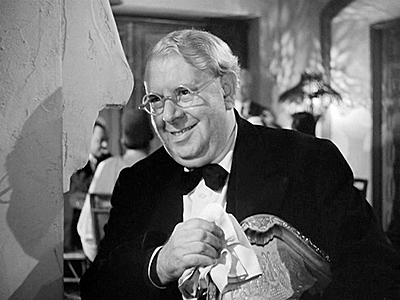
With his assortment of lovable supporting roles — befuddled yet helpful uncles and friends, slightly curmudgeonly shop owners, eccentric producers — S.Z. “Cuddles” Sakall is pretty much the definition of a Hollywood character actor. His variations on a discombobulated theme, often tinged with sly wit, charmed American audiences from the early ’40s through the mid-’50s, yet he’d been acting for 30 years before he ever set foot in Hollywood.
Who the heck is Gerö Jenö? That is S.Z. Sakall’s birth name, sometimes translated from his native Hungarian as “Jacob Gerö,” which is what appeared on his U.S. citizenship paperwork. Most sources say he was born in 1883, on February 2 in Budapest. (In case you were wondering, he was a Capricorn Aquarius.) Edit: Someone rightly commented that Feb. 2 is Aquarius, it’s squarely in the sign, not sure I got Capricorn from.
By the early 1900s, Gerö Jenö was writing scripts for musical-comedy theatre in Hungary. Several sources mention that he took his stage name, S.Z. Sakall, from the Hungarian phrase “szoke szakall,” in English “blond beard,” which he apparently grew to look older. He started acting at the age of 18. In the early ’20s, he moved to Berlin and appeared in his first film in 1927.
He continued working on stage and in film in Vienna and Berlin, and briefly had a production company, until 1933, when the Nazis took over Germany. Sakall, who was Jewish, had to go back to Hungary. In 1940, Hungary joined the Axis, giving the Nazis control of most of Europe. Many — Jews and others who objected to the regime — who were able to leave, did so. Those in the film industry made their way to either London or Hollywood, and formed an essential part of American and western European moviemaking for the next two decades, exerting tremendous influence on both the style and content of films. A look at the cast and crew list for Casablanca (1942) has a fair proportion of these refugees: director Michael Curtiz; composer Max Steiner; and actors Paul Henreid, Conrad Veidt, Peter Lorre, and Sakall.
RENAULT: Carl, see that Major Strasser gets a good table, one close to the ladies. CARL: I have already given him the best, knowing he is German, and would take it anyway.
I can’t help but wonder how Sakall was affected by these lines and others in Casablanca. Perhaps the proximity of art to life was the reason Sakall at first refused the role of Carl the math-professor-turned-headwaiter, even though his Yankee Doodle Dandy director and fellow Hungarian Curtiz was helming, and the cast included top-name talent. Pure speculation on my part. What I do know is that all three of his sisters, his niece, and his wife’s brother and sister were murdered by the Nazis.
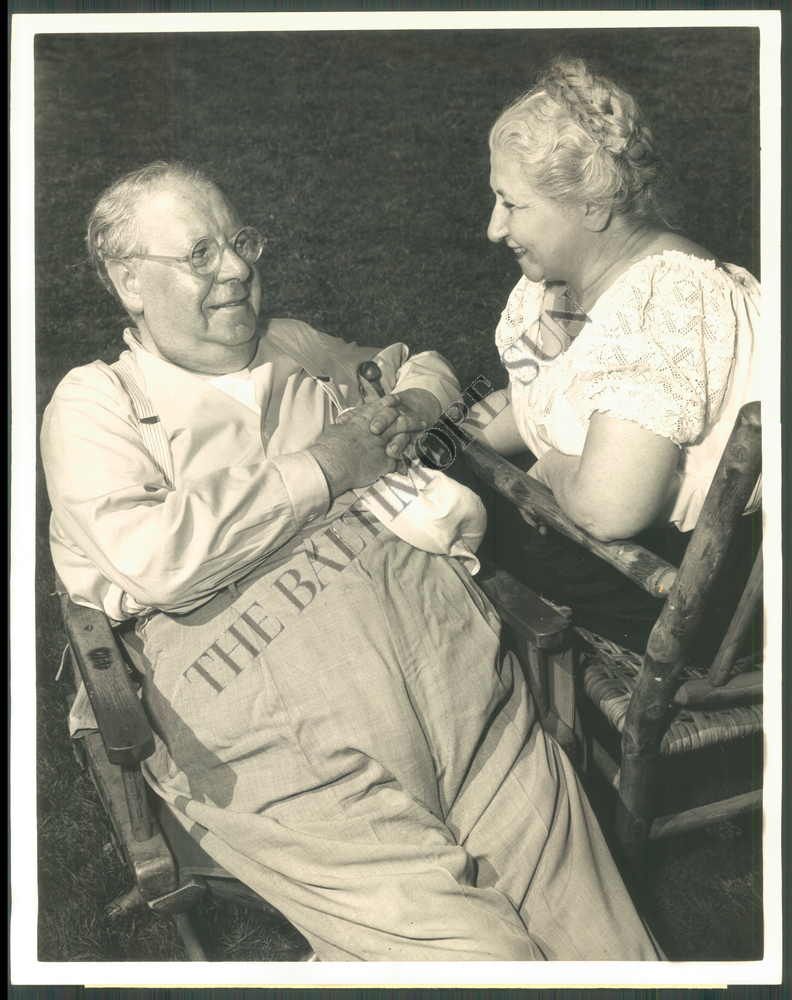
1948 photo from The Baltimore Sun: HAPPY HOLLYWOOD WEDLOCK — S.Z. (“Cuddles”) Sakall and his spouse Boeszike (he can pronounce it) have enjoyed nearly 30 years of wedded bliss. Boeszike comes to work with Cuddles nearly every day to help him with his lines, and bits of business, and for them love’s young dream is still way up there on rosy cloud No. 1. Cuddles, assisted by Boeszike, is soon to be seen in Warner Bros.’ “Whiplash.” / From: Warner Bros. Studio / Burbank, California
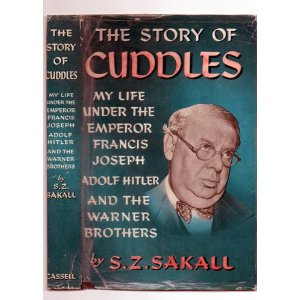
I don’t know for sure when Sakall acquired his famous nickname, Cuddles, or who gave it to him — his TCM clip cites Jack Warner as the source, but I’ve also heard that Doris Day coined it. He was first credited as “S.Z. ‘Cuddles’ Sakall” in 1945’s San Antonio.* I’ve read that he wasn’t fond of his nickname, and also that his charm, basic niceness and, um, cuddly exterior made it entirely appropriate both in film and in life. In 1954, Sakall published his wonderfully-titled memoir, The Story of Cuddles: My Life Under the Emperor Francis Joseph, Adolph Hitler and the Warner Brothers. The book is out of print and the one used copy I could find goes for $480.10. If anyone wants to buy me this for Christmas…I’m just saying. He passed away from heart failure in 1955.
It wouldn’t be going out on much of a limb to say Cuddles is best-known for Casablanca. So it is fitting that Humphrey Bogart, Sidney Greenstreet, John Qualen, the film’s producer Hal Wallis, its director Michael Curtiz, its composer Max Steiner, and S.Z. “Cuddles” Sakall were all laid to rest in Forest Lawn Memorial Park in Glendale, California.**
My Top Three Cuddles Roles
Ball of Fire Sakall plays one of 7 professors attempting to produce an encyclopedia. Because they’ve been cloistered in a mansion for 9 years, the group reacts strongly when showgirl Sugarpuss O’Shea (Barbara Stanwyck) turns up. As kindly physiology professor Magenbruch, he delivers many of his lines with a touch of mischief…his area of academic study is sex.
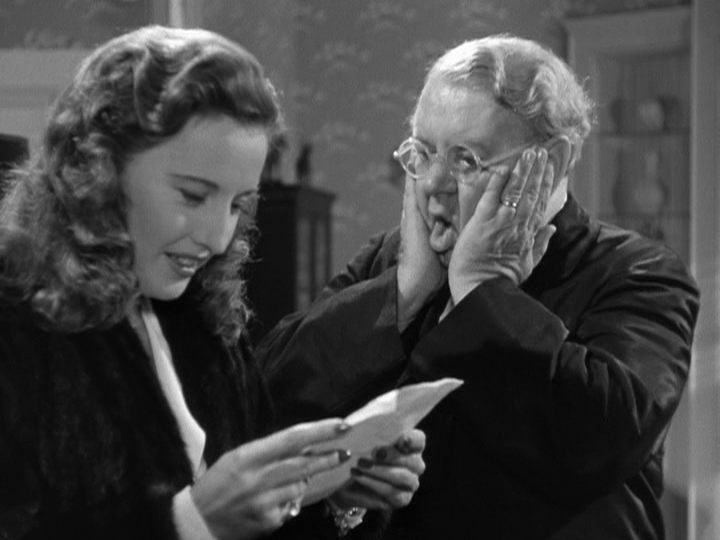
Christmas in Connecticut Sakall reunited with Stanwyck for this screwball comedy about a homemaking columnist who isn’t married and doesn’t have any kids. Cuddles plays her good friend, a chef named Felix, who is soon promoted to uncle. In my opinion, this is the quintessential Cuddles role, featuring all the befuddlement and exasperation for which he is known, together with the classic phrase, “It’ll be hunky-dunky,” Cuddle-ese for “hunky-dory.”
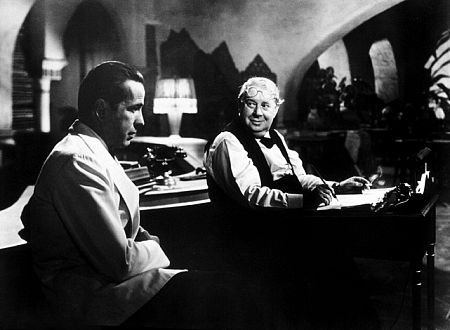
Casablanca As mentioned above, Sakall was unwilling to appear in this film. He tried to get Warner Brothers to pay him four weeks’ work, but the studio would only agree to three. His name was misspelled in the credits. But the character is essential to the story and serves as a sympathetic counterpoint to Humphrey Bogart’s brusque Rick.
*San Antonio starred Errol Flynn as a cowboy fighting cattle rustlers and Alexis Smith as the singer who falls in love with him. Sakall plays the singer’s manager, who repeatedly refers to riderless horses as “empty horses.” This phrase was most likely borrowed from, and a dig at, Casablanca director Michael Curtiz, with whom Flynn and David Niven notoriously clashed while filming Charge of the Light Brigade. (Niven called his second autobiography Bring on the Empty Horses.) There is at least one other connection to Casablanca: Dan Seymour, who played the bouncer Abdul, appears uncredited in San Antonio. The entire film is available on YouTube.
** Sakall’s nearest famous neighbors at Forest Lawn are the Ruggles brothers. Actor Charlie is in the same row; director Wesley is in the next row, across from Charlie.
It seems to me that most film fans are familiar with Universal’s 1931 version of Dracula. Starring Bela Lugosi in the role that made him a star, it’s still a popular choice at Halloween, and it’s still capable of creeping you out. However, many are unaware of, and fewer still have seen, Universal’s Drácula, a Spanish-language version, also from 1931. Instead of Lugosi in the title role and Helen Chandler as Mina, en el versión español there are Carlos Villarias and 21-year-old Lupita Tovar as Eva (like Mina, but, as we’ll see, different). While Tod Browning shot the English version during the day, George Melford helmed the Spanish version by night on the same sets. The two productions also shared some of the same crew, who were able to learn from any mishaps or discoveries that occurred during the day. Browning’s version began filming on September 29, 1931; Melford’s on October 23.
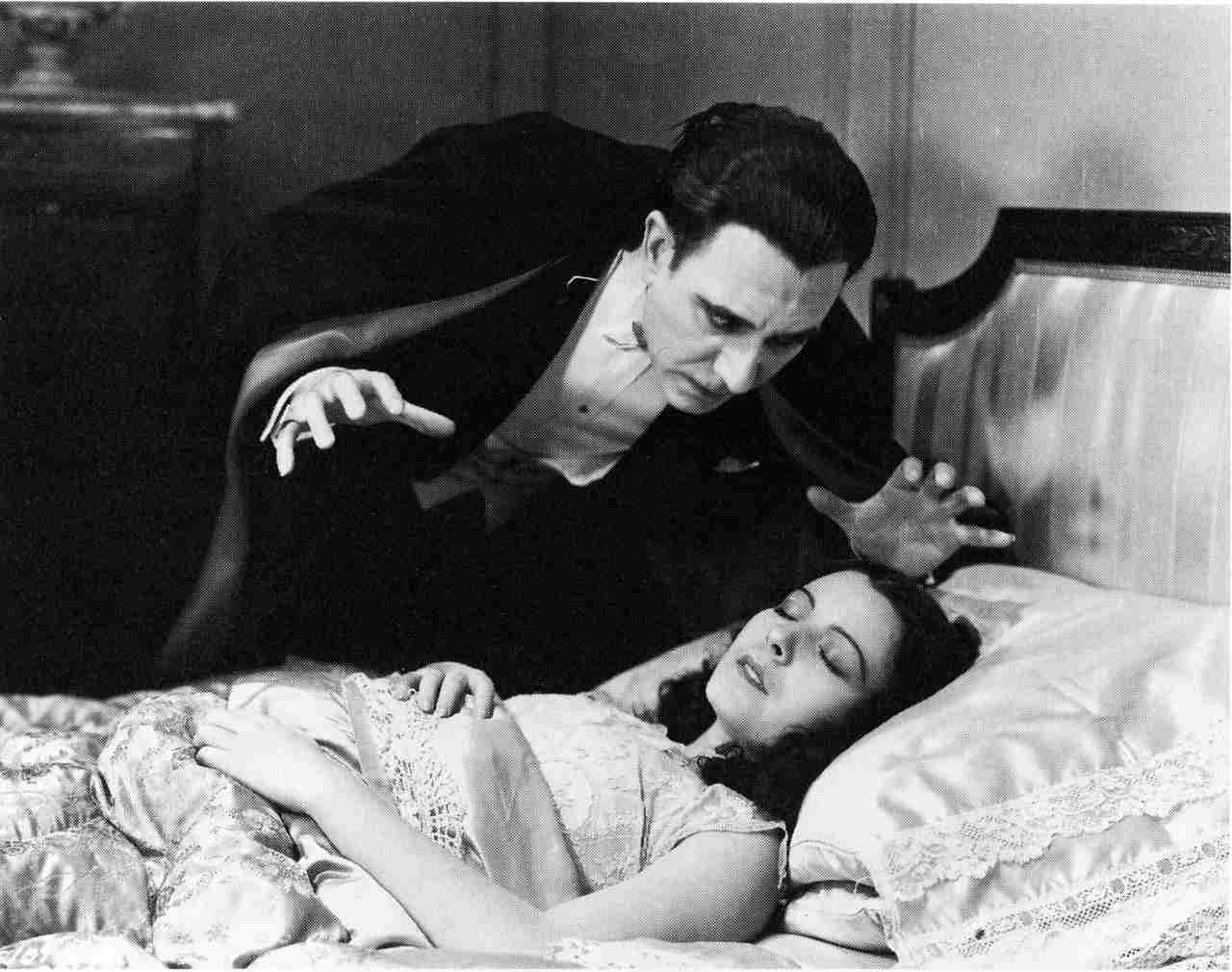
Drácula (Carlos Villarias) menaces Eva (Lupita Tovar) in Universal’s Spanish-language version of DRACULA (1931).
The Depression had taken a slice of Universal’s profit pie, and, with the advent of sound, producing films for the once-lucrative foreign markets had gotten more expensive. A silent film could play anywhere in the world with an update to the titles, but effective dubbing was in the future. From The Vampire Book:
Universal’s Czechoslovakian-born executive Paul Kohner suggested a solution to the studio’s head, Carl Laemmle, Jr.: shoot foreign language versions of motion pictures simultaneously with the English versions, thus cutting costs by using the sets more than once. Kohner also argued that salaries for foreign actors and actresses were far less than those of Americans. Laemmle appointed Kohner head of foreign productions. The first result was a Spanish version of The Cat Creeps, a talkie remake of The Cat and the Canary, which Universal had originally done as a silent film. Released in 1930 as La Voluntad del Muerto, it was an overwhelming success in Mexico and made actress Lupita Tovar a star.
Kohner decided to make a Spanish version of Dracula and moved quickly to secure the youthful Tovar for the lead before she could return to Mexico. He chose Carlos Villarias (or Villar) for the role of Dracula, and secured a capable supporting cast with Barry Norton (“Juan” or Jonathan Harker) , Eduardo Arozamena (Abraham Van Helsing), and Pablo Alvarez Rubio (R. N. Renfield).
Not all was smooth sailing. In 2008, at the age of 98, Tovar recalled the vampire-like hours the Spanish-language cast and crew kept, plus another slight detail…Melford didn’t speak Spanish.
Despite any difficulties during the shoot, the Spanish-language version has everything the English-language version has, and more. The camera shakes off that early-talkie stasis and actually moves, following characters in pans or swooping tracking shots. The lighting is more complicated and the scenes which rely on effects are technically better; for instance, when Dracula appears out of a cloud of smoke. Tovar’s characterization of Eva is more dynamic, and she was given a more realistic wardrobe, than Chandler as Mina.
Lupita Tovar, c. 1930.
The only deficiency in Drácula is unfortunately…Dracula himself. Villarias’ performance, especially when compared with Lugosi’s, seems exaggerated and tends to evoke more laughter than fear. When I saw the film on the big screen a couple of years ago, the audience couldn’t help but laugh, during even the most suspenseful and/or horrifying scenes. I guess it could have been just a bunch of people catching the giggles from each other; you can judge for yourself because the whole movie is on YouTube. [Edit: It’s no longer on YouTube, watch for it at your local arthouse.]
Villarias aside, Kohner certainly delivered value for money at Universal. Drácula cost just a tenth of what the English-language version had. Though it disappeared for a while in the mid-twentieth century, a revival in the 1990s returned it to prominence and many critics now rate it more highly than its English-language counterpart.
According to Michael Mallory, writing in Universal Studios Monsters: A Legacy of Horror, Kohner had another motive besides saving money for making Dracula in Spanish: preventing Lupita Tovar from resuming her career in Mexico. Mallory maintains that Kohner was “madly stricken” with Tovar, who wanted to pursue opportunities at home, and that the producer’s thrifty idea was at least in part a scheme concocted to keep the beautiful actress in the U.S. and on the lot. Whether this is true or not, Kohner and Tovar married in 1932 and remained together until Kohner’s death in 1988. Their daughter, Susan Kohner, who played Sarah Jane in Imitation of Life, had two sons — Paul and Chris Weitz, the writer/directors responsible for About a Boy, In Good Company, and yes, American Pie.
A few days ago I was honored to receive the Liebster Award from Iba at I Luv Cinema and from Ruth at Flix Chatter and I couldn’t be more surprised and grateful. It’s a really cool idea for a blog event.
The rules:
Each person must post 11 things about themselves.
Answer the 11 questions the person giving the award has set for you.
Create 11 questions for the people you will be giving the award to.
Choose 11 people to award and send them a link to your post.
Go to their page and tell them. I think letting people know on Twitter is cool.
NO TAG BACKS. Although I will answer my own questions.
A movie is a couple hours, but a TV show is a much lengthier commitment. I only watch two shows, Mad Men and The Vampire Diaries. Don’t knock TVD unless and until you’ve actually watched a couple episodes of it 🙂
I love anything French, and any book/film about or taking place in France. The 2011 Three Musketeers? Yep, I saw it, it was actually pretty good.
Related to that, I want to write about French film and film noir more often.
My dad and my husband’s dad went to the same high school.
I have three tattoos and am working on a fourth.
One of the people I most admire is the inventor James Dyson for his creativity and resilience. Plus, if you have furry pets, the Dyson vacuum cleaner will change your life.
I believe in that astrology stuff (I’m a Taurus). It isn’t just your sun sign, it’s where all the planets are in your whole chart. I’ve been a lot happier since I started to rely more on astrology and my intuition.
Over the past few years, I’ve lost around 100 lbs. and am still dropping.
Now, my answers to Iba’s questions:
1. Lord of the Rings or Harry Potter?
What a question! Wow. While I read The Hobbit and The Lord of the Rings first, Harry Potter has the slightest edge. Don’t tell my husband.
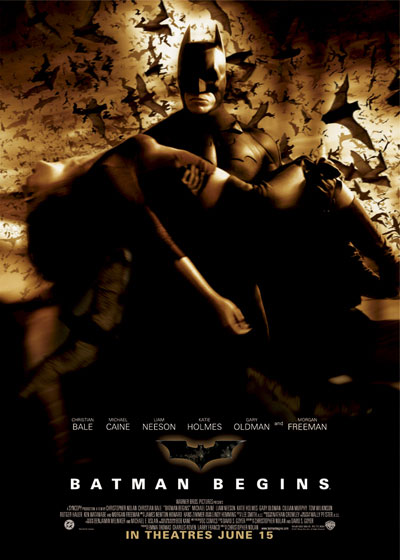
I waited 2 or 3 hours for Christian Bale in BATMAN BEGINS back in 2005
2. What’s the longest you have waited in line for a movie?
Two or three hours. Not long, compared to other people.
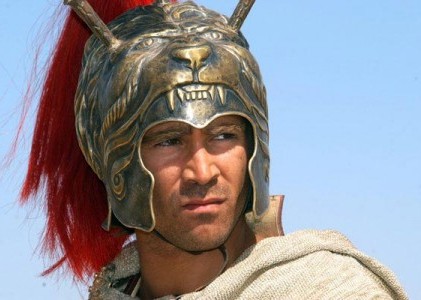
No disrespect meant, but ALEXANDER (2004) just wasn’t my thing
3. Have you ever fallen asleep in a film? If so, which one?
Never, though I got pretty drowsy during Alexander(2004).
Pretty weird, huh?
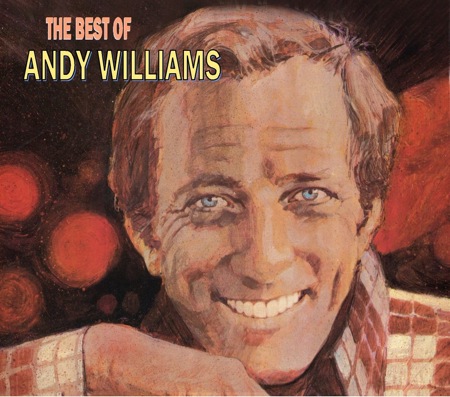
4. What was your first concert experience?
Andy Williams. I was eight or nine, I think. So hip!
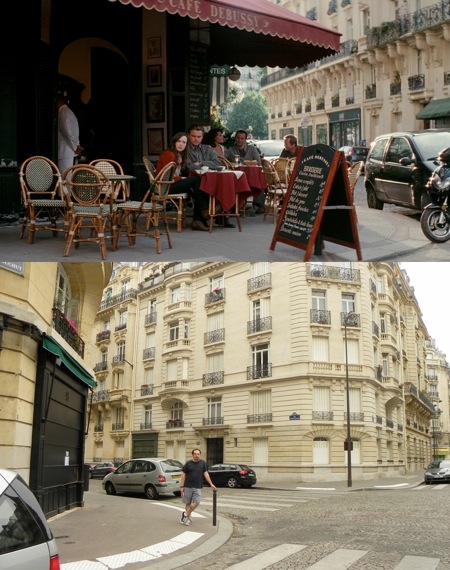
Paris 2010. Tim in front of the café Da Stuzzi, aka Café Debussy in INCEPTION
5. If you could go anywhere in the world, where would it be?
Back to Paris, and I wouldn’t ever leave.
6. Any hidden talent(s)?
Black belt designer/art director and Adobe Creative Suite ninja. I have other talents, but they will remain hidden.
7. Subtitles: Yea or Nay?
That’s a definite yea! Dubbing is horrible to watch, the voices never match the actors, and you can pick up and/or practice another language by watching subtitled movies.
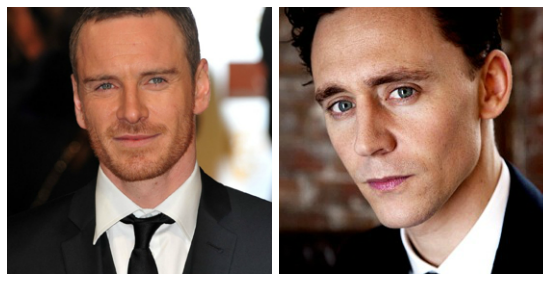
With Michael Fassbender and Tom Hiddleston on board, THE ENGLISHMAN’S DAUGHTER is sure to be awesome.
8. What book would you like to be seen made into a movie? The Englishman’s Daughter by Ben McIntyre. It’s one of those non-fiction novels, about English soldiers who get caught in a French village behind the enemy lines during World War I. That’s all I’m going to say, you should read it! But it’s short and McIntyre’s style is fairly cinematic; it would make an excellent film. I think Joe Wright, François Ozon, or Guillaume Canet (Ne le dis à personne) should direct it, Michael Fassbender and Tom Hiddleston should be two of the soldiers, and all my favorite French actors should be in it — Marion Cotillard, Mèlanie Laurent, Audrey Tautou, Catherine Deneuve, Alain Delon, Jean Rochefort, Daniel Auteuil, Gilles Lelouche, and Gaspard Ulliel.
9. What is the first thing you would do if you won the lottery?
After I took care of all my entire family’s financial obligations, I’d buy a movie theater.
10. Have you ever snuck into a film without paying for it?
Yes, I have. I did actually pay, but I saw another film after the one I paid for. I guess that’s half price.
11. What is your favorite silent film?
I haven’t seen that many, although I’ve seen more in the last six months than I have my whole life. I’ve got a soft spot in my heart for The Artist, the “silent film gateway drug,” but I also love Sunrise (1927) and Das Cabinet des Dr. Caligari (1919).
And, my answers to Ruth’s questions:
1. Who’s your favorite movie actor who’s currently starring in a TV show?
I guess Jon Hamm or Ian Somerhalder. They have both been in a couple movies. Or maybe Kristen Wiig, although she’s not on TV anymore.
2. Could you date someone who does not love movies?
No.
3. What makes you want to have a movie blog?
I write a column for Examiner about classic movies in Detroit and I wanted to branch out and write about current movies and other classics. Also, it gives me somewhere to put all my movie babble instead of driving everyone around me crazy with it. I have to say, this blog wouldn’t exist without the encouragement of Ruth (Flix Chatter).
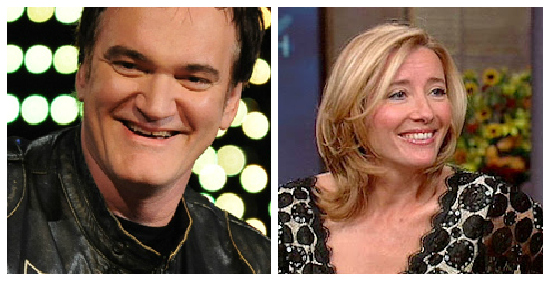
Science fiction film, Emma Thompson plays the lead. Call me, QT!
4. Which director/actor collaboration you’d like to see [it has to be people who have never worked together before]?
Quentin Tarantino and Emma Thompson.
5. What dish are you good at making?
Any kind of Italian or Mexican food. I also make a mean potato salad and the best pancakes.
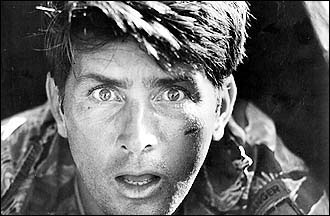
I met Martin Sheen considerably after this picture was taken
6. Any encounter with a celebrity you care to share?
I met Martin Sheen once. He’s about my height and seemed like one of the nicest people you’d ever want to meet.
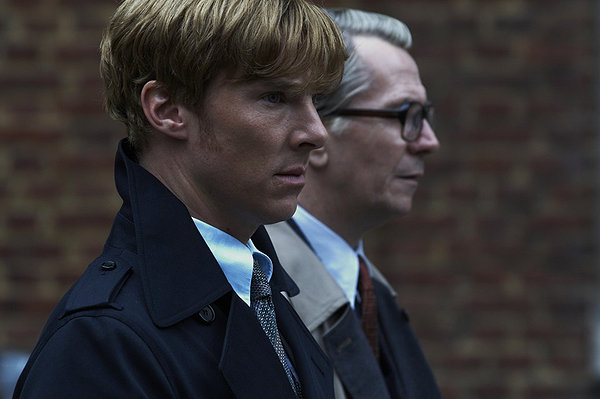
TINKER TAILOR SOLDIER SPY is set mostly in London
7. Since the Olympics is still going on, what’s your favorite movie set in London?
There’s so many…I’ll stick to the most recent one I really liked, Tinker Tailor Soldier Spy.
8. Which is your favorite movie writer [could be a journalist, novelist, etc.]?
Hildy Johnson (Rosalind Russell) in His Girl Friday (1940-above) or Jo March (Winona Ryder) in Little Women (1994).
9. Which do you prefer: sweltering heat vs. cool, rainy days?
You need some of both, and I really like sweltering heat, but I like cool rainy days just that little bit more.
I broke the rules on this one…MAD MEN is not a movie. [Image from Down The Retro Rabbit Hole]10. Favorite outfit/costume from a movie?
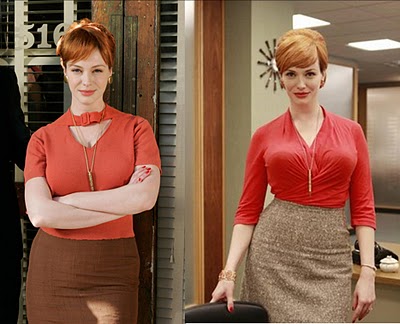
The costumes in Marie Antoinette (2006). Myrna Loy’s dresses in Libeled Lady. Peppy Miller’s outfits in The Artist, especially the shoes. And Joan Holloway Harris’ entire wardrobe on Mad Men. I know it’s not a movie, but it’s not often that a fictional character has my body type 🙂
11. Which actor/actress you initially detest but then slowly warming up to? [Feel free to reverse the question, that is an actor you initially love but now can’t stand.]
I never detested Channing Tatum, I just didn’t understand why he kept getting movies…he works a lot. But he was pretty good in The Eagle and hilarious in 21 Jump Street, which is getting its own sequel.

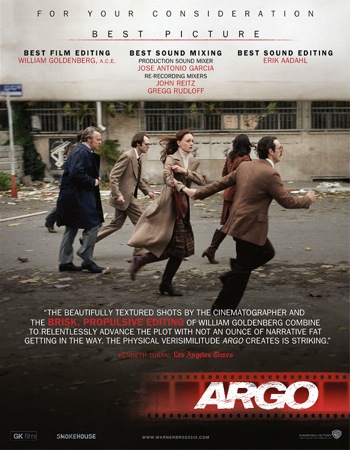 Best Picture — While I’ve seen less than half the nominees in this category, and I suspect that Moonrise Kingdom belongs in it, I’m really happy to see movies from so many different genres get the nod. We’ve got a detective story, a Western, a couple of fantasies, historical drama, a musical, and even a rom-com that shows that two dysfunctional people can have a functional relationship. Not that Silver Linings Playbook is going to win…it looks like that distinction will go to Argo, with which I’m completely happy.
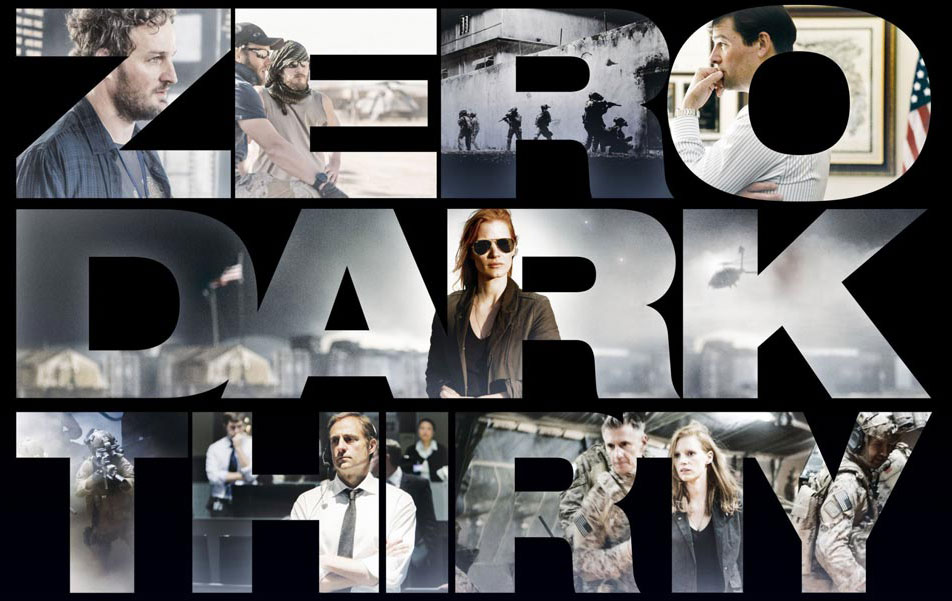 Maybe the reason ZDT is so controversial is because a woman is the lynchpin of the ultimately successful “greatest manhunt in history.” Maybe it’s because Jason Clarke makes Dan, Maya’s colleague who does a lot of torturing, funny and likable, and that makes people uncomfortable (could just be me). Whatever the reason, the controversy surrounding this film has overshadowed its actual merit. There seems to be more outcry against a fictional piece of entertainment than there was against a real-life U.S. policy. Which is sad because it takes a ton of talent to retell a now-familiar story that is more static than dynamic in such an absorbing and visually stunning way. Yet this didn’t even get a nomination for Cinematography.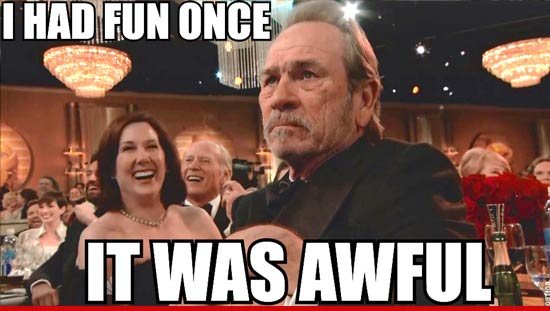










 Paula's Cinema Club