Frank McHugh was perhaps the epitome of a reliable supporting player. You know this guy — you might not know his name, but you know his face.
As a Warner Brothers contract player in the ‘30s and ‘40s, no one backstopped stars like Bing Crosby, William Powell, and James Cagney better than McHugh. He was an expert at sheepish expressions, jittery laughs, and screwball action, usually serving as comic relief and providing larcenous or romantic complications when required.
McHugh was born into a stage family on May 23, 1898, and appeared in vaudeville with his siblings Matt and Kitty by the age of 10. Drawn from his stage career by the arrival of talkies, he arrived in Hollywood in 1930, signed with Warner Brothers almost immediately, and appeared in nearly 90 films in his first 10 years with the studio.
He was also known as a central member of the Irish Mafia, the tight-knit group of Irish-American actors that included Cagney, Pat O’Brien, Spencer Tracy, Allen Jenkins, Frank Morgan, and Ralph Bellamy. They preferred to be known as the “Boys’ Club,” and Morgan and Bellamy were actually of German and English/French descent respectively, but these real-life ties translated well onscreen. McHugh and Cagney, for instance, appeared together in 12 pictures; McHugh and O’Brien in 11.
Frank McHugh and James Cagney bottle a little fun in THE ROARING TWENTIES (1939).
What you may not know about McHugh is the valuable real-life part he played during World War II.
Like many in Hollywood, he enthusiastically supported the war effort, joining the Hollywood Victory Caravan in May 1942. This show traveled the United States, featuring performances by the biggest stars, with the ticket proceeds going the Army and Navy Relief Fund.
The star-studded Hollywood Victory Caravan at a stop in Minnesota
Mark Sandrich, director of the Fred Astaire-Ginger Rogers films, and Alfred Newman, Twentieth Century Fox’s musical director, organized the Caravan as a musical revue. It featured, at various times, Crosby, Cagney, O’Brien, Cary Grant, Charles Boyer, Claudette Colbert, Charles Coburn, Joan Blondell, Joan Bennett, Eleanor Powell, Desi Arnaz, Bert Lahr, and Groucho Marx, along with McHugh (leaning forward in the top row above). In August and September of the same year, he went to England with a USO tour, the American Variety Show.
After those tours, McHugh continued his war efforts, producing his own show and taking it to the troops in Europe two years later. In November and December 1944, just in time for the Battle of the Bulge, “McHugh’s Revue” toured the front lines in Belgium, France, Holland, and Germany.
McHugh loved meeting and chatting with the servicemen, and the feeling was mutual. He received a citation from the Army, in which General Raymond S. McLain referred to the Revue as “an oasis in this desert of hardship and suffering….Your show was sparkling, and left a refreshing atmosphere in the spirit of many battle weary soldiers.” This certainly was McHugh’s most important, and possibly most loved, supporting role.
Many materials related to McHugh’s wartime activities, including his own account of McHugh’s Revue, are preserved in the Frank McHugh Papers at the New York Public Library, which I hope to see someday.
This post is part of the 2013 What A Character! blogathon, co-hosted by myself, Kellee of Outspoken and Freckled, and Aurora of Once Upon A Screen. Be sure and check out all the Saturday posts.
In our classic movie corner of the world, the eleventh month of the year is not dedicated to family gatherings or special sales. Here we celebrate crime-laden streets, shadowy figures, and suspicious cops. This is Noirvember.
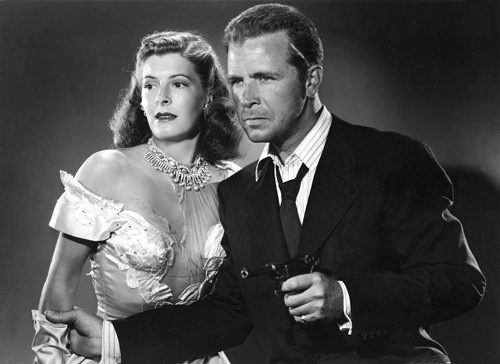
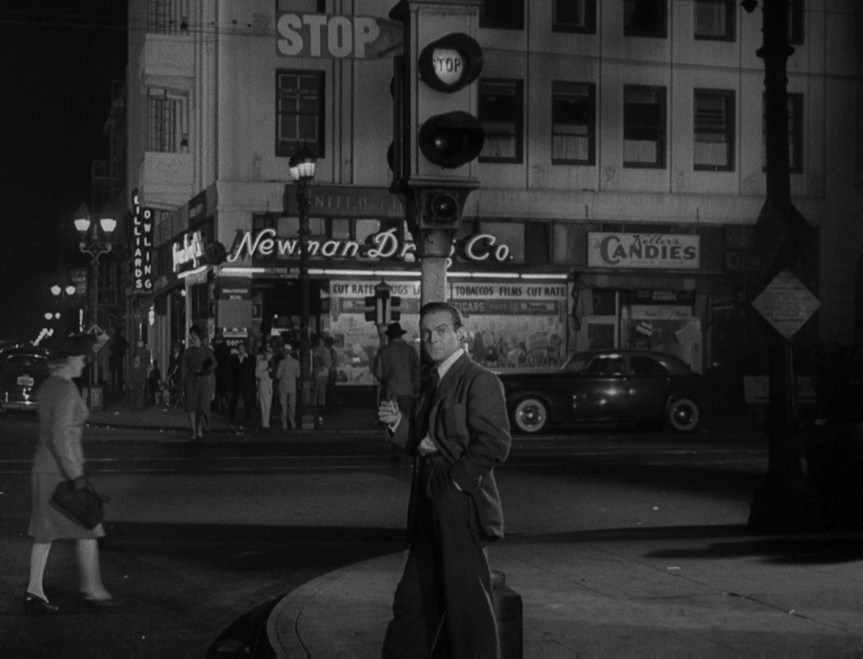
Micheline Cheirel and Dick Powell in CORNERED (1945)
In celebration of all things noir, TCM Party is joining Warner Archive Instant for a series of tweet-a-longs in November. We’ve chosen favorite films noir from the Warner Archive Instant offerings.
Using the hashtags #TCMparty and #Noirvember, we will gather to watch and tweet along as follows (all times are Eastern):
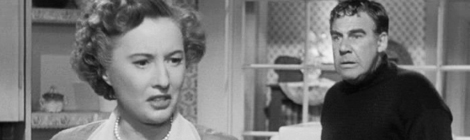
Sunday, November 3 at noon – Guest host Aurora [@CitizenScreen] has chosen Fritz Lang’s CLASH BY NIGHT (1952) starring Barbara Stanwyck, Robert Ryan, Paul Douglas and Marilyn Monroe.
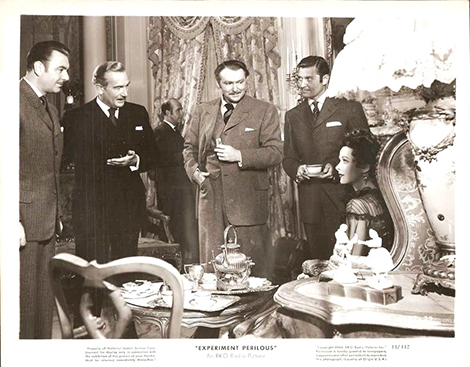
Tuesday, November 12 at 8 p.m. – @TCMparty host Paula has chosen Jacques Tourneur’s EXPERIMENT PERILOUS (1944) starring Hedy Lamarr, George Brent and Paul Lukas.
Saturday, November 16, time TBD – Special guest host Karen [@TheDarkPages] has chosen Vincent Sherman’s THE DAMNED DON’T CRY (1950) starring Joan Crawford, David Brian, Steve Cochran and Kent Smith.
@TCMParty host Trevor has chosen three noirs: Thursday, November 21 @ 8 p.m. – Jack Bernhard’s DECOY (1946) starring Jean Gillie, Edward Norris and Robert Armstrong. Sunday, November 24 @ noon – Richard Fleischer’s ARMORED CAR ROBBERY (1950) starring Charles McGraw, Adele Jergens and William Talman. Thursday, November 28 @ 8 p.m. – Edward Dmytryk’s CORNERED (1945) starring Dick Powell, Walter Slezak and Micheline Cheirel.
We hope everyone will want to participate, as it’s sure to be a fun, informative time. If you already subscribe to Warner Archive Instant, you’re all set. If you don’t, you can sign up for a free two-week trial here.
Either way, you need only be on Twitter at the scheduled time, use the correct hashtags, and wait for the host to signal, “START THE MOVIE,” to enjoy online Noirvember.
We’re thrilled to be presenting these Warner Bros. film noirs as part of the excitement of #TCMparty, and hope this is the first of many collaborations between our enthusiastic film-loving community and the studio with deep dark noir roots.
Note that these Noirvember tweet-a-longs are in addition to the regular #TCMparty events, which follow along to scheduled programming on TCM (dates listed below). Please visit the TCM Party tumblr for more info.
Wednesday, November 6 @ 8 p.m. THE KILLERS (1946)
Wednesday, November 13 @ 8 p.m. GUNFIGHT AT THE O.K. CORRAL (1957)
Tuesday, November 19 @ 8 p.m. THE MALTESE FALCON (1941)
Wednesday, November 27 @ 8 p.m. FIELD OF DREAMS (1989)
Anybody who has either read this blog for a while or attended a TCM Party knows that I have been watching old movies since I was a young child.
During the summer when my mom was working, I would be at my grandparents’ house, watching the local afternoon movie showcase, Bill Kennedy At The Movies, hosted by the titular raconteur/retired actor. For those who grew up outside of the metro Detroit area and/or were born after 1986 or so, picture a slightly-unkempt, more rambling, hammier Dean Martin. At least that’s how it seemed at the time.
Slinging both fascinating anecdotes — particularly about the films in which he’d had a role — and barbs that mostly went over my head, Kennedy owned those hours after noon and before the 6 o’clock news. He showed pretty much anything old. The Best Years of Our Lives is one that I particularly remember. I can remember just bawling during it, without even really knowing why.
In those days, respectable Italian girls lived with their parents or their husbands, certainly not by themselves or with other girls. Not in my mother’s family. Thus if I was allowed to stay for the evening, I got to see my mother’s oldest sister, Mary Rose Romano, when she arrived home from work. Born the same day as Elizabeth Taylor, February 27, 1932, Aunt Mary seemed just as glamorous and self-possessed. Unlike my parents, she worked in a bank downtown, and wore suits to the office; also scarves, cute shoes, and amazing jewelry. (Also unlike my parents, she liked to take me shopping for clothes.) Though (I now know) she was probably really tired, we’d always talk about whatever I’d watched, because she knew all about Old Hollywood — the movies, how they were made, the actors and actresses. No one has had more of an influence on my film taste than Aunt Mary.
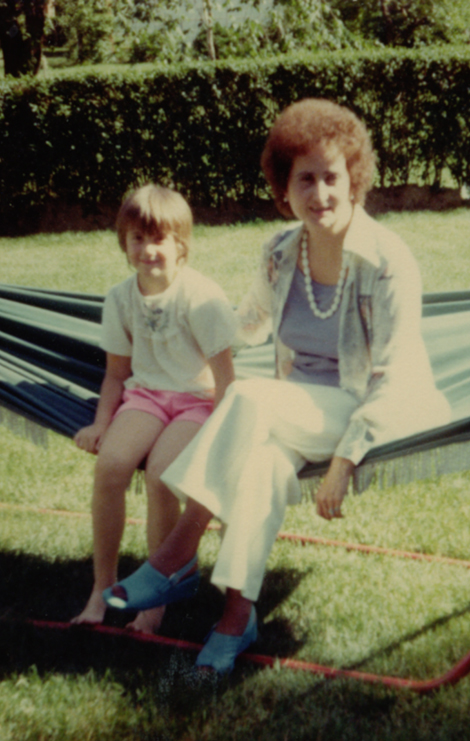
Me and my aunt, c. 1977
I believe her favorite movie was Gone With The Wind. Back in the day, before cable, really the only way to see it in one piece was on network TV in the evening. Even broken up with ads, it was powerful stuff. She told me all about the burning of Atlanta being filmed first, Clark Gable’s dentures, the long process of casting Scarlett, and how Leslie Howard was a spy and died in The War. This was the first time I was conscious of a film being a purposeful creation, the result of a collaborative effort by many people. Since then, I’ve learned more about the time period portrayed in the film, and I have a fair amount of ambivalence about it, but to this day, if I’m home, I can’t pass it up.
Fast forward 20 years or so. My mother died of cancer in 2002, and afterwards my husband and I began to visit my aunt (now in her 70s) and my grandmother (in her late 80s) every Sunday. The routine almost never varied: lunch at around noon, then movies on TCM until 4 or 5 p.m., accompanied by their inevitable dialogue, which I affectionately call “Who’s Dead?”
— “Jesus, everyone in this movie is dead.”
— “Yeah, there’s so-and-so. He’s dead.”
— “There’s so-and-so. She’s been dead forever.”
I think it may be an Italian thing.
These Sunday afternoons were when I realized how much I had absorbed from her as a kid. She loved the classics and had great respect for both their craft and their magic, but at the same time, she could be irreverent. In other words, she would have fit right in at a TCM Party. Among these random recollections, imagine the quotes from Mary are tweets and you’ll get the picture (may contain spoilers):
Psycho: “That sound [the stabbing in the shower] is somebody knifing a melon. Nobody could believe Janet Leigh got killed off. It just didn’t happen. That Hitchcock was a weirdo.”
Now, Voyager: We watched this together so many times that it’s almost painful to watch now. My aunt looked a bit like Miss Davis, and had her crisp enunciation, and I always got the impression from her comments that she could relate to Charlotte Vale, but I can’t know for sure.
Any Joan Crawford movie: “Watch out…she packs a wallop.”
Any appearance by Adolphe Menjou or Ray Milland: “He’s such a sleaze.”
Jeremiah Johnson: Robert Redford was a fave of ours, particularly in The Sting and this downer of a 1970s beard-tastic Western. When the widow freaks out on Jeremiah and forces him to take her son along with him, I remember asking, “What is she going to do? How is she going to get food out there by herself?” Mary shrugged. “She’ll go over to craft services, they’ll find her something.”
Victor/Victoria: “Has this guy [James Garner as King Marchand] ever really looked at Julie Andrews?”
On The Waterfront: This is the last film we ever watched together, a couple of weeks before Tim and I saw it at the TCM Film Festival with an introduction by Eva Marie Saint. I so wish my aunt could have gone with us. To Terry Malloy [Marlon Brando]: “She’s not interested in you, you dumb lug.” To Edie Doyle [Saint]: “He’s no good. Go back to school and study.”
The Pink Panther: [Gales of laughter] “What an idiot. He’s so stupid. He’s so silly.”
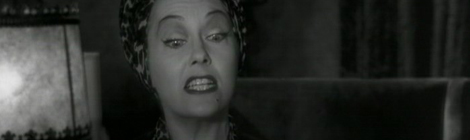
Sunset Blvd.: Norma Desmond: “They had to have the ears of the whole world too. So they opened their big mouths and out came talk. Talk! TALK!” Aunt Mary: “Thank God. Who wants to read a movie?”
Two Mules for Sister Sarah: “She’s a pretty lousy nun.”
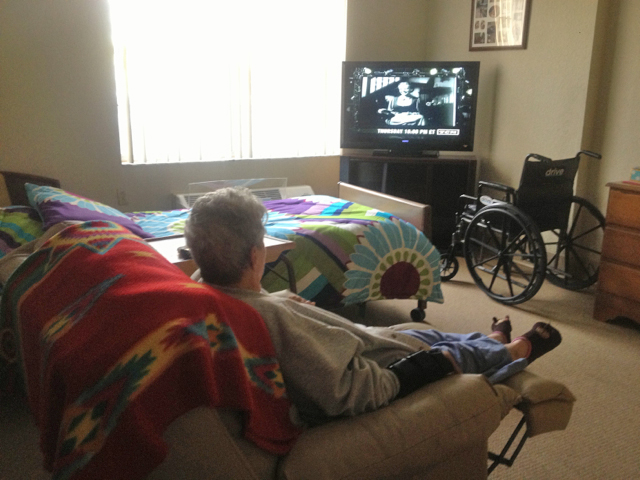
Watching “the channel,” April 2013
My Aunt Mary passed away on September 27, 2013. Our family and everyone who knew her will remember her unqualified generosity, her style, and her sense of humor, but I also have her love of the movies, and because of that, she is still with me.
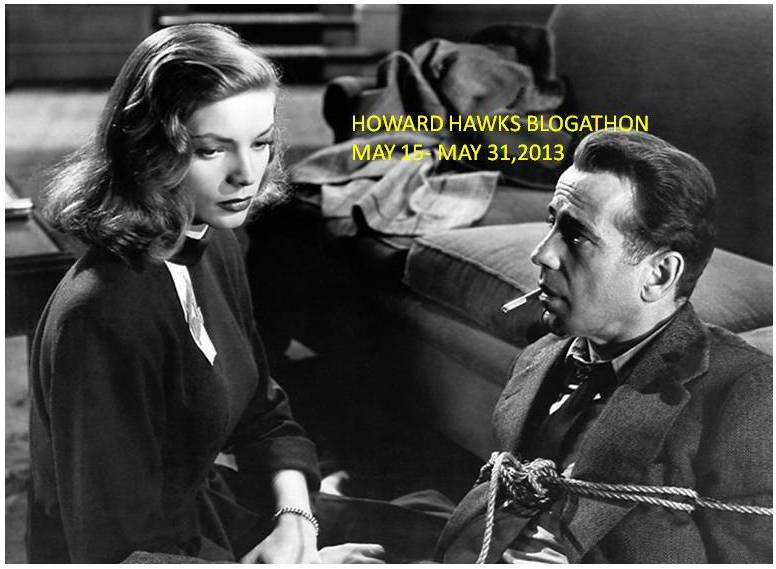
This post is part of the Howard Hawks Blogathon organized by Ratnakar at Seetimaar – Diary of a Movie Lover. The blogathon began on May 15 and runs through May 31. Check out these posts, there’s no one more deserving of a two-week tribute from some great bloggers than Hawks.
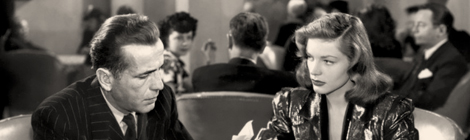
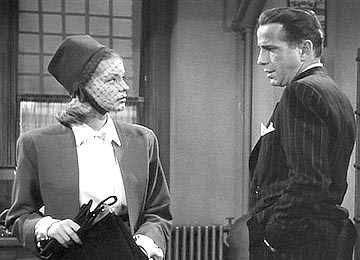
The image above is taken from Hawks’ The Big Sleep, which has a reputation for being a great yet somewhat incomprehensible film noir. No one can really deny the gritty atmosphere created by Hawks and his team, or the unmistakable chemistry between the leads, Humphrey Bogart and Lauren Bacall, which Hawks displayed to great effect. But, due to factors beyond Hawks’ control, the plot is a bit difficult to follow, supposedly even for the author of the book on which the film was based, Raymond Chandler. Any Google search will turn up the story that, when asked (by Hawks and the film’s writers) which character killed another, Chandler didn’t know either.
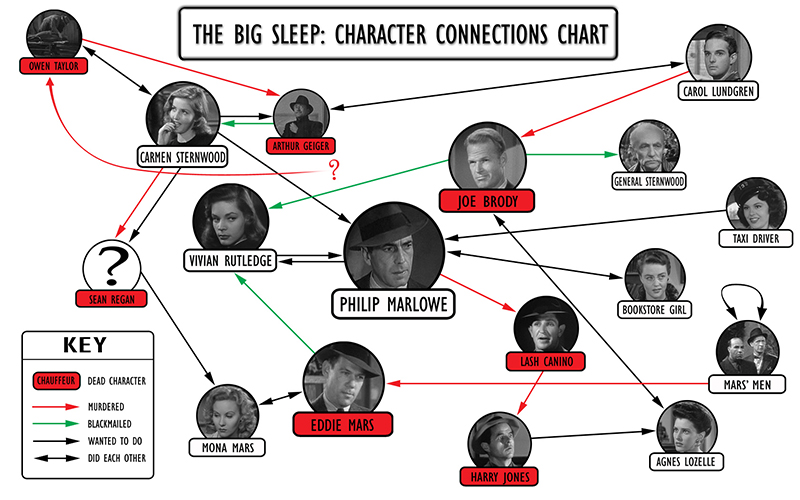
Whether the Chandler anecdote is true or not, it is certain that the transition to film further complicated the author’s already convoluted novel. How did this happen? Spoiler alert: There are plenty in here! If you haven’t read or seen The Big Sleep and you care about spoilers, stop reading and come back once you have read or seen it. Even if you have read the book or seen the film, you might want to refresh your memory before reading the rest of this post. This SparkNotes plot summary of the book is the briefest I’ve found. A diagram is always helpful as well.
Mostly accurate diagram from The Reelist. Though images from the film are used, the events depicted are those of the book.
Two major circumstances upon which the book’s cohesion depends ran afoul of the Hays Production Code. The first was that Carmen Sternwood (Martha Vickers in the film) kills Sean “Rusty” Regan (before Marlowe enters the story), making her older sister Vivian Regan (Vivian Rutledge in the film, played by Lauren Bacall) both a widow and an accessory to murder. The second is that Arthur Gwynne Geiger, who is blackmailing Carmen with compromising pictures, is a pornographer who is in a homosexual relationship with Carol Lundgren (who murders Joe Brody because he thinks Brody killed Geiger). Whew! Anyway, neither of these plot points could stand under the Code. The identity of Regan’s killer is fuzzy in the film; it’s implied, but never actually stated, that Eddie Mars killed Regan for messing around with Mars’ wife. Mars then evaded justice and collected blackmail from Vivian by convincing her that Carmen killed Regan. Neither the pornography, illegal in 1944, or the homosexuality are ever referred to; thus Sternwood family chauffeur Owen Taylor’s motivation for killing Geiger is unclear, and Lundgren’s motivation for gunning down Brody is greatly diminished. So that’s one layer of complication.
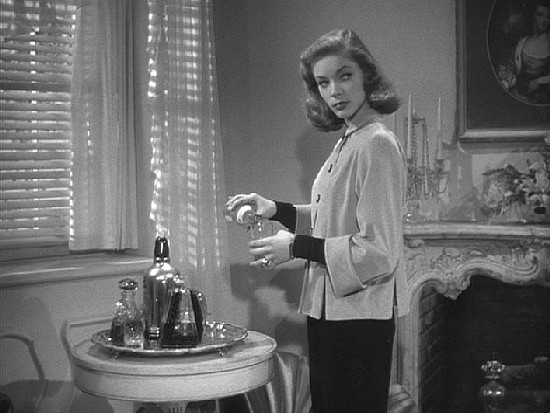
“I sat down…and looked at Mrs. Regan. She was worth a stare. She was trouble.” Lauren Bacall as Vivian
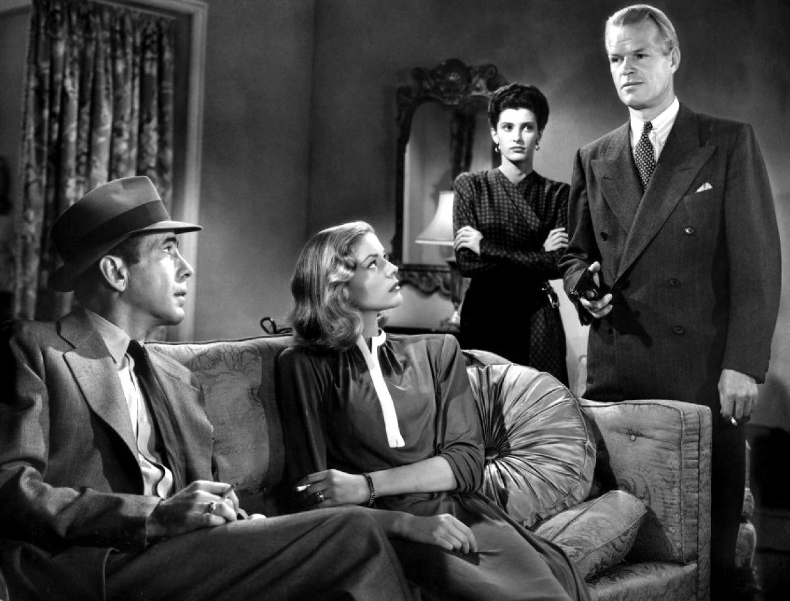
Further changes which don’t seem to significantly affect the plot were also made to the source material, to amplify Bacall’s role and strengthen Marlowe and Vivian’s relationship. Vivian is present in two major scenes from which she is absent in the book, one at Joe Brody’s apartment, and one at Eddie Mars’ hideout near the end. In the latter scene, it is Vivian, not Mona Mars, who unties Marlowe, helps him to escape, and accompanies him back to LA. There is a scene of her singing at Eddie Mars’ casino which is reminiscent of her début, Hawks’ To Have and Have Not. And her last name is changed to Rutledge; she is still a widow but not Regan’s, which arguably reduces any incentive she may have to find Regan. Some of these changes affect later scenes in the film, but they don’t seem to affect the overall action of the story.*
In the book, Vivian is not present in the scene at Joe Brody’s apartment. Her presence has no material affect on the plot though, because she’s gone by the time Brody is shot by Carol Lundgren
However, there are actually two versions of The Big Sleep, and this is where things really start to get cloudy… The first version, which is closer to the book, began shooting in October of 1944, and was completed in January 1945. Though it was ready for release in March of that year, it was shelved, and ultimately not released in its original form, for two reasons. First, World War II was rapidly winding down and Warner Brothers, like the rest of the studios, was looking to fast-track war-themed properties into cinemas as quickly as possible. A detective story without a time-sensitive theme could wait. Thus, Bacall’s film with Charles Boyer, Confidential Agent, though shot after Sleep, was released before.
Which brings us to the second reason another version of Sleep exists: Bacall received reviews so horrible that they seemed to wipe out all the acclaim she’d received for To Have and Have Not. I’ve seen the film and I think they were overreacting. She is certainly miscast as an English aristocrat; the role should probably have gone to Margaret Lockwood or someone like that. But it’s Bacall, and she isn’t as awful as these reviews were. At any rate, her agent, Charles Feldman, who was also Hawks’ agent, wrote a letter to studio head Jack Warner, asking him to order a re-take of a scene which particularly bothered Feldman, known as the “veil scene,” and essentially requesting that “insolent and provocative” scenes, like those in Have Not, be added to Sleep, in order to save Bacall’s career and the film. Warner did order a re-take of the veil scene and the addition of more sassy scenes with Bogart and Bacall. Hawks re-assembled most of his cast and crew and filmed these in January of 1946.
The “veil scene” was cut and replaced with the scene in which Marlowe and Vivian prank the police.
For the 1946 version, which is the version usually shown on TCM and for big-screen revivals, Bacall’s part was further enhanced, and the plot further obscured. For instance, when Marlowe brings Carmen home from Geiger’s house, instead of leaving her with Norris the butler, Marlowe brings Carmen upstairs to Vivian’s bedroom, giving them an opportunity for a saucy exchange. This forces an alteration to the scene in Marlowe’s office which takes place the next day; Vivian can no longer say she wasn’t home the night before. The scene was dubbed over; if you look really closely, you can see it is a little off.
There are other changes, but perhaps the most important one is the deletion of an exposition-rich scene in the DA’s office, in which all the facts were laid bare as Marlowe is questioned by District Attorney Wilde and Captain Cronjager of LAPD. Don’t recognize those names? Both characters were completely cut, as they didn’t make sense without the scene. But it was replaced with this, one of the greatest extended double entendres ever:
To the great credit of Howard Hawks and his cast and crew, most critics and fans appreciate the mood of the film, the noir tawdriness of the characters, and the incandescent spark between Bogart and Bacall, and overlook, or even love, the disorder of the action. The Time magazine review of August 26, 1946 stated, “the plot’s crazily mystifying, nightmare blur is an asset, and only one of many,” and commended Bogart and Hawks for their work. Roger Ebert viewed both versions in 2009, and preferred the 1946:
The new scenes add a charge to the film that was missing in the 1945 version; this is a case where “studio interference” was exactly the right thing. The only reason to see the earlier version is to go behind the scenes, to learn how the tone and impact of a movie can be altered with just a few scenes….As for the 1946 version that we have been watching all of these years, it is one of the great film noirs, a black-and-white symphony that exactly reproduces Chandler’s ability, on the page, to find a tone of voice that keeps its distance, and yet is wry and humorous and cares.
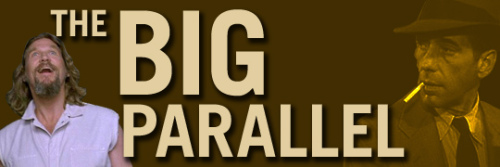
Possibly the most famous fans of The Big Sleep are Joel and Ethan Coen, who paid homage to it with their 1998 classic The Big Lebowski. (A classic doesn’t always have to be old.) There are many connections between the two films, and the best post I’ve seen on the subject is The Big Parallel by John at the droid you’re looking for. Check it out.
* Another aspect of the story that doesn’t seem to affect, well, anything really, is that we’ll never know who killed Owen Taylor. This is the question that so confounded Chandler and everyone else. As stated above, the Sternwood family chauffeur, who was in love with Carmen, killed Geiger because the latter was blackmailing her. Taylor was found murdered in the Sternwood family Packard, sunk off Lido Pier. I’ve read the book and watched both movies a couple of times, and I don’t believe it’s in there. We’ll never know for sure I guess, but I vote for Norris, the butler.
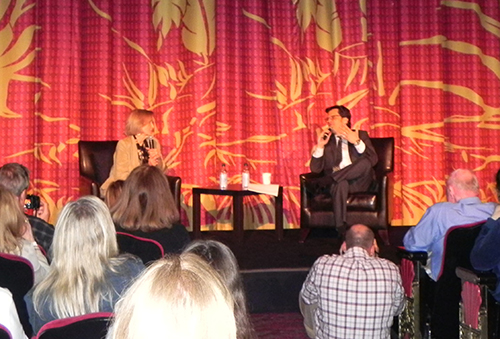
TCM’s host Ben Mankiewicz also did a media call on the Wednesday before TCMFF actually started.
As before, some highlights:
Lawrence Carter-Long, TCM’s co-host for The Projected Image, their series on portrayals of disability on film, will be back. Mankiewicz said, “I learned more from Lawrence Carter-Long than anyone else in 10 years with TCM….He is a resource we’ve used since and will continue to use.”
Mankiewicz loved that TCMFF included Airplane! as part of this year’s travel theme “when it looks like the whole thing was shot for $4.95. ‘See LAX…the inside of an airplane.’ Nonetheless, that’s a travel movie.”
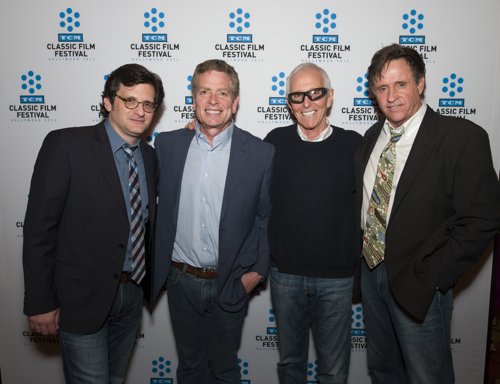
TCM host Ben Mankiewicz with David Zucker, Jim Abrahams and Robert Hays at Saturday’s screening of AIRPLANE! Photo courtesy of TCM
Film Noir Foundation’s Eddie Muller is coming up on TCM Friday nights with a series of around 20 films noir. Mankiewicz likes neo-noirs, particularly three involving John Dahl — The Last Seduction, Kill Me Again, and Red Rock West. “I’d love to make a case for us to show those, those are great films. You can clearly see Dahl had a keen appreciation of ’40s and ’50s film noir.”
TCM is featuring more films from the ’70s and ’80s, but not because there’s some kind of age requirement. “We have a very open mind as to what makes a classic movie. It’s not about years removed from a movie…the movies have to have some emotional connection for people. Because we learned that two-thirds of our audience is under 49 years old, we realized very quickly that most people have not seen most of our movies when they came out, or anytime even close to when they came out. So how did these movies become important to them? It’s probably through family connections, they watched with their parents or grandparents, or, what happens to me sometimes, because we shoot so far ahead, I don’t know what we’re showing, and like you guys, I’ll stumble on to a movie on a Saturday afternoon. As we get better perspective on movies, which does come with time, and as more of those titles become available, I suppose that you might see more ’70s and ’80s movies on TCM, but I always say that with a caveat: nothing is going to stop us from showing the movies we already show….In that sense, our programming won’t change. We always, always want to find something that will be relevant and emotional for our audience. There were a lot of great filmmakers in the ’70s, I think more so than the ’80s, if i could sort of flippantly dismiss an entire decade, which, by the way, was important to me. It’s what I grew up with, what are you gonna do? I can’t change when I grew up. So, i think you’ll see more ’70s and ’80s movies, but not to the extent that we’ll change what we already show.”
He has some choice in which movies he hosts on TCM, but not as much as you might think. “Charlie (Tabesh, TCM’s programmer) knows what I like, but in the end, I’m an employee.”
Re: a 16-year-old girl’s crush on Farley Granger: “It’s not gonna work out for her.”
Mankiewicz believes the Production Code was the result of Fatty Arbuckle’s three trials.
I also got to interview Mankiewicz for some of the shortest-seeming 15 minutes in my life ever. He isn’t the first interviewee from whom I’ve cadged refreshments, but he is nicest.
What’s your process for hosting on TCM? Anywhere from one day to three or four weeks before, they start sending me scripts. And I go through every one of them, and put them in my voice, add stories, take stories out. Same process for Robert. Some of them, when movies start coming back, I realize that what they sent is essentially what I wrote three years earlier, cos I’ll be like, i wrote this and then I’ll change it again, because I’m like, oh that sucked. That’s the basic process. The research department in Atlanta keeps track so that we don’t repeat the same stories. It takes a while to go through 200 scripts. We shoot them all basically in a row in a week. And by the way, it’s super-easy to get confused. I don’t pretend to not have to look stuff up.
Ben Mankiewicz’s notes. Photo by me
[At this point, I’d forgotten the questions I’d prepared. I also remembered something Robert Osborne had said earlier in the day; he studies up on people he’s going to interview because once a reporter looks at his/her notes, it’s no longer a conversation. Yikes. I decided to wing it.] Quentin Tarantino has a litmus test for potential girlfriends. He shows them Rio Bravo to see what their reaction is. Not that you would have something like that now, but did you ever have a film like that, and if so, what was it?
Good question. No, not off the top of my head, is there a film that did that. But I would know whether I connected with people based on what they liked, no question. Obviously from the time I was getting serious about girls, if a girl thought Fletch was stupid, obviously I’m not gonna go out with her. But that was at a time when I had no appreciation of classic movies. I mean, now, no question, I love Rio Bravo, that makes Tarantino so cool. I gotta find a cool answer to that. To me, like somebody who wouldn’t appreciate A Face in the Crowd, or wouldn’t be blown away by that, I couldn’t possibly have a serious friendship with them. That movie just gets me every time. It was so prescient, 53 years ahead of time. And also, if you’re not moved by Casablanca, if you make fun of Casablanca — whatever, we’re not sleeping together. Well, we might sleep together. But I’m not gonna call you.
You said you weren’t always into classic movies…what were some of the first ones that pushed you in that direction? My mom showed me North by Northwest. It’s funny how memory plays tricks on you, because I remember saying to Mom that I didn’t want to watch it because it’s black and white. She gets me to watch it, and it’s not black and white….And I remember thinking, this is really cool, and that guy is cool. Like all of a sudden. And it’s not like I didn’t know who Cary Grant was. But I associated him with something that I knew instinctively I was going to not like. When I went to college, I was always looking to do things as easily as possible. I took a film course at Tufts pass-fail, thinking this is going to be the easiest thing in the world. I was such an idiot. I wrote a paper, that counted for more than half the grade, on Santa Fe Trail. And I started doing the research. These guys weren’t in the Army together at the same time, this is all a wildly nonsensical re-imagination of how history worked. But they’re going after John Brown. The movie is made in 1940, and clearly, John Brown is a Hitler-ian figure in the movie, and I wrote about the historical context, and how, ironically, they’d screwed up history. And I loved writing the paper. It was so good. I got an A+. I remember thinking, I don’t think the professor thinks anyone wrote a better paper in this class. And of course, my thought wasn’t, I should pay more attention to film. My thought was, I can’t believe I took this class pass-fail. I cannot believe that I’ve just given away an A. So it was developing then. And then I went out to LA after I graduated, just to see family out here, and I went to a couple of parties, and I was introduced as Ben Mankiewicz, and people would say, “From the Hollywood Mankiewiczes?” And I’d say, yeah, and they’d be like, Hollywood royalty. Happened twice. And I was like are they thinking of someone else? It just started to come together how much my family mattered to a very small group of people, but it mattered a lot to that group.
Which actors/actresses working in Hollywood today would have done well in the Old Hollywood system, and vice versa? [This is a recurring question of mine.] I think a lot of the big stars then would have done well today. There’s no question, Clark Gable would have been a star, Cary Grant. Those are easy ones. Bogie. John Wayne. From now, George Clooney could work in any era. Robert Downey Jr., any era. If you own the screen now, the way those guys do…not only are they enormously talented, not only can they play a variety of roles, but they have that screen charisma. Clooney was my first thought, but I’m not sure that Downey isn’t a better answer. I don’t even really like the Sherlock Holmes movies, but he’s got a thing. Johnny Depp owns the screen. They are too charming not to succeed. The talent and looks that Ryan Gosling has, of course he’d succeed. Jessica Chastain, Jennifer Lawrence, no question. Chastain even looks like it. I don’t think there’s any doubt there. Penelope Cruz is another one. I don’t know how the language issue would have worked then. Maybe she’d have made Spanish-language movies, but she would have been a big star. Matt Damon would have been a star, and he’s not even that good-looking. Not in the same league as those other guys. For him, he just sort of exudes charm. He makes it work in so many different roles. I think there are many others. I don’t think things are even remotely lost in Hollywood right now. There are a lot of reasons now why Hollywood is totally f*cked up but that said, there’s still great stars, there’s great producers, and there’s great movies. But frequently the ones that get the most attention and marketing are embarrassments. But there’s still great movies being made.
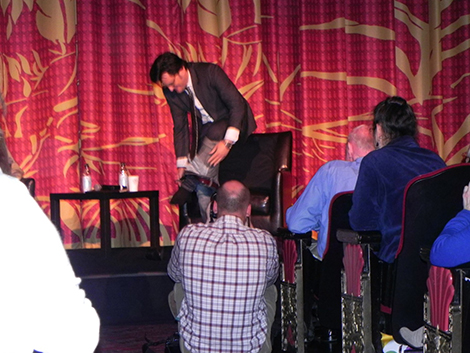
Eva Marie Saint and Mankiewicz before ON THE WATERFRONT, Friday night at TCMFF. It must be pretty cool to be friends with someone from one of your favorite movies 🙂 Photo by meSaint apparently likes to razz Mankiewicz about his wearing jeans all the time, so he took them off. Saint responded, “You almost gave me a heart attack.” Photo by me
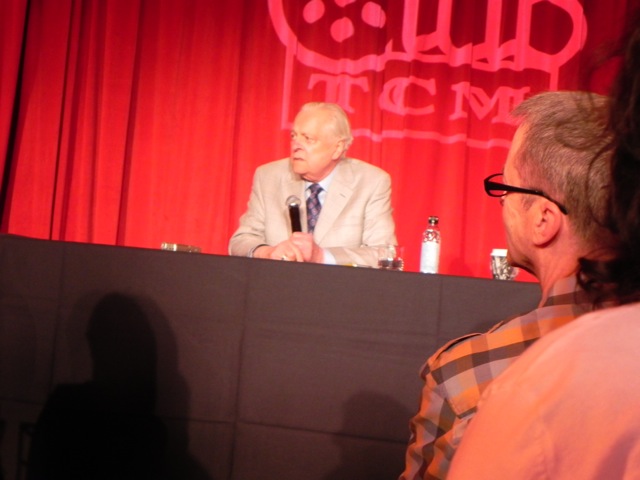
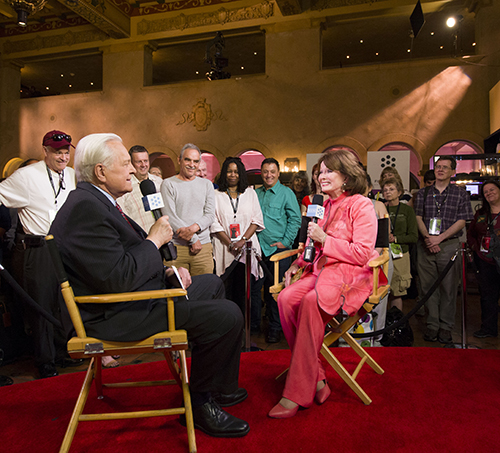
On the day before the Turner Classic Movies Classic Film Festival [TCMFF] officially started, the bloggers (and probably some traditional media too) gathered in the Blossom Room of the Roosevelt Hotel, aka Club TCM. I barely kept it together when Robert Osborne strolled in. I confess I’m a little in awe of him.
Photo by me.
[Osborne, on the other hand, is unflappable. On Sunday, confronted with boos and hisses at Grauman’s (he was talking about new owner TCL’s imminent IMAX conversion), he responded, “Don’t throw anything. Well, if you do, throw a Porsche.” As Porsche was a sponsor at the Festival, Osborne got to drive one all weekend and had just told us he really enjoyed it. Maybe you had to be there.]
Many others have covered this media call so I will relay what I thought was most interesting:
He didn’t know when he took the hosting job with TCM that he would be helping people to heal from illness or get through unemployment, or running a film course. I and many others can attest that he does both. Osborne wasn’t very enthused about the TCM Cruise in the beginning but “it’s so much fun now.” The people on the cruises sort themselves out by favorite star: “You go into a room, ‘OK now the Bogart people are going to be here at 5 o’clock, the Cagneys are going to be in Studio B at 4:30, the Stanwyck people…’ ”
On the studio system & the Production Code: “For a long time, the studio system got so smacked down, and even people who were around at the time and had complained about it realize now that it was a great system…it worked very well. I also think that some of the best movies were great because there was a censorship thing….I don’t think the screen’s been improved by the fact that you can do or say anything you want onscreen that you want to say, because it’s now I think in the hands of people that don’t have any taste, and don’t know where the line should be….The [1946] Postman Always Rings Twice is much sexier than the one that was made [in 1981]. They’re doing it right on the kitchen table, and it’s not nearly so interesting. There were certainly bad things about the studio system and bad things about censorship, but there were good things that came out of it. I don’t think there’s anything like wit on film anymore. You see movies from the ’30s and ’40s, like Woman of the Year or Libeled Lady — they didn’t hammer you over the head with the comedy, there were no bodily fluid jokes like we have today. Having a cap on some of that stuff so that people had to sneak around it made it a little more clever.” He’s philosophical about the Grauman’s conversion, possibly because he’s co-owner of the only movie theatre in Port Townsend, Washington State. They recently upgraded to digital projection. “[Digital] is going to put a lot of small-town theatres out of business. So I’m for anything that’s going to restore theatres or make them more relevant. It’s very sad, because people love to go to the movies, and it’s going to be cut out for a lot of people….we did raise the money in Port Townsend, but only because of the kind of town it is.” Cher was super-professional during her filming for April’s Friday Night Spotlights. Osborne quipped, “No diva at all. It was a little disappointing actually.” They are both Tauruses, though Cher is on the cusp. I’m just saying.
Osborne interviews Ann Blyth on Saturday, April 27. Photo courtesy of TCM.
He was looking forward toFunny Girl, The Razor’s Edge, Cluny Brown, and Desert Song at TCMFF; and particularly to talking to Ann Blyth: “You can’t believe she’s in her 80s, and she’s so nice. I want to talk to her about how, when she was so effective as a mean daughter [Vida in Mildred Pierce], that you hated so much, why that never affected her career, and why she was never cast in a part like that again. She was able to not be typecast and that amazes me.” The “bosses at TCM” were surprised that younger people get into the channel [!!!] but Osborne wasn’t because they stop him on the street. He believes they will pass their love for classic movies on to their children, as so often their families did for them, and “hopefully it will go on forever, and hopefully you will all go on forever.” The feeling is mutual, Mr. Osborne.
If anyone out there has attended a TCM Party hosted by me, you know I always natter on about great Old Hollywood cinematographers, the crisp blacks and whites and beautiful contrast they produced, etc. etc. There are a few names that come up repeatedly, more often than most. Gregg Toland — Citizen Kane, Ball of Fire, The Little Foxes, The Best Years of Our Lives — is an obvious possibility, as is Jack Cardiff — A Matter of Life and Death, Black Narcissus, The Red Shoes. But with this post I’m beginning a series about five less well-known DPs who are equally deserving of some attention.
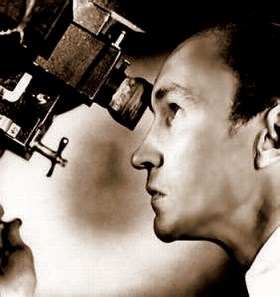
John Francis Seitz of the American Society of Cinematographers, c. 1936
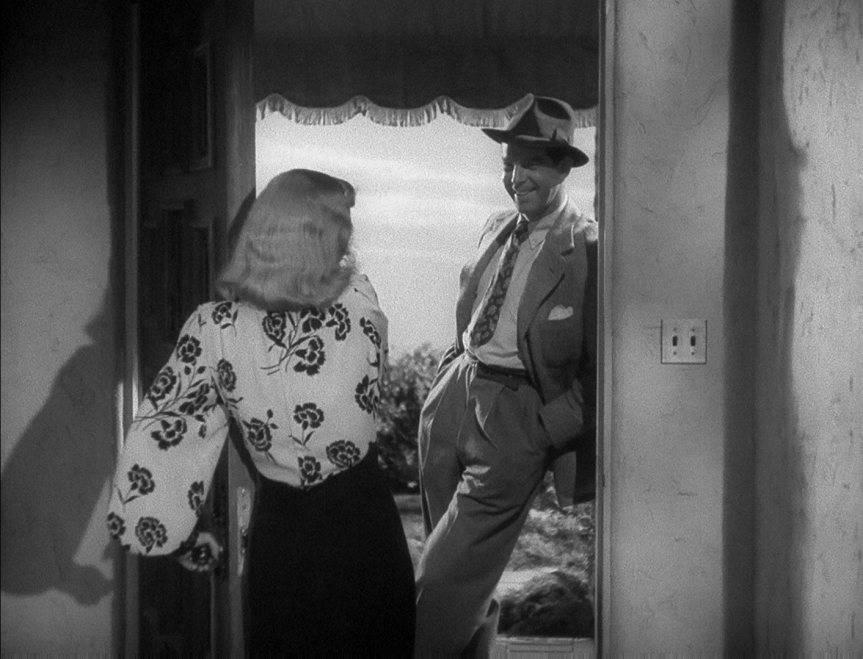
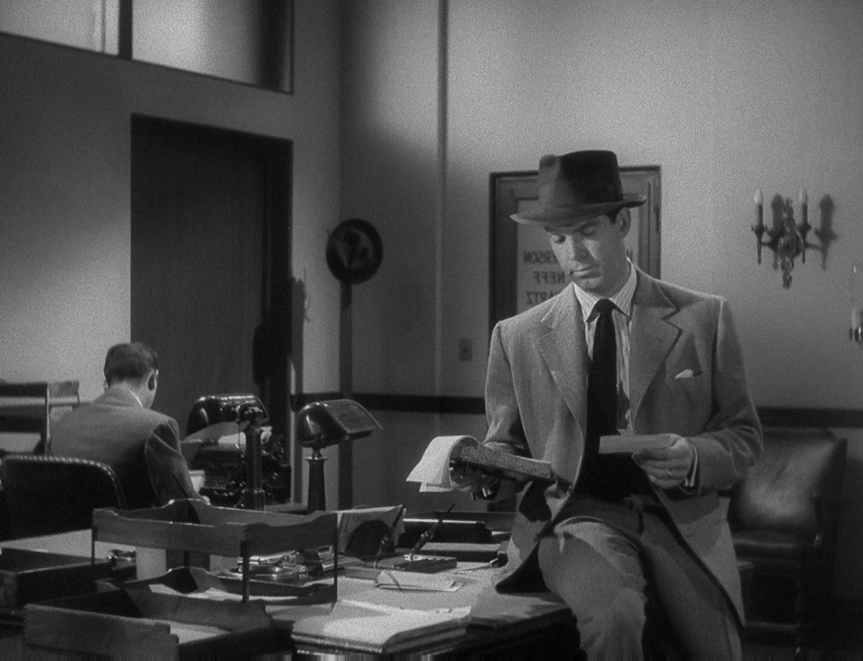
I’m going to start with John F. Seitz, ASC. Seitz is probably best known for the films noir he worked on with Billy Wilder, Sunset Blvd. and Double Indemnity, which I was admiring last Sunday as I watched it for the bazillionth time. All of Seitz’ trademarks — inky blacks and brilliant whites, “differential illumination of different regions of the screen,” “Rembrandt north light,” and low key lighting — are present in Indemnity, creating some of the most influential noir images ever made.
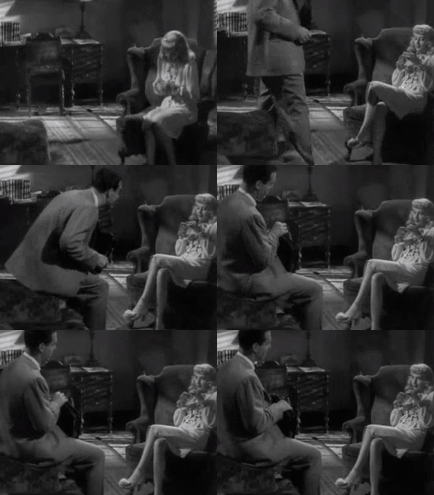
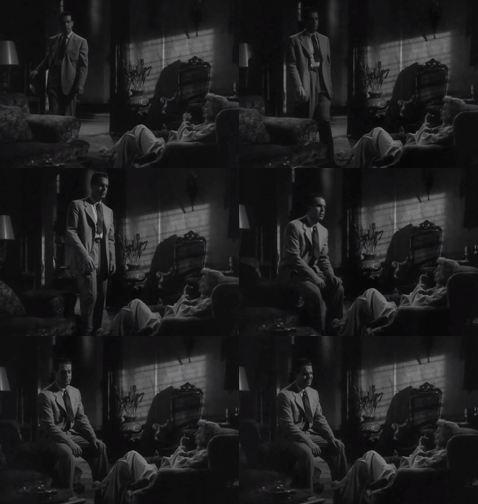
I find these two parallel scenes particularly striking examples of how Wilder and Seitz worked together so well…in both Walter Neff (Fred MacMurray) walks into the room and sits down in front of Phyllis Dietrichson (Barbara Stanwyck), but the angle is slightly different, and the lighting serves as a barometer for their relationship.
Indemnity and Sunset are just two of Seitz’ 163 films, made over more than 4 decades. Born in 1892, Seitz began as a lab tech in Chicago in 1909 and was working in movies as a director of photography by 1913, continuing through his last film, Guns of the Timberland (1960). He held 18 patents for photographic devices and processes — including dissolve techniques and the matte shot, which he fine-tuned while working on Rex Ingram’s Trifling Women (1922). The collaboration with Ingram was key to Seitz’ career:
Ingram was a great pictorialist; everything in his pictures was subordinate to the image. Collaborating with a cameraman of genius, John Seitz, he created some of the most beautiful films of the entire silent era.
— Kevin Brownlow and John Kobal, Hollywood: The Pioneers
Seitz’ other works include some of my favorite movies: Sullivan’s Travels and This Gun For Hire, both with Veronica Lake; Five Graves To Cairo and The Lost Weekend, also directed by Wilder; and The Big Clock, which like Weekend, starred Ray Milland. These are just a fraction of his output. How does one person create all those stunning images? Perhaps it was his willingness to experiment:
Where [others] might be inclined to play it safe by using tried and true techniques, Seitz doesn’t hesitate to stick his neck out to try for the unusual and original effect — and he invariably comes up with an exciting result. Far from being a trickster out to create an effect for its own sake, [he] remains an alert experimentalist, constantly searching for new approaches and original camera techniques to make the motion picture a more dramatic medium. There are no clichés in his style – as modern as tomorrow, rugged, forceful and, above all, alive. He insists that cinematography must exist to tell the screen story, rather than stand out as a separate artistic entity.
— Herb Lightman, “Old Master, New Tricks,” American Cinematographer, September 1950
I can’t pretend that this post is in any way a definitive or comprehensive analysis of Seitz’ work, but I hope that it will compel a few to see some of it for themselves. TCM is offering two opportunities on Monday, April 15. One of the silent films he worked on, Mare Nostrum, directed by Ingram, is on at midnight Eastern time. According to TCM’s site, “British director Michael Powell, who worked on Mare Nostrum as a grip, would cite Ingram as one of the influences on his own visionary epics, including Black Narcissus (1947) and The Red Shoes (1948).” Also, one of the pre-codes Seitz shot, Ladies They Talk About (1933), also starring Stanwyck, is scheduled for 6:00 a.m. Eastern.
And now, a very belated THANK YOU: Sincere and heartfelt gratitude to whoever was so kind as to nominate me for not one but two 2013 LAMMY Awards, Best Classic Film Blog, and Best Blogathon/Meme for 31 Days of Oscar, credit for which I share with Kellee of Outspoken and Freckled and Aurora of Once Upon A Screen. There isn’t much chance of my getting through to the next round, but this is one case where I can honestly say the nomination is the award. Tune in to the LAMBcast on Monday at 9:00 a.m., featuring Aurora, to hear the final nominees.
The winners, the losers, the snubs, the backstories, the gossip, the players and the games… it’s all about Oscar!
The 31 Days of Oscar blogathon, hosted by myself, Aurora of Once Upon A Screen, and Kellee of Outspoken and Freckled, continues. We’ve had two great weeks of submissions covering a wide variety of films from the silent era to this year’s nominees. So if you need more Oscar, you can also check out Week 1 and Week 2.
And now…these are the brilliant Week 3 posts, listed with Twitter handles (where available) so we can all find each other and converse.
Check out my completely random, probably totally wrong 2013 Oscar predictions, including a mini-review of Zero Dark Thirty.
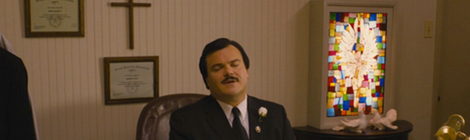
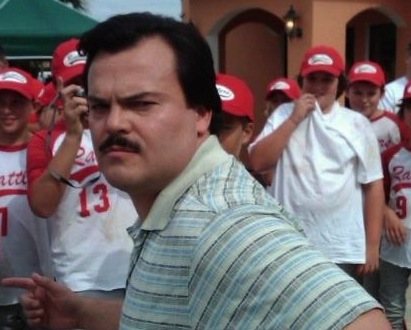
Oscar snubs are pretty much a given. When the Academy made the number of Best Picture nominees variable, it virtually guaranteed them in the Best Director category, and it’s no secret that I think both Ben Affleck and Kathryn Bigelow deserved nods this year. Still, If you haven’t seen Richard Linklater’s Bernie, you probably had to read the title of this post a couple times. But yes, I do believe Jack Black deserved a Best Actor nomination for his performance in the title role.
The film is a genre-defying mix of reality and fiction based on the true story of Bernie Tiede. It blends documentary style interviews, scenes with only actors, and scenes where actors play off real townsfolk playing themselves. Tiede befriended and eventually murdered an elderly woman, Marjorie Nugent (Shirley MacLaine), in Carthage, Texas in the mid-1990s. The character Bernie is unlike any other I’ve seen Black play. To be fair, I’d only seen him in The Holiday, Be Kind Rewind and Year One, in which his characters were all sort of similar, funny, a bit wild, sometimes manic, and seemingly based on himself.
Bernie Tiede is a complete departure. He’s a popular small-town funeral director who favors gospel music, community theater, and the company of women 20 years older than himself. Black becomes Bernie, but his performance isn’t just an imitation of mannerisms and speech. The actor invests the character with enough heart so that, murderer or not, he’s likable. We can relate to Bernie and his apparently innocent desire to help improve the lives of the town’s residents.
First this clip, Black as Bernie:
And an interview with the real Bernie
So why wasn’t Black nominated for an Oscar, despite receiving Golden Globe and Independent Spirit nominations? Part of it is that the Golden Globes have separate comedy/musical categories for Best Picture, Actor and Actress, while comedies are notoriously unpopular with Academy voters. And, because the film didn’t receive a wide release, I think it’s a safe assumption that many Academy members, like many of the moviegoing public, completely missed it. Also, the story unfolds on such a small canvas that it reminded me of Jane Austen’s work, and her description of it as “the little bit (two inches wide) of ivory on which I work with so fine a brush.” Yet, also like Austen’s work, it manages to comment on class conflict, justice, and human nature. How easy for a film like this to get lost in the shuffle of special effects showcases and global-history dramas. Which is really a shame.
When I say playing Bernie Tiede is a departure for Jack Black, I really mean it.
PS: I’ve said before, Bernie is a character study, and boy oh boy, is it ever full of characters. Make sure you watch the credits to see who is acting and who are actual members of the town. I’ve included some clips below in the hope that they’ll convince you to give the film a try:
Matthew McConaughey as Danny Buck Davidson, district attorney in Carthage:
A Carthage resident’s guide to Texas:
Plus, sing along with Bernie on “Love Lifted Me” — this scene is our first sight of Black in the film:
Greetings, all and sundry! When an opportunity arises to indulge in a favorite pasttime. Wax nostalgic about the ins and outs and nuts and bolts of a specific time in cinematic history. Its awards and rewards. You graciously accept and give it your best effort. To that end, I would like to thank Paula for chance to shine some light on…
1973: A Very Good Year in Film
A year that created a lot of controversy as the war in Vietnam was finally winding down and the palette of tastes continued to swell and expand, allowing some well-established talent to prove their mettle, while young upstarts were given the chance to make their mark for future generations.
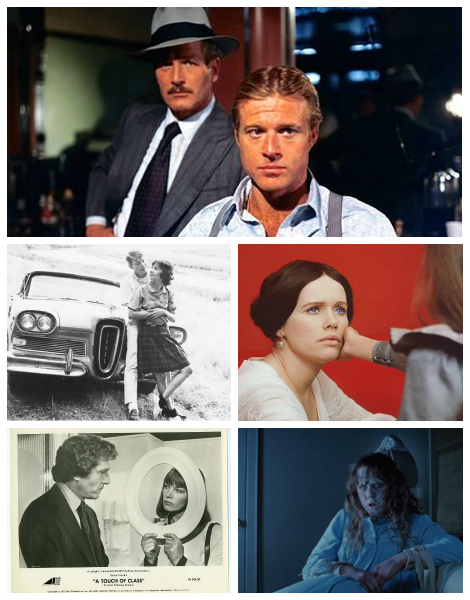
Best Picture 1974, clockwise from top: Winner THE STING; nominees CRIES AND WHISPERS, THE EXORCIST, A TOUCH OF CLASS, and AMERICAN GRAFITTI
Ingmar Bergman weighed in with a familial tome, Cries and Whispers. Which would explore the world of sisters as one is bedridden and slowly deteriorating to cancer in late 1800s Stockholm. Wondrously, sometimes rawly, told in flashbacks of earlier times and sibling rivalry, as the sisters coalesce and slowly retreat and pull apart.
While the previous year’s heavy hitter, William Friedkin, exceeded all expectations. Bought the rights to the worldwide best seller, The Exorcist, and re-wrote the limitations of American Horror. In a film that pulls the audience in and takes them on a ride not soon forgotten. And a fledgling director named George Lucas gave his personal take on rites of manhood and cruising the strip on a warm summer night before college in American Graffiti. A cut in the can, near-documentary benchmark film that would launch countless careers.
Not to be outdone, and to prove that he still had it, Melvin Frank put together a trans-continental, high-end romantic comedy, A Touch of Class. That spans Europe and mixes lush backgrounds and scenery as an affair takes root and flourishes. Placed squarely opposite what many would wrongly perceive to be a forgettable medium-length, low-budget ode to changing times and morals from John G. Avildsen, Save The Tiger. Only to have the field rounded out by George Roy Hill and his offering, The Sting. Which had the trademark look and feel of an old Warner Brothers backlot gangster film. Though highly polished and superbly executed on Universal’s backlots. Brought to life by two of the most handsome and proven actors in Hollywood.
A heady brew, indeed. Five contenders, unique in their own ways, vying for the 1974 Best Picture Academy Award. With the shot callers and odds makers outside the Academy close to tossing their arms up in the air. As quality and story cancelled each other out for the most part. Perhaps, and perhaps not, revealing the value of large ad campaigns as ballots were cast. Not exactly a coin toss, but a process of taking in the myriad details and many memorable moments as a decision is made.
I can’t disagree that The Sting deserves the top slot. Hill directs masterfully with a practiced touch around well and often meticulously detailed sets that somehow always seem smaller than they appear. Not exactly cramped, but compact. Drawing attention to the two leads as they move and share space with a stalwart cast of veterans and soon-to-be-recognized talent. In a tale that boasts no weak spots. Moves fluidly and builds to a delightful payoff. Infinitely watchable. And re-watchable, as only a few key scenes are telegraphed ahead of time. And even those have a pleasant twist.
The category of Best Actor is just as difficult. With Marlon Brando, the odds-on favorite for his role as American expatriate Paul in Last Tango in Paris. Still riding the crest of his role as Don Corleone in The Godfather and being re-introduced to a new generation of audiences. Brando plays an often unlikeable character, a bit too fascinated and fixated on sex. Under the helm of Bernardo Bertolucci. In a film more memorable for its intimate scenes than stunning dialogue.
Followed closely by Jack Nicholson. A soon-to-be household name after his roles in Easy Rider, Five Easy Pieces and Carnal Knowledge. It is in The Last Detail that Nicholson is allowed to push already legendary boundaries. Chew occasional scenery in scenes where he loses it. Keeping the faith as a believable career Navy NCO on a job few want, but needs to be done.Up-and-coming Al Pacino delivered a more than solid performance in Serpico. As New York policeman, Frank Serpico. A career-long honest cop who resisted the temptations of payoffs and worse. Becoming a pariah and shifted from precinct to precinct. Making notable cases, busts and arrests across the boroughs. While gathering information on bad cops and being denied a detective’s gold shield.
Staunch and stoic Jack Lemmon’s name on the ballot may have raised cursory eyebrows. An everyman’s actor just coming into his own. And his Harry Stoner in Save the Tiger has those quiet inner qualities writ large. As the head of a company which mass produces fashions seen on the catwalks of Paris, Milan and London. Suddenly stricken with hard times. In a film that would reveal Mr. Lemmon to be one of America’s great untapped dramatic talents. I’ve no doubt those cursory eyebrows were lifted a bit more with the addition of Robert Redford in The Sting. His often too-cautious Johnny Hooker is one of Redford’s best roles opposite Paul Newman. Though not what I would consider to be Oscar quality.
Many might have been surprised with Mr. Lemmon’s Oscar win for Best Actor, though I wasn’t. I knew his performance as mid-life crisis material Harry Stoner was special after just fifteen minutes of sitting in a near-empty matinee. And that the fix would be in as the final credits rolled. Few actors have been able to open up and reveal the heights and depths of their characters as Mr. Lemmon had. And would again in later films.
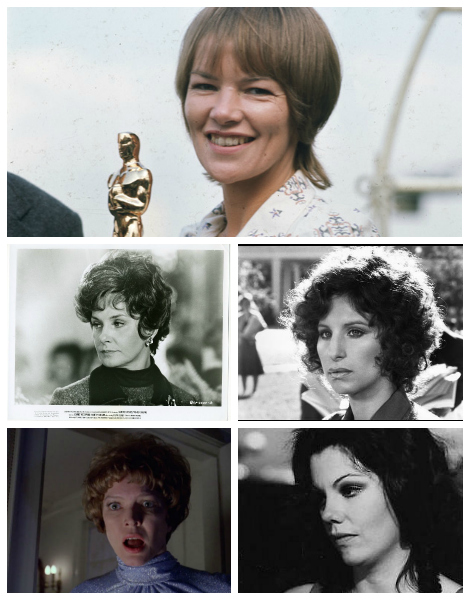
Best Actress 1974, clockwise from top: Winner Glenda Jackson; nominees Barbara Streisand, Marsha Mason, Ellen Burstyn, and Joanne Woodward
Which made the selection of Best Actress only slightly less difficult. With fresh, aspiring faces mixed amongst veterans who always delivered more than was asked or required. With Joanne Woodward exploring and making her mark in fertile fields usually left for Gena Rowlands in Summer Wishes, Winter Dreams. As Rita, a wife on the verge of a nervous breakdown due to empty nest syndrome and wishes that she had married the young man she had a crush on ages ago. One of the first and better “What if?” films of the 1970s. Followed closely by Barbra Streisand’s post-WWII radical chic Katie in The Way We Were tangled up with Navy officer Redford in an “on-again, off-again” relationship under the deft touch of Sydney Pollack.
Offset by Marsha Mason’s hard luck Maggie Paul in Mark Rydell’s Cinderella Liberty. Doing whatever is necessary to her and her ten-year-old mulatto son’s heads above water in the Navy liberty port of Seattle, Washington. While a single mom in Georgetown (Washington DC), Chris MacNeil, played by nearly unknown Ellen Burstyn, copes with her daughter being possessed by Satan in The Exorcist.
Leaving Glenda Jackson several obstacles and egos to clear in her role as George Segal’s “other woman” in A Touch of Class. A nicely detailed return to the earlier sophisticated romantic comedies of 1950s and ’60s. Where wit, adult dialogue and lush sets and backdrops have equal weight with the leads’ chemistry. An odd, almost safe choice for Best Actress at first glance and by today’s standards, though Ms. Jackson and Mr. Segal make the idea of “love at first sight” appear elegant, if not effortless. Even between a divorcée and a married man.
Which brings us to Best Supporting Actors. With Jason Miller and his role as Father Damien in The Exorcist out in front. Mostly, I believe for his ability to respond so well to shock and fear amongst then cutting edge special effects technology and a child’s bedroom kept at below freezing temperatures. Followed close by John Houseman’s Professor Kingsfield in James Bridges’ The Paper Chase. Mr. Houseman made the most of his voice that could easily bounce off the back walls of any enclosed space. Along with enunciation, a near void of contractions to project and surround himself with the aura of omniscient invincibility to a classroom full of aspiring college students.
Leaving plenty of room for Vincent Gardenia to play with his role of old and wizened coach, “Dutch” Schnell, in Bang the Drum Slowly. Though tinged with tragedy, still one of the better baseball films around. And Mr. Gardenia makes the most of his role as the team’s Father Confessor, manager, and mother hen. With veteran Jack Gilford and young upstart Randy Quaid filling whatever space is left with their quiet brilliance. In Mr. Gilford’s case, it’s playing Jack Lemmon’s wise old sage and business partner Phil Green in Save the Tiger.Who, like Mr. Lemmon’s Harry Stoner, just wants another season, but won’t condone arson and insurance money to do it. And Randy Quaid’s oversized, introspective, something of a dullard young sailor, Meadows, makes more than the most of each scene opposite Jack Nicholson. While on their way to Norfolk and its brig for petty theft from a Base Exchange.
A very contentious field. A grand master of projection with Mr. Houseman. Opposite a grounded character actor in Mr. Gardenia and two students of the “Less is more” contingent. A tough choice for Best Supporting Actor, but a proper one, as Mr. Houseman’s haughty, eloquent Professor Kingsfileld in The Paper Chase is awarded the prize.
With ladies demanding equal time. The nominees for Best Supporting Actress are more diverse and eclectic. Peter Bogdanovich’s Paper Moon is double-tapped, with Madeline Kahn’s Trixie Delight and Tatum O’Neal’s Addie Loggins, who may or may not be con man Ryan O’Neal’s Moses Pray’s daughter. Busily wrapping any and all in her way around her little finger. While Trixie offers fresh and often insightful comic relief.
While near complete unknown Linda Blair delivers above and beyond as an adolescent girl with familial problems experiencing a close encounter of the inexplicable kind in The Exorcist. While Sylvia Sidney excels as Woodward’s aged and infirm mother Mrs. Pritchett in Summer Wishes, Winter Dreams. Leaving Candy Clark’s bombshell blonde turn as a tempting Marilyn Monroe beauty behind the wheel of a classic white T-Bird in Lucas’ American Graffiti.
The award of Best Supporting Actress to Tatum O’Neal in Paper Moon came as no real surprise. Though her voice may have grated a time or two. Ms. O’Neal showed great potential and ease of execution in a familial, very family-friendly film. The sum of which reflected Mr. Bogdanovich’s “sit back and let it happen” school of direction.
Overall Consensus:
I’ve long believed that the 1970s were the last great era for films. With many directors taking a path away from the slowly stagnating Hollywood “system” and indulging in ventures that would make or break them and their reputations. And 1973 is a banner year for those pioneers. Who were able to find the talent and money and put it all on the line. As with John Alvidson and Jack Lemmon collaborating in what could and should have been a just under two hour personal ode to changing times and morals that reaped enormous rewards. Especially for screenwriter, Steve Shagan. And just being recognized Marvin Hamlisch and his minimalist score for Save the Tiger.
Add to the mix a young unknown named George Lucas given a fistful of money to start a project, choose his own cast of unknowns who would find fame in later films, shoot through the nights, and cut the film in the can. And start all over again for consecutive nights. While proven directors like William Friedkin and George Roy Hill are given wherewithal to run their films their way. Even if the former’s project, The Exorcist, rubbed many the wrong way at first viewing, and the latter’s The Sting, the second collaboration of Messieurs Newman and Redford, is a superior, cast-driven long con and period piece.
Taken altogether, 1973 was a watershed for directors taking the less-used path. And actors, cinematographers, arrangers, musicians, set designers, and wardrobe technicians applying new ideas and swinging for the fences.

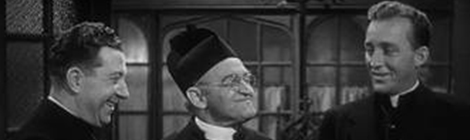
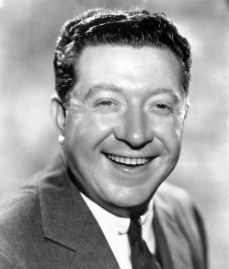 As a Warner Brothers contract player in the ‘30s and ‘40s, no one backstopped stars like Bing Crosby, William Powell, and James Cagney better than McHugh. He was an expert at sheepish expressions, jittery laughs, and screwball action, usually serving as comic relief and providing larcenous or romantic complications when required.
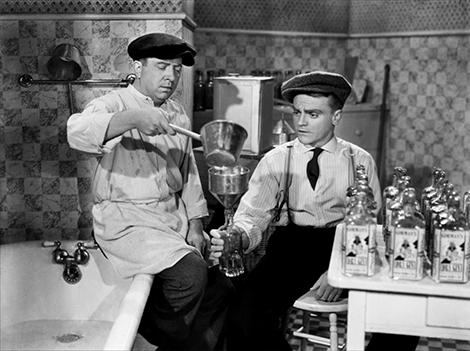 Frank McHugh and James Cagney bottle a little fun in THE ROARING TWENTIES (1939).
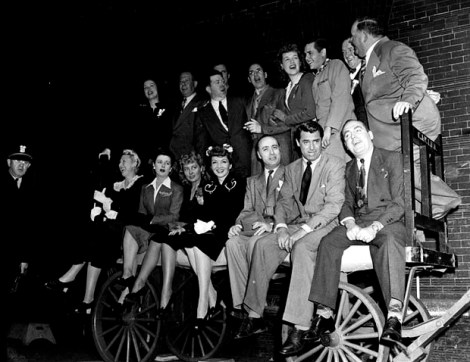 The star-studded Hollywood Victory Caravan at a stop in Minnesota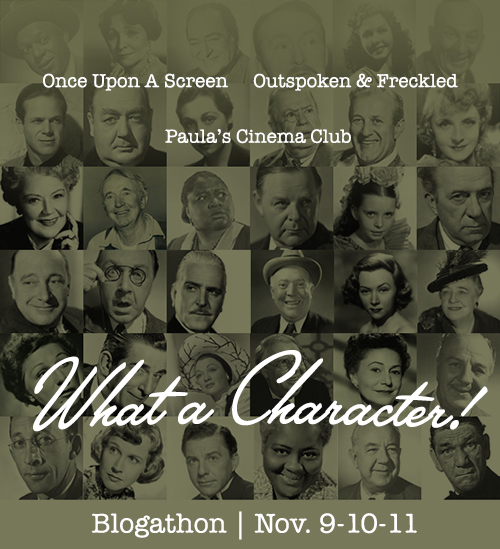







 Paula's Cinema Club