
TCMFF: Ben Mankiewicz

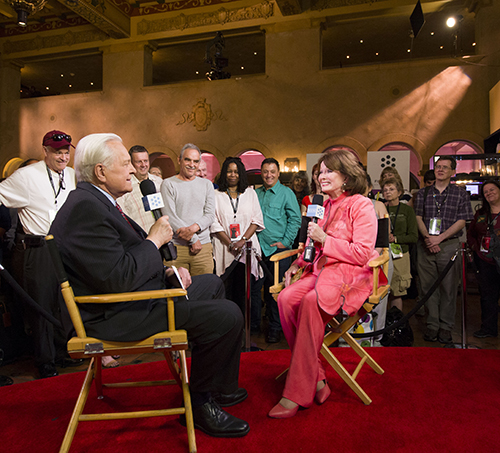
TCM’s host Ben Mankiewicz also did a media call on the Wednesday before TCMFF actually started.

As before, some highlights:

Lawrence Carter-Long, TCM’s co-host for The Projected Image, their series on portrayals of disability on film, will be back. Mankiewicz said, “I learned more from Lawrence Carter-Long than anyone else in 10 years with TCM….He is a resource we’ve used since and will continue to use.”

Mankiewicz loved that TCMFF included Airplane! as part of this year’s travel theme “when it looks like the whole thing was shot for $4.95. ‘See LAX…the inside of an airplane.’ Nonetheless, that’s a travel movie.”
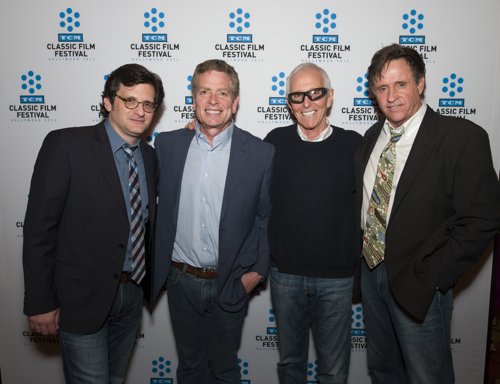
TCM host Ben Mankiewicz with David Zucker, Jim Abrahams and Robert Hays at Saturday's screening of AIRPLANE!
TCM host Ben Mankiewicz with David Zucker, Jim Abrahams and Robert Hays at Saturday’s screening of AIRPLANE! Photo courtesy of TCM

Film Noir Foundation’s Eddie Muller is coming up on TCM Friday nights with a series of around 20 films noir. Mankiewicz likes neo-noirs, particularly three involving John Dahl — The Last Seduction, Kill Me Again, and Red Rock West. “I’d love to make a case for us to show those, those are great films. You can clearly see Dahl had a keen appreciation of ’40s and ’50s film noir.”

TCM is featuring more films from the ’70s and ’80s, but not because there’s some kind of age requirement. “We have a very open mind as to what makes a classic movie. It’s not about years removed from a movie…the movies have to have some emotional connection for people. Because we learned that two-thirds of our audience is under 49 years old, we realized very quickly that most people have not seen most of our movies when they came out, or anytime even close to when they came out. So how did these movies become important to them? It’s probably through family connections, they watched with their parents or grandparents, or, what happens to me sometimes, because we shoot so far ahead, I don’t know what we’re showing, and like you guys, I’ll stumble on to a movie on a Saturday afternoon. As we get better perspective on movies, which does come with time, and as more of those titles become available, I suppose that you might see more ’70s and ’80s movies on TCM, but I always say that with a caveat: nothing is going to stop us from showing the movies we already show….In that sense, our programming won’t change. We always, always want to find something that will be relevant and emotional for our audience. There were a lot of great filmmakers in the ’70s, I think more so than the ’80s, if i could sort of flippantly dismiss an entire decade, which, by the way, was important to me. It’s what I grew up with, what are you gonna do? I can’t change when I grew up. So, i think you’ll see more ’70s and ’80s movies, but not to the extent that we’ll change what we already show.”

He has some choice in which movies he hosts on TCM, but not as much as you might think. “Charlie (Tabesh, TCM’s programmer) knows what I like, but in the end, I’m an employee.”

Re: a 16-year-old girl’s crush on Farley Granger: “It’s not gonna work out for her.”

Mankiewicz believes the Production Code was the result of Fatty Arbuckle’s three trials.

I also got to interview Mankiewicz for some of the shortest-seeming 15 minutes in my life ever. He isn’t the first interviewee from whom I’ve cadged refreshments, but he is nicest.

What’s your process for hosting on TCM?
Anywhere from one day to three or four weeks before, they start sending me scripts. And I go through every one of them, and put them in my voice, add stories, take stories out. Same process for Robert. Some of them, when movies start coming back, I realize that what they sent is essentially what I wrote three years earlier, cos I’ll be like, i wrote this and then I’ll change it again, because I’m like, oh that sucked. That’s the basic process. The research department in Atlanta keeps track so that we don’t repeat the same stories. It takes a while to go through 200 scripts. We shoot them all basically in a row in a week. And by the way, it’s super-easy to get confused. I don’t pretend to not have to look stuff up.
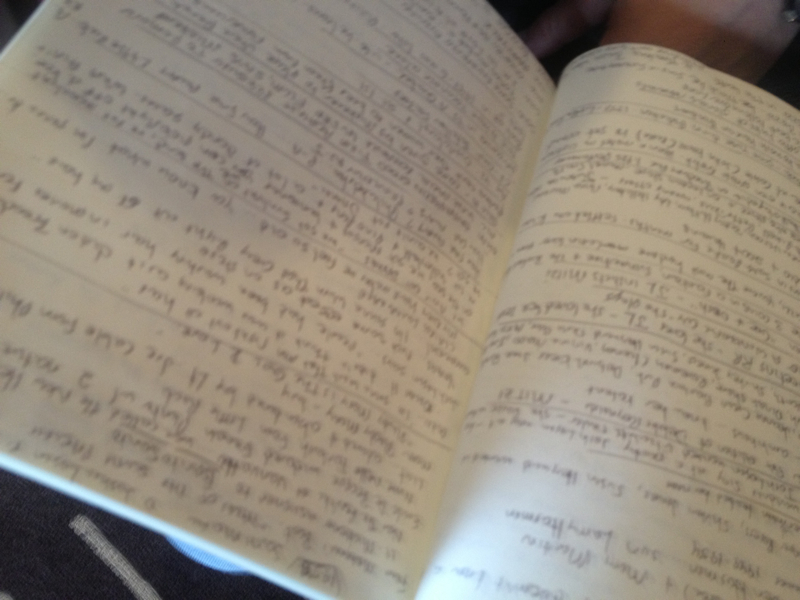
Ben Mankiewicz's notes on one of the films he was to introduce at TCMFF
Ben Mankiewicz’s notes. Photo by me

[At this point, I’d forgotten the questions I’d prepared. I also remembered something Robert Osborne had said earlier in the day; he studies up on people he’s going to interview because once a reporter looks at his/her notes, it’s no longer a conversation. Yikes. I decided to wing it.]
Quentin Tarantino has a litmus test for potential girlfriends. He shows them Rio Bravo to see what their reaction is. Not that you would have something like that now, but did you ever have a film like that, and if so, what was it?

Good question. No, not off the top of my head, is there a film that did that. But I would know whether I connected with people based on what they liked, no question. Obviously from the time I was getting serious about girls, if a girl thought Fletch was stupid, obviously I’m not gonna go out with her. But that was at a time when I had no appreciation of classic movies. I mean, now, no question, I love Rio Bravo, that makes Tarantino so cool. I gotta find a cool answer to that. To me, like somebody who wouldn’t appreciate A Face in the Crowd, or wouldn’t be blown away by that, I couldn’t possibly have a serious friendship with them. That movie just gets me every time. It was so prescient, 53 years ahead of time. And also, if you’re not moved by Casablanca, if you make fun of Casablanca — whatever, we’re not sleeping together. Well, we might sleep together. But I’m not gonna call you.

You said you weren’t always into classic movies…what were some of the first ones that pushed you in that direction?
My mom showed me North by Northwest. It’s funny how memory plays tricks on you, because I remember saying to Mom that I didn’t want to watch it because it’s black and white. She gets me to watch it, and it’s not black and white….And I remember thinking, this is really cool, and that guy is cool. Like all of a sudden. And it’s not like I didn’t know who Cary Grant was. But I associated him with something that I knew instinctively I was going to not like.
When 

I went to college, I was always looking to do things as easily as possible. I took a film course at Tufts pass-fail, thinking this is going to be the easiest thing in the world. I was such an idiot. I wrote a paper, that counted for more than half the grade, on Santa Fe Trail. And I started doing the research. These guys weren’t in the Army together at the same time, this is all a wildly nonsensical re-imagination of how history worked. But they’re going after John Brown. The movie is made in 1940, and clearly, John Brown is a Hitler-ian figure in the movie, and I wrote about the historical context, and how, ironically, they’d screwed up history. And I loved writing the paper. It was so good. I got an A+. I remember thinking, I don’t think the professor thinks anyone wrote a better paper in this class. And of course, my thought wasn’t, I should pay more attention to film. My thought was, I can’t believe I took this class pass-fail. I cannot believe that I’ve just given away an A.

 So it was developing then.
And then I went out to LA after I graduated, just to see family out here, and I went to a couple of parties, and I was introduced as Ben Mankiewicz, and people would say, “From the Hollywood Mankiewiczes?” And I’d say, yeah, and they’d be like, Hollywood royalty. Happened twice. And I was like are they thinking of someone else? It just started to come together how much my family mattered to a very small group of people, but it mattered a lot to that group.

Which actors/actresses working in Hollywood today would have done well in the Old Hollywood system, and vice versa? [This is a recurring question of mine.]
I think a lot of the big stars then would have done well today. There’s no question, Clark Gable would have been a star, Cary Grant. Those are easy ones. Bogie. John Wayne. From now, George Clooney could work in any era. Robert Downey Jr., any era. If you own the screen now, the way those guys do…not only are they enormously talented, not only can they play a variety of roles, but they have that screen charisma. Clooney was my first thought, but I’m not sure that Downey isn’t a better answer. I don’t even really like the Sherlock Holmes movies, but he’s got a thing. Johnny Depp owns the screen. They are too charming not to succeed. The talent and looks that Ryan Gosling has, of course he’d succeed. Jessica Chastain, Jennifer Lawrence, no question. Chastain even looks like it. I don’t think there’s any doubt there. Penelope Cruz is another one. I don’t know how the language issue would have worked then. Maybe she’d have made Spanish-language movies, but she would have been a big star. Matt Damon would have been a star, and he’s not even that good-looking. Not in the same league as those other guys. For him, he just sort of exudes charm. He makes it work in so many different roles. I think there are many others. I don’t think things are even remotely lost in Hollywood right now. There are a lot of reasons now why Hollywood is totally f*cked up but that said, there’s still great stars, there’s great producers, and there’s great movies. But frequently the ones that get the most attention and marketing are embarrassments. But there’s still great movies being made.
Eva-Marie-Saint-Waterfront-lores
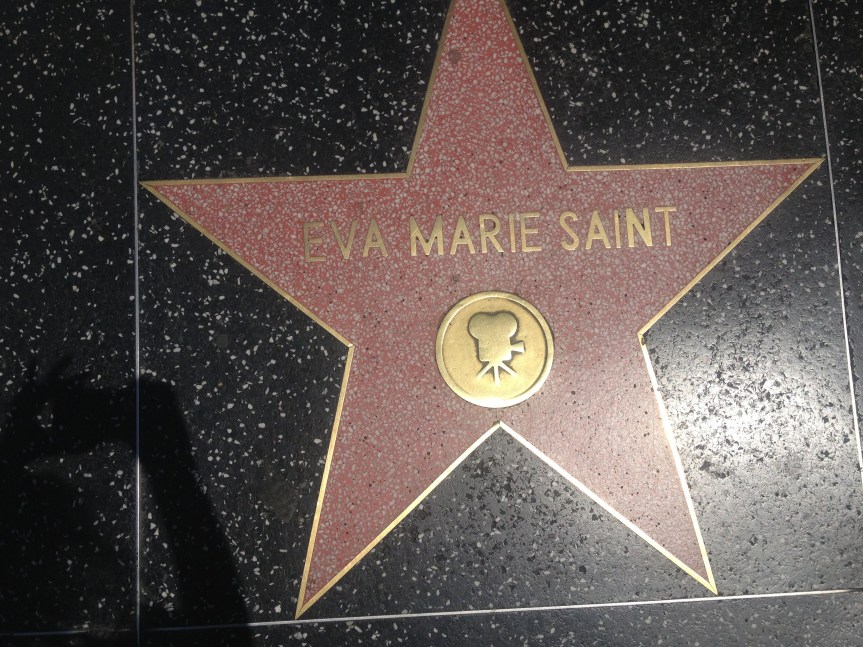
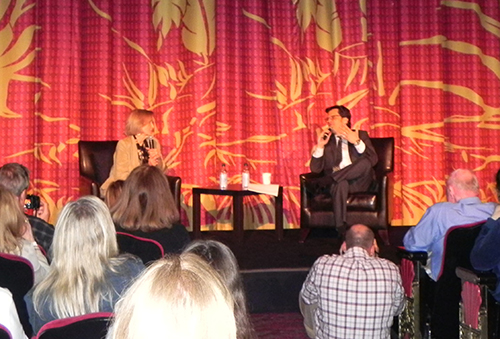
Eva Marie Saint and Mankiewicz before ON THE WATERFRONT, Friday night at TCMFF. It must be pretty cool to be friends with someone from one of your favorite movies 🙂 Photo by me
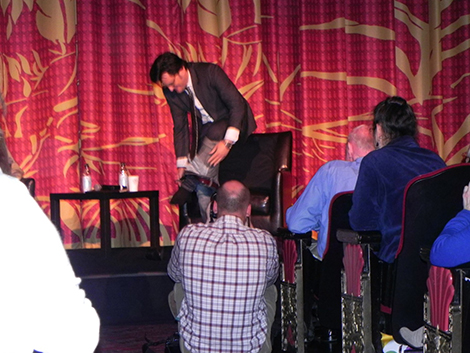
Saint apparently likes to razz Mankiewicz about his wearing jeans all the time, so he took them off. Saint responded, "You almost gave me a heart attack."
Saint apparently likes to razz Mankiewicz about his wearing jeans all the time, so he took them off. Saint responded, “You almost gave me a heart attack.” Photo by me

TCMFF: Robert Osborne

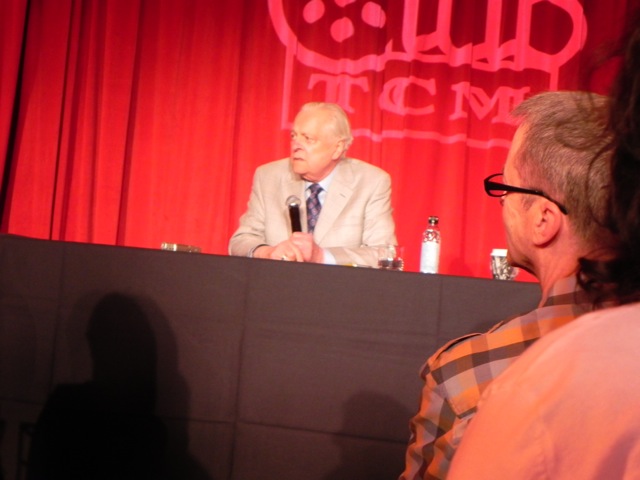
On the day before the Turner Classic Movies Classic Film Festival [TCMFF] officially started, the bloggers (and probably some traditional media too) gathered in the Blossom Room of the Roosevelt Hotel, aka Club TCM. I barely kept it together when Robert Osborne strolled in. I confess I’m a little in awe of him.

DSCN4068
Photo by me.

[Osborne, on the other hand, is unflappable. On Sunday, confronted with boos and hisses at Grauman’s (he was talking about new owner TCL’s imminent IMAX conversion), he responded, “Don’t throw anything. Well, if you do, throw a Porsche.” As Porsche was a sponsor at the Festival, Osborne got to drive one all weekend and had just told us he really enjoyed it. Maybe you had to be there.]

Many others have covered this media call so I will relay what I thought was most interesting:

He didn’t know when he took the hosting job with TCM that he would be helping people to heal from illness or get through unemployment, or running a film course. I and many others can attest that he does both.
Osborne wasn’t very enthused about the TCM Cruise in the beginning but “it’s so much fun now.” The people on the cruises sort themselves out by favorite star: “You go into a room, ‘OK now the Bogart people are going to be here at 5 o’clock, the Cagneys are going to be in Studio B at 4:30, the Stanwyck people…’ ”

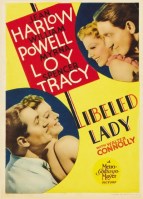
Poster - Libeled Lady_lowresOn the studio system & the Production Code: “For a long time, the studio system got so smacked down, and even people who were around at the time and had complained about it realize now that it was a great system…it worked very well. I also think that some of the best movies were great because there was a censorship thing….I don’t think the screen’s been improved by the fact that you can do or say anything you want onscreen that you want to say, because it’s now I think in the hands of people that don’t have any taste, and don’t know where the line should be….The [1946] Postman Always Rings Twice is much sexier than the one that was made [in 1981]. They’re doing it right on the kitchen table, and it’s not nearly so interesting. There were certainly bad things about the studio system and bad things about censorship, but there were good things that came out of it. I don’t think there’s anything like wit on film anymore. You see movies from the ’30s and ’40s, like Woman of the Year or Libeled Lady — they didn’t hammer you over the head with the comedy, there were no bodily fluid jokes like we have today. Having a cap on some of that stuff so that people had to sneak around it made it a little more clever.”
He’s philosophical about the Grauman’s conversion, possibly because he’s co-owner of the only movie theatre in Port Townsend, Washington State. They recently upgraded to digital projection. “[Digital] is going to put a lot of small-town theatres out of business. So I’m for anything that’s going to restore theatres or make them more relevant. It’s very sad, because people love to go to the movies, and it’s going to be cut out for a lot of people….we did raise the money in Port Townsend, but only because of the kind of town it is.”
Cher was super-professional during her filming for April’s Friday Night Spotlights. Osborne quipped, “No diva at all. It was a little disappointing actually.” They are both Tauruses, though Cher is on the cusp. I’m just saying.

Osborne interviews Ann Blyth on Saturday, April 27.
Osborne interviews Ann Blyth on Saturday, April 27. Photo courtesy of TCM.

He was looking forward to Funny Girl, The Razor’s Edge, Cluny Brown, and Desert Song at TCMFF; and particularly to talking to Ann Blyth: “You can’t believe she’s in her 80s, and she’s so nice. I want to talk to her about how, when she was so effective as a mean daughter [Vida in Mildred Pierce], that you hated so much, why that never affected her career, and why she was never cast in a part like that again. She was able to not be typecast and that amazes me.”
The “bosses at TCM” were surprised that younger people get into the channel [!!!] but Osborne wasn’t because they stop him on the street. He believes they will pass their love for classic movies on to their children, as so often their families did for them, and “hopefully it will go on forever, and hopefully you will all go on forever.” The feeling is mutual, Mr. Osborne.

I’ll have more from TCMFF soon.

TCM Classic Film Festival

I always knew I’d see a lot of movies and meet a lot of people at the Turner Classic Movies Classic Film Festival. (That is the actual name. Yes, they repeat “Classic.” But most refer to it as TCMFF.)
What I didn’t foresee is how great the introductions and discussions before the films are. These are usually given by people connected with the film, whether they are actual cast or crew, relatives of same, or film scholars who are experts on it.
One highlight so far was the interview with Eva Marie Saint before the screening of On The Waterfront. Another was the Safe in Hell discussion between film historian Donald Bogle and the director’s son, William Wellman, Jr. In both cases, I got a big dose of the behind-the-scenes info about how these classics were made and the colorful personalities who made them.
Today is Day 3, bringing more tough choices between more incredible movies. For instance, this morning I’m still torn between a Bugs Bunny retrospective and The Ladykillers.
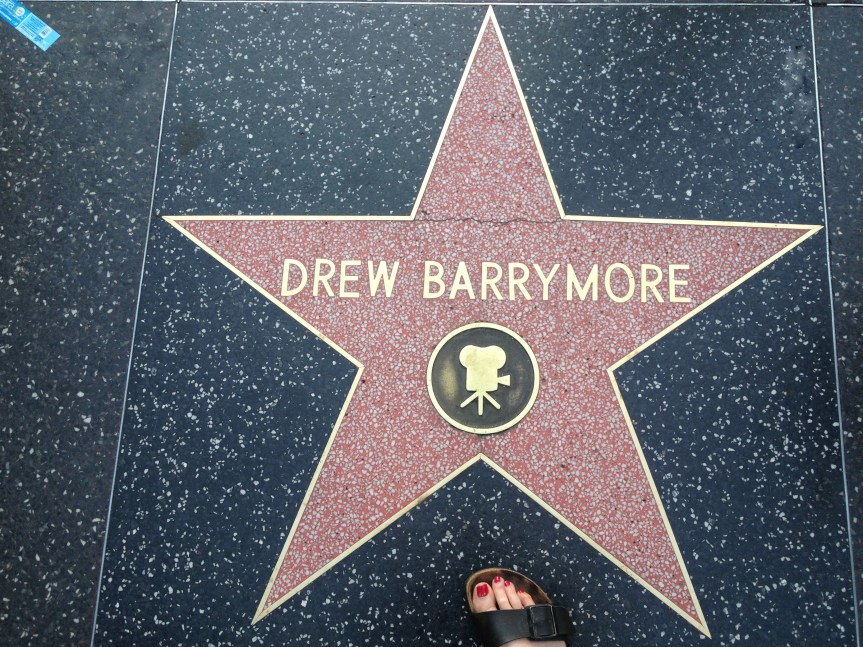
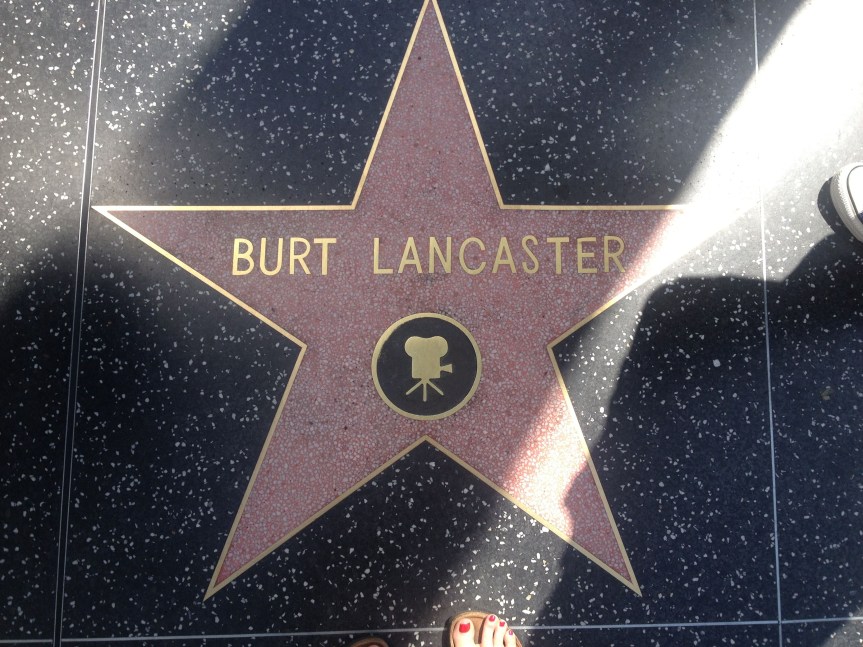
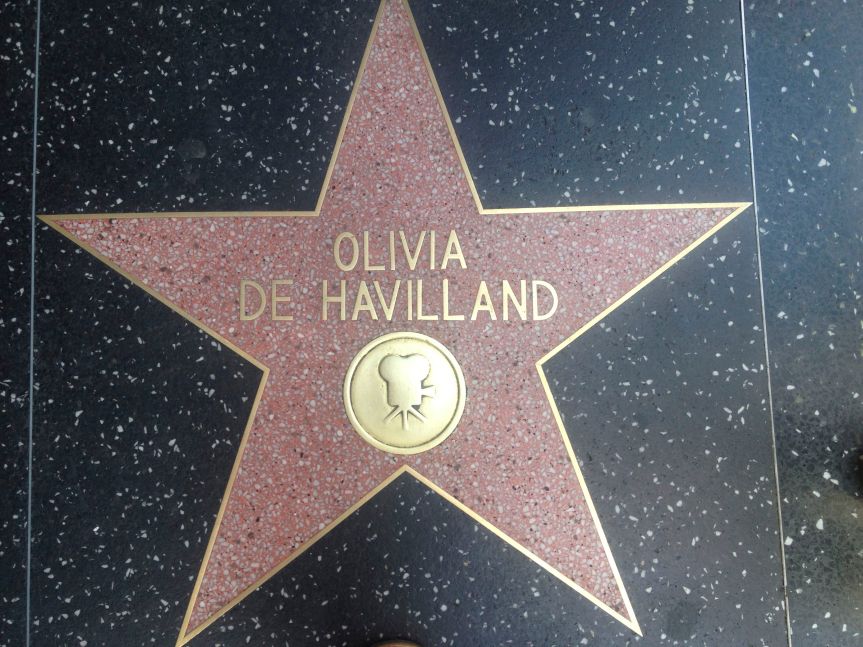
As I’ve never walked down Hollywood Blvd. before, I’m sure I’ll be taking more of these:

IMG_2138

IMG_2089

IMG_2137

IMG_2140

IMG_2139

I’m planning a complete post when I return.

Reckless Review: BROKEN FLOWERS

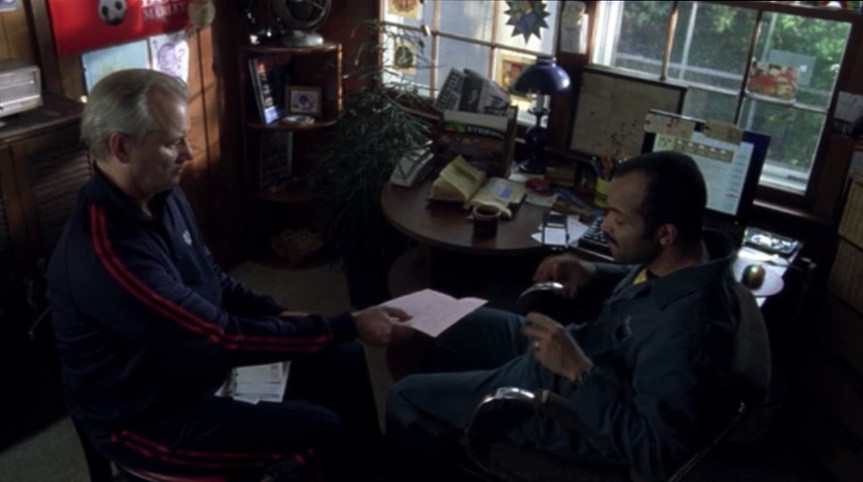
It’s difficult not to feel bad for Don Johnston (Bill Murray), the protagonist in Jim Jarmusch’s Broken Flowers (2005). Though he made a bunch of money a while back in something to do with computers and doesn’t need to work, he is almost completely alone, even when there are people around. We meet him as his girlfriend Sherry (Julie Delpy) is moving out of his dark, nearly empty, house. As she leaves, she sees his mail on the floor in the foyer, a pink envelope on the top of the stack. “Looks like you got a love letter from one of your other girlfriends,” she says, clearly disgusted. When Don opens the letter, he’s with his next-door neighbor and buddy Winston (Jeffrey Wright), and its contents are a shock.

Bill Murray and Jeffrey Wright in BROKEN FLOWERS (2005)

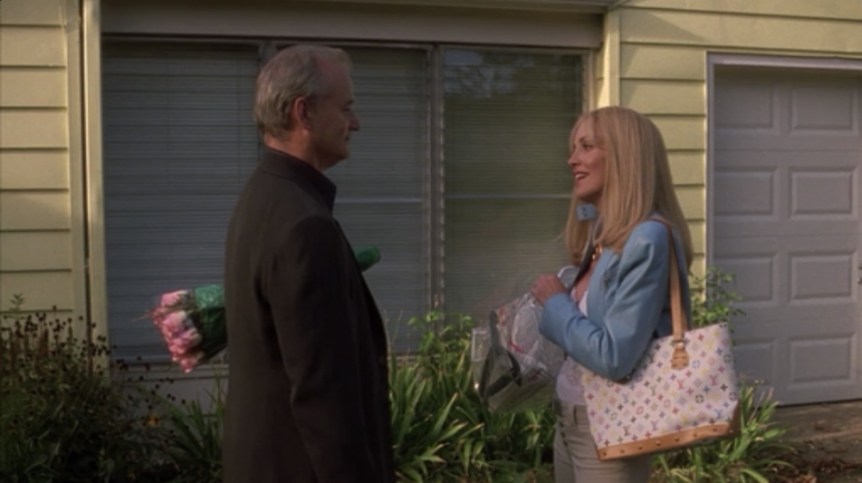
Don reads that he has a son he doesn’t know about, born nearly 20 years before. This child is searching for Don and may find him. But who is the mother? The letter is unsigned, the postmark too faint to read, and apparently back in the day, Don lived up to the Don Juan characteristics implied in his name…there are quite a few women who could have written it. Amateur detective Winston begins a Sherlock-Holmes-style analysis of the stationery — it’s pink and flowery, and whoever wrote it used an old typewriter with a red ribbon. Don protests that the whole thing is a joke and he doesn’t want to know, but he is overwhelmingly lonely, and as Winston won’t let the mystery alone, Don is soon on a mission to revisit the possible moms. Trekking around the country to unspecified locations, he encounters his former girlfriends’ surprise, rage, indifference, and everything in between. Standouts along the way include Sharon Stone, Chloë Sevigny, the unrecognizable Tilda Swinton, and Alexis Dziena, as Stone’s character’s teenaged daughter, who has interesting fashion sense.

murray-stone-broken-flowers

The film’s pace is leisurely but quietly captivating, as Jarmusch uses suspense-style compositions to create understated tension. He takes the advice “show, don’t tell” and applies in a straightforward style. Murray gives a convincing, melancholy performance, with only hints of the goofball we know is there. Don never says, “I’m lonely,” but we see his life contrasted with Winston and his wife Mona’s. Each ex is a fairly well-sketched person, with her own believable personality — all they seem to have in common is that they were blonde. We get to judge for ourselves whether or not they are telling the truth about their lives — Jarmusch doesn’t weigh in.  “Look for clues,” Winston urges Don, referring to the typewriter and the pink flowers that will reveal the mother’s identity, but what Don is really looking for is the meaning of his life.

Another part of Broken Flowers‘ charm is its remarkable soundtrack. Where you might expect anguished folk-rock or confessional ballads, Jarmusch and music editor Jay Rabinowitz provide an eclectic mix of upbeat, sunny-sounding tunes. There are multiple tracks from both Ethiopian jazz composer Mulatu Astatke and British singer Holly Golightly, with and without the Greenhornes. What this all means for the moviegoer is an excellent if overlooked little gem of a film.

Five Fave Classic Cinematographers, Pt. 1: John F. Seitz

If anyone out there has attended a TCM Party hosted by me, you know I always natter on about great Old Hollywood cinematographers, the crisp blacks and whites and beautiful contrast they produced, etc. etc. There are a few names that come up repeatedly, more often than most. Gregg Toland — Citizen Kane, Ball of Fire, The Little Foxes, The Best Years of Our Lives — is an obvious possibility, as is Jack Cardiff — A Matter of Life and Death, Black Narcissus, The Red Shoes. But with this post I’m beginning a series about five less well-known DPs who are equally deserving of some attention.

SeitzCamera-1936
John Francis Seitz of the American Society of Cinematographers, c. 1936

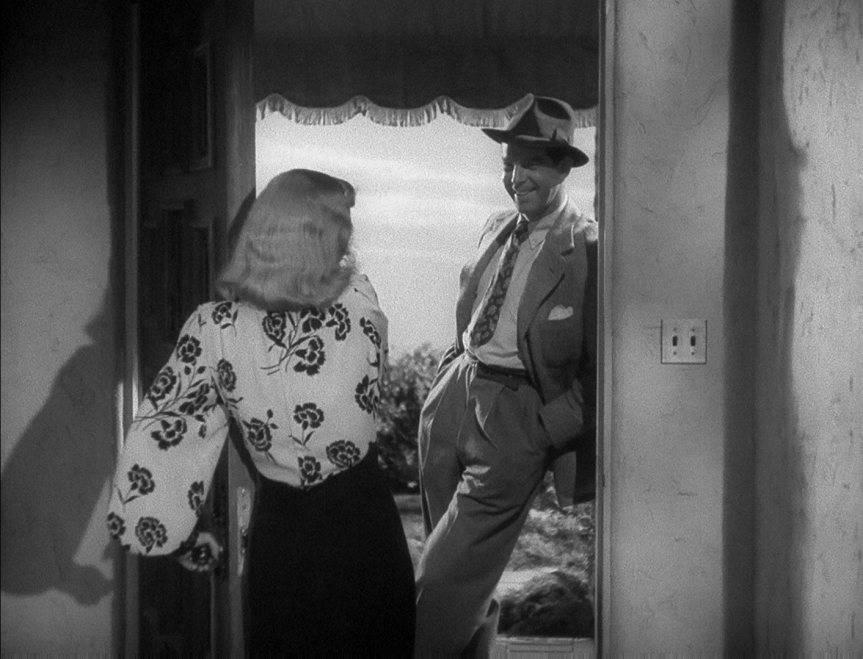
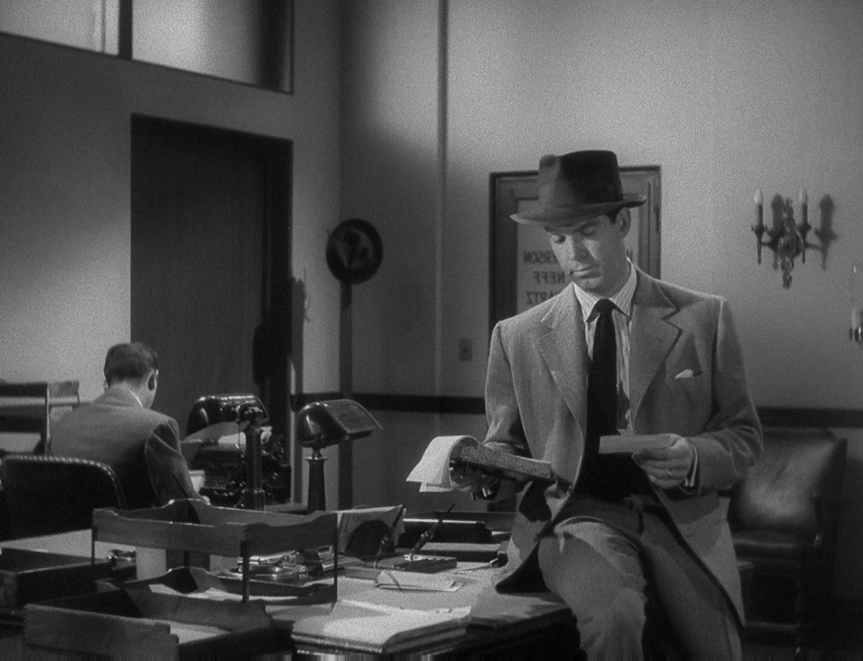
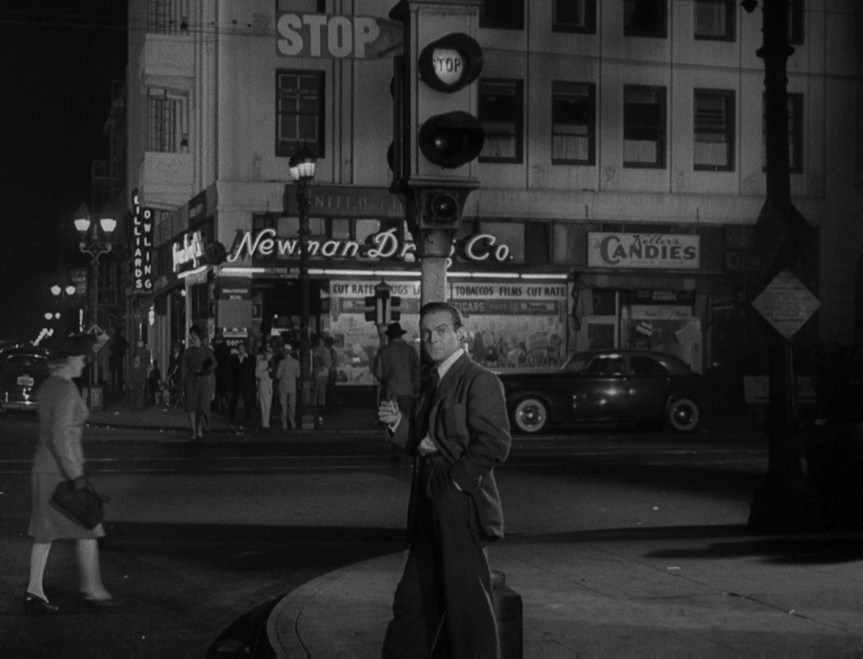
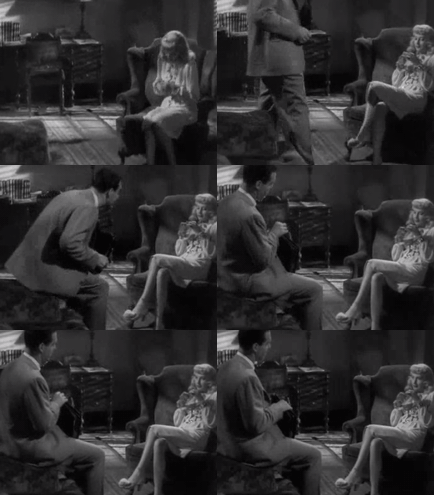
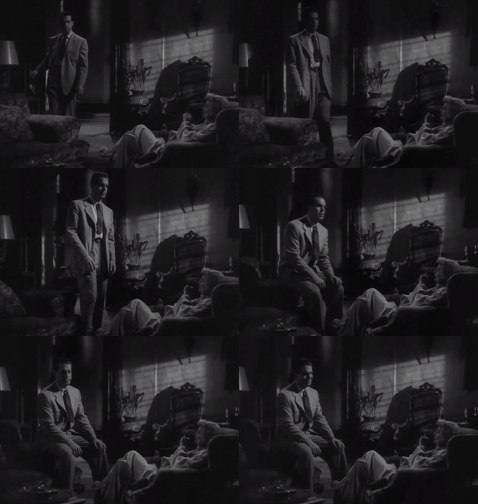
I’m going to start with John F. Seitz, ASC. Seitz is probably best known for the films noir he worked on with Billy Wilder, Sunset Blvd. and Double Indemnity, which I was admiring last Sunday as I watched it for the bazillionth time. All of Seitz’ trademarks — inky blacks and brilliant whites, “differential illumination of different regions of the screen,” “Rembrandt north light,” and low key lighting — are present in Indemnity, creating some of the most influential noir images ever made.
16

15

25

Double Indemnity screen caps are from the fabulous Bluscreens blog.

I find these two parallel scenes particularly striking examples of how Wilder and Seitz worked together so well…in both Walter Neff (Fred MacMurray) walks into the room and sits down in front of Phyllis Dietrichson (Barbara Stanwyck), but the angle is slightly different, and the lighting serves as a barometer for their relationship.

From sunny days...
From sunny days…
...to trouble in paradise.
…to trouble in paradise.

Gifs by A Modern Musketeer.

Some of Seitz’ work on Sunset Blvd.:

Sunset Blvd. caps from DVD Beaver.

Indemnity and Sunset are just two of Seitz’ 163 films, made over more than 4 decades. Born in 1892, Seitz began as a lab tech in Chicago in 1909 and was working in movies as a director of photography by 1913, continuing through his last film, Guns of the Timberland (1960). He held 18 patents for photographic devices and processes — including dissolve techniques and the matte shot, which he fine-tuned while working on Rex Ingram’s Trifling Women (1922). The collaboration with Ingram was key to Seitz’ career:

Ingram was a great pictorialist; everything in his pictures was subordinate to the image. Collaborating with a cameraman of genius, John Seitz, he created some of the most beautiful films of the entire silent era.
Kevin Brownlow and John Kobal, Hollywood: The Pioneers

Seitz’ other works include some of my favorite movies: Sullivan’s Travels and This Gun For Hire, both with Veronica Lake; Five Graves To Cairo and The Lost Weekend, also directed by Wilder; and The Big Clock, which like Weekend, starred Ray Milland.  These are just a fraction of his output. How does one person create all those stunning images? Perhaps it was his willingness to experiment:

Where [others] might be inclined to play it safe by using tried and true techniques, Seitz doesn’t hesitate to stick his neck out to try for the unusual and original effect — and he invariably comes up with an exciting result. Far from being a trickster out to create an effect for its own sake, [he] remains an alert experimentalist, constantly searching for new approaches and original camera techniques to make the motion picture a more dramatic medium. There are no clichés in his style – as modern as tomorrow, rugged, forceful and, above all, alive. He insists that cinematography must exist to tell the screen story, rather than stand out as a separate artistic entity.
Herb Lightman, “Old Master, New Tricks,” American Cinematographer, September 1950

I can’t pretend that this post is in any way a definitive or comprehensive analysis of Seitz’ work, but I hope that it will compel a few to see some of it for themselves. TCM is offering two opportunities on Monday, April 15. One of the silent films he worked on, Mare Nostrum, directed by Ingram, is on at midnight Eastern time. According to TCM’s site, “British director Michael Powell, who worked on Mare Nostrum as a grip, would cite Ingram as one of the influences on his own visionary epics, including Black Narcissus (1947) and The Red Shoes (1948).” Also, one of the pre-codes Seitz shot, Ladies They Talk About (1933), also starring Stanwyck, is scheduled for 6:00 a.m. Eastern.

And now, a very belated THANK YOU: Sincere and heartfelt gratitude to whoever was so kind as to nominate me for not one but two 2013 LAMMY Awards, Best Classic Film Blog, and Best Blogathon/Meme for 31 Days of Oscar, credit for which I share with Kellee of Outspoken and Freckled and Aurora of Once Upon A Screen. There isn’t much chance of my getting through to the next round, but this is one case where I can honestly say the nomination is the award. Tune in to the LAMBcast on Monday at 9:00 a.m., featuring Aurora, to hear the final nominees.

Russell Crowe – The Early Years

This post is prompted by Flix Chatter’s recent post, Russell Crowe Birthday Tribute: Top 10 Favorite Roles of the Aussie Thespian. Her Top 3 favorite Crowe roles are the same as mine:

  1. Jeffrey Wigand in The Insider (This is the one that deserved an Oscar; if you haven’t seen it, get thee to Netflix or whatever ASAP.)
  2. Maximus in Gladiator
  3. Bud White in L.A. Confidential

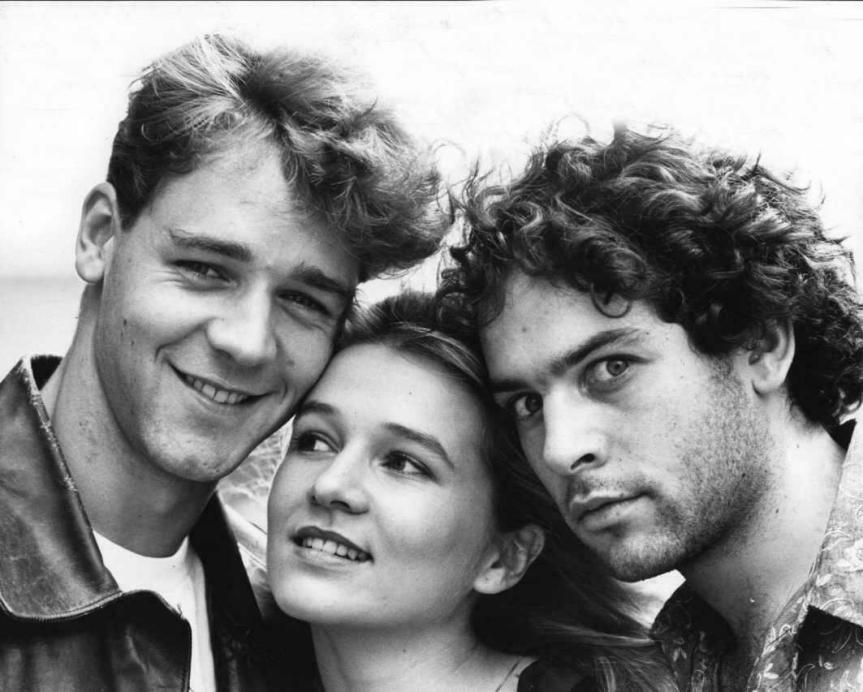
Her list brought to my mind the films that Crowe starred in before he got super-famous — relatively obscure Australian movies that didn’t win any major awards, yet were entertaining to watch, with the occasional interesting aspect to them. How do I know? Well, not that long ago, from around 1999 until 2005 or so, I was quite the fan of Crowe’s. Although I was nowhere near as dedicated as other admirers, I rented, borrowed or bought much of his early work. Sure, these films were 10 or more years old, but I had to see them. In those pre-Netflix days, before video was widely available online, this took some doing. Though lesser in both renown and production values, these movies did usually showcase Crowe’s talent and occasionally give insight into Australian society. Here’s a quick look at the ones I consider to have been most rewarding:

Crowe, Danielle Spencer, and Robert Mammone star in THE CROSSING

The Crossing (1990): Soapy love triangle starring Crowe as the main character’s former best friend and and Danielle Spencer as the former girlfriend. They met on this shoot and had an on-again, off-again relationship, before marrying and divorcing. Why you should bother: Crowe is darn good in it; it’s stunning really how much of his craft was already in place. Fun factoid: Director George Ogilvie paid to have Crowe’s broken front tooth replaced. (Update: Crowe and Spencer are not divorced, they are separated.)

Brides of Christ (1991): This miniseries from Australian television is about the teachers and students at a convent school in the 1960s. Crowe plays the boyfriend of the rebellious main character; their relationship is cut short when he gets drafted and sent to Vietnam. Why you should bother: Though it’s a dramatized version, BoC provides a glimpse of Australia’s social change and involvement in the Vietnam War, which I was not aware of previously. Other stars in the cast include Brenda Fricker as a nun and pre-fame Naomi Watts. Also Crowe does his own guitar playing and singing. Fun factoid: Though not that well-known in the U.S., female lead Kym Wilson is a big TV star in Oz. She starred in the Aussie indie Flirting with Watts and Nicole Kidman. I highly recommend this quirky little romance. Don’t be fooled by some of the DVD cover art you might see though; Wilson, Watts and Kidman are barely in it. The (perfect) leads are Noah Taylor and Thandie Newton.

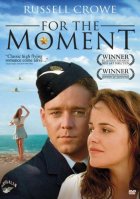
For-The-Moment-DVDFor The Moment (1993): Crowe plays an Australian WWII airman stationed in Canada, in love with his girlfriend’s married sister, whose husband is fighting in Europe. Why you should bother: Potentially clichéd characters elevated by some interesting, great-ish performances. Crowe in uniform, reciting poetry. Fun factoid: This film was an American/Canadian production, filmed in Manitoba, Canada at actual Commonwealth airbases.

The Sum of Us (1994): I can’t do any better than this summary on IMDB: “A widowed father…is searching for ‘Miss Right,’ his son …is searching for ‘Mr. Right.'” It’s a character-based comedy-drama, the kind that doesn’t really get made all that often anymore, depicting a realistic family’s good and bad times. Why you should bother: Crowe’s non-stereotypical character’s orientation is pretty much accepted and no more commented on than, say, eye color, presenting a refreshing perspective. Plus insight into Australian Christmas. Fun factoid: Crowe had already worked with the actor who plays his dad, Jack Thompson, when the former was a 6-year-old extra on a TV show. Bonus video: From the soundtrack,”Better Be Home Soon” by Crowded House:

You can hear Crowe talk about these and a lot of his other films in one of my all-time favorite episodes of Inside the Actors’ Studio:

If it’s Springtime, Why Is It Still Cold Outside Movie Quiz

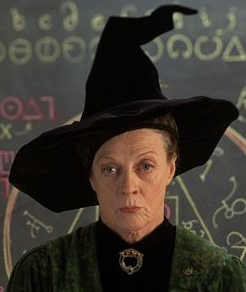
mcgonagall
Warning: this is no lightweight quiz. Extreme brainwracking may occur! Professor McGonagall approves.

My friend Michael of It Rains…You Get Wet answered this thought-provoking movie quiz earlier, it was actually devised by Dennis at Sergio Leone and the Infield Fly Rule, under the name “MISS JEAN BRODIE’S MODESTLY MAGNIFICENT, MATRIARCHALLY MANIPULATIVE SPRINGTIME-FOR-MUSSOLINI MOVIE QUIZ.” I’m so late on this that Dennis has already compiled all the answers here, here, here and here, but I still had a lot of fun with this quiz so, at the risk of total redundancy, I’m posting my answers.

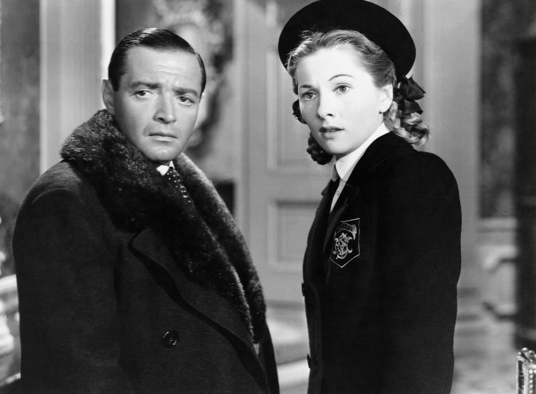
Lorre-Fontaine-Constant-Barf

1)      The classic movie moment everyone loves except me is:
Any of the 112 moments of The Constant Nymph (1943). Joan Fontaine was 25 and doesn’t seem 14 to me, just a little mental, but not as crazy as Charles Boyer’s character would be to leave Alexis Smith’s for a teenager. By the end of the film, I really felt they deserved each other.

 2)      Favorite line of dialogue from a film noir
“Baby, I don’t care.”

       
3)      Second favorite Hal Ashby film
The Last Detail. My number one is Harold and Maude. But have you ever seen 8 Million Ways To Die (1986)?

       
4)      Describe the moment when you first realized movies were directed as opposed to simply pieced together anonymously. *
I’m not really sure, but I have a pretty clear memory of my mother telling me how Atlanta burning in Gone with the Wind was actually the set from another film, and that they had filmed that first. Before that I thought they started with the first scene and went through it in the order of the finished film. I was maybe 10 or 11.
       
5)      Favorite film book 
Halliwell’s Film Guide. 

       
6)      Diana Sands or Vonetta McGee?
Vonetta McGee. Repo Man.

7)      Most egregious gap in your viewing of films made in the past 10 years
Children of Men. I know, I know!
       
8)      Favorite line of dialogue from a comedy
It is really difficult to choose one, but let’s go with: “All you need to start an asylum is an empty room and the right kind of people.”
       
EA02-crop

9) Second favorite Lloyd Bacon film
Espionage Agent (1939), with Joel McCrea and Brenda Marshall. Number one would be 42nd Street.

tumblr_mjiqvaE4xa1r3mh0to1_250
10)   Richard Burton or Roger Livesey?
Roger Livesey.       
11)   Is there a movie you staunchly refuse to consider seeing? If so, why?
A Clockwork Orange, because I don’t want anything to ruin Singin’ in the Rain. Killer Joe, because the description of that one is enough. Twilight, I guess just because I’m sick of hearing about it. There’s many others, probably hundreds.
       
12)   Favorite filmmaker collaboration
Orson Welles and Gregg Toland. Christopher Nolan and Wally Pfister. Quentin Tarantino and Sally Menke. Alfred and Alma Hitchcock.
       
13)   Most recently viewed movie on DVD/Blu-ray/theatrical?
The Guard (2011).
       
14)   Favorite line of dialogue from a horror movie
“If you want good product, you gotta buy American.”
        
15)   Second favorite Oliver Stone film
JFK. First favorite is still Platoon.
       
16)   Eva Mendes or Raquel Welch?
I don’t have strong feeling one way or the other. Let the flaming commence!

17)   Favorite religious satire
The Life of Brian. With runner up to Father Ted. It’s only runner-up because it’s not a movie, and it would have made a funny one.
       
18)   Best Internet movie argument? (question contributed by Tom Block)
19)   Most pointless Internet movie argument? (question contributed by Tom Block)
I think a lot of the time, these are the same thing. Internet movie arguments are the best, because mostly they are fun, and they’re also pointless, because I’ve yet to have one change my mind about anything important. Any argument that turns personal or has people unfollowing and blocking each other is a big bummer, though.
       
20)   Charles McGraw or Robert Ryan?
Robert Ryan.
         
21)   Favorite line of dialogue from a western
“Old man, make three coffins.”
       
22)   Second favorite Roy Del Ruth film
Tail Spin. First choice is Topper Returns. The movie isn’t all that great, but Joan Blondell is in it.

23)   Relatively unknown film or filmmaker you’d most eagerly proselytize for
It used to be Rian Johnson, because I knew he was a genius about 5 minutes into Brick. Richard Linklater is hardly an unknown filmmaker, but his Bernie (2012) is mostly unknown, and that is the one I’ve probably yammered on about the most.
       
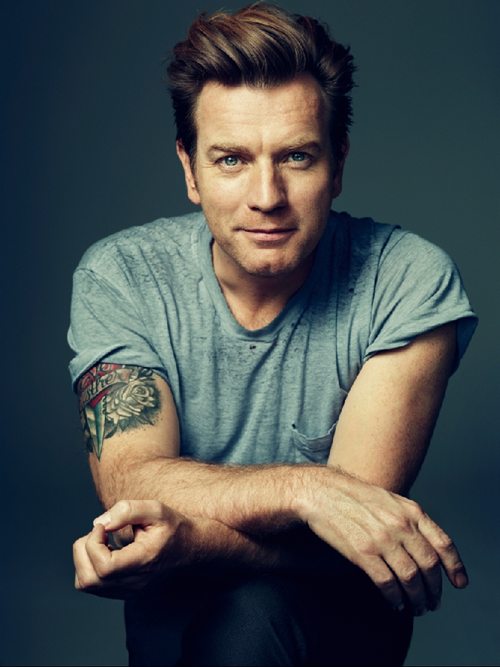
24)   Ewan McGregor or Gerard Butler?
With apologies to Ruth at Flix Chatter, Ewan McGregor.
ewan-mcgregor
       
25)   Is there such a thing as a perfect movie?
I don’t know. But there are some that are pretty darn close. Casablanca. Jane Eyre.
       
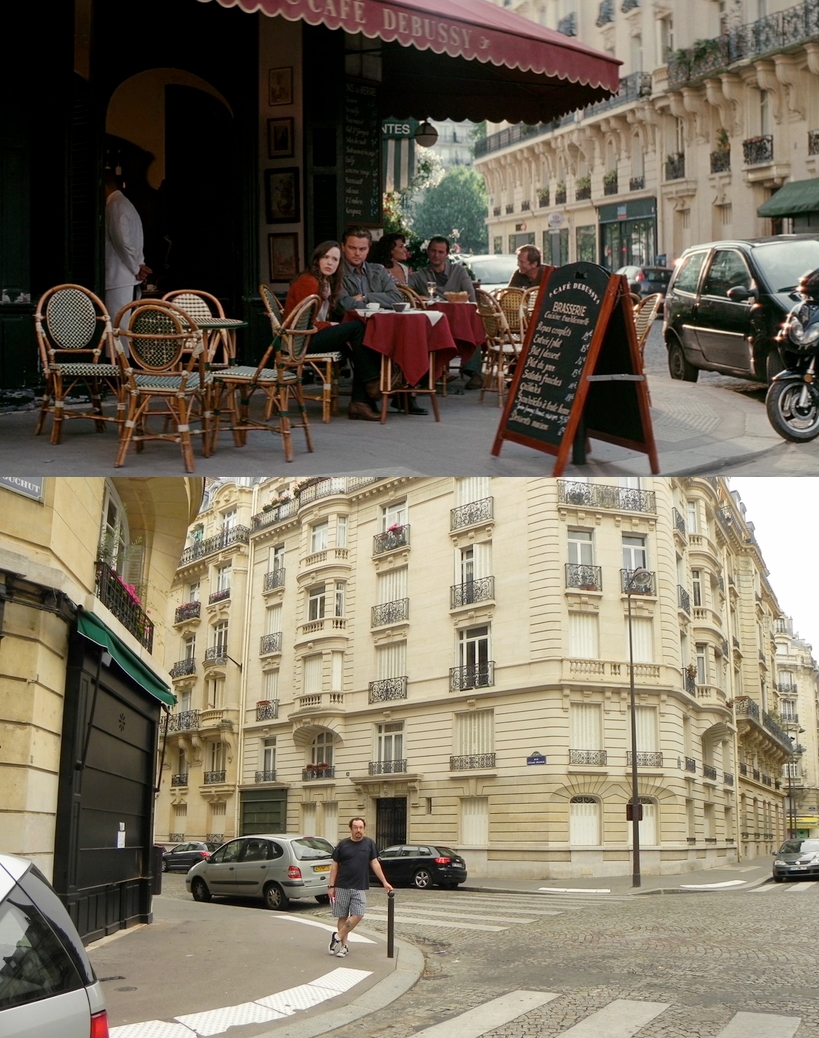
 26)   Favorite movie location you’ve most recently had the occasion to actually visit *
Da Stuzzi, the café they dressed for Café Debussy in Inception (2010).
inception location - Café Debussy
Pointe Hardware & Lumber, where they filmed Gran Torino (2008).
“Clint Eastwood’s Favorite Hardware Store”
Pointe-Hardware-Gran-Torino
Metro Airport (DTW), used for Up In The Air (2009).
Up-In-The-Air-DTW-low
       
27)   Second favorite Delmer Daves film
As a director, Destination Tokyo (1943). First is Dark Passage (1947). As a writer, An Affair to Remember (1957). First would be The Petrified Forest (1936). I know, it was an adaptation of a play.
        
28)   Name the one DVD commentary you wish you could hear that, for whatever reason, doesn’t actually exist *
Casablanca.
       
29)   Gloria Grahame or Marie Windsor? Gloria Grahame.
Gloria Grahame as Violet in IT'S A WONDERFUL LIFE
       
30)   Name a filmmaker who never really lived up to the potential suggested by their early acclaim or success.
At the risk of incurring some major wrath…Orson Welles.
31)   Is there a movie-based disagreement serious enough that it might cause you to reevaluate the basis of a romantic relationship or a friendship? *
Not based on a certain actor, director or film. Twitter is basically an exercise in “to each his or her own.” However, I can’t be friends or more with anyone who enjoys rape scenes, i.e. clapping, cheering, wolf whistles.
* denotes a classic or, if you must, recycled question from quizzes past that Miss Brodie thought might be interesting to revisit.

31 Days of Oscar: THE TRAIN (1964)

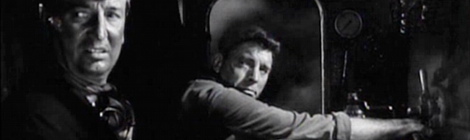
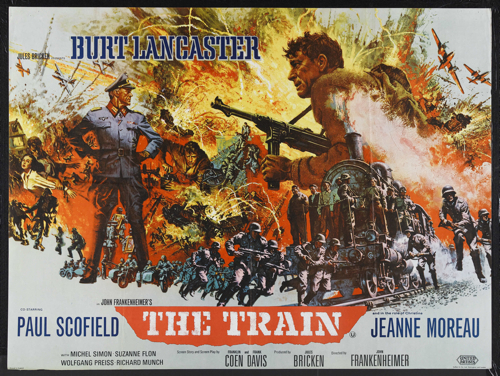
I talk about how much I love The Train all the time, I watch or DVR it every time it’s on, and I really want more people to see it, but I feel like I haven’t really said why. Its premise is deceptively simple: In the waning days of World War II, French railway inspector/Resistance member Labiche (Burt Lancaster) is ordered by Nazi-in-charge von Waldheim (Paul Scofield) to get a train through to Germany no matter what. Which wouldn’t be a big deal, except that nearly every important piece of art left in France is on the train. Von Waldheim has ruthless soldiers at his disposal, but Labiche’s Resistance friends, some of whom actually run the trains, are used to making sabotage seem normal. It’s an unpredictable, suspenseful chess match with French lives staked against the country’s soul.

Train1964-low-res

Maybe it’s so good because it’s so real. How real? Lancaster did all his own stunts. He even did stunts for another actor. He was injured only once during filming but it had nothing to do with the movie: He sprained his knee while golfing. Director John Frankenheimer covered it by having Labiche get shot in the leg.

Lancaster was actually responsible for Frankenheimer’s presence on set. After the first day of filming, Lancaster didn’t think original director Arthur Penn was emphasizing action and suspense as much as necessary. The actor, who was also producing, had Penn fired and called on his Young Savages/Birdman of Alcatraz/Seven Days in May director, who was happy to help — provided his conditions were met: the film’s official title would be “John Frankenheimer’s The Train;” he would have final cut; and he would receive a Ferrari. The producers agreed to all of it. (Don’t feel too badly for Penn…he went on to make Bonnie and Clyde.)

In addition, when you see trains crashing or derailing, they’re very real, life-sized, often WWII-era, trains — Frankenheimer didn’t use miniatures. In one scene, the production was able to take advantage of the French government’s decision to scrap a railyard by “planting dynamite charges beneath the tracks….According to Newsweek, this brief sequence incorporated 140 separate explosions, 3,000 pounds of TNT and 2,000 gallons of gasoline” [source].

I could write another whole blog post about the filming of these scenes:

and I haven’t even mentioned Jeanne Moreau’s cameo as an innkeeper who may or may not be collaborating with the Nazis, the crazy weather delays and their effect on the film, or the real-life true story that inspired the script — Rose Valland’s autobiographical Le front de l’art: défense des collections françaises, 1939-1945.*

Furthermore, the film can be enjoyed as both a straight-up action picture and as a philosophical exploration of art and war. It asks the questions, “How much does art matter, and is it worth dying for?” and suggests that one’s answer will vary based on class. The Train’s preoccupation with social status is understated, but it reminds me of another film with an ambivalent outlook on war, La Grande Illusion. For starters, both have working-class Frenchmen, Labiche and Jean Gabin’s Lieutenant Maréchal, and aristocratic Germans, von Waldheim and Erich von Stroheim’s Captain (later Major) von Rauffenstein, though their differences are far more prominent in Illusion.

So The Train won a ton of Oscars, right? Not at all. It received one Academy Award nomination for Best Writing, Story and Screenplay – Written Directly for the Screen — which it lost, to Darling. Neither film is really all that well-known today, but I confess I have more affection for the somber World War II movie that could.

31-Days-450x300

This post is part of Week 5 of the 31 Days of Oscar blogathon, hosted by myself, Aurora of Once Upon A Screen and Kellee of Outspoken & Freckled. Check out past weeks’ fabulous posts as well:   Week 1   Week 2   Week 3   Week 4

* Per IMDB, paintings from the Jeu de Paume Museum in Paris “were indeed loaded into a train for shipment to Germany during World War II, but fortunately, the elaborate deception seen in the movie was not really required. The train was merely routed onto a ring railway and circled around and around Paris until the Allies arrived.”

UPDATE: This post wouldn’t really be complete without Frankenheimer’s TCM tribute to Lancaster. The director talks about The Train, including the one-take scene Jack Deth referenced in his comment, here

31 Days of Oscar – 2013 Predictions and Musings

I am the first to admit that I have been too busy to actually see a good many of the 2013 nominees, but I still like predicting who will win and lamenting who should win but probably won’t. I haven’t read anyone else’s predictions but I do rely heavily on tweet buzz. I estimate a whopping .5% of the Academy are on Twitter, so we’ll see how that goes.

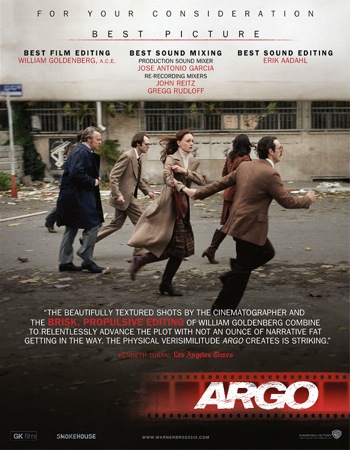
argo5-low-resBest Picture — While I’ve seen less than half the nominees in this category, and I suspect that Moonrise Kingdom belongs in it, I’m really happy to see movies from so many different genres get the nod. We’ve got a detective story, a Western, a couple of fantasies, historical drama, a musical, and even a rom-com that shows that two dysfunctional people can have a functional relationship. Not that Silver Linings Playbook is going to win…it looks like that distinction will go to Argo, with which I’m completely happy.

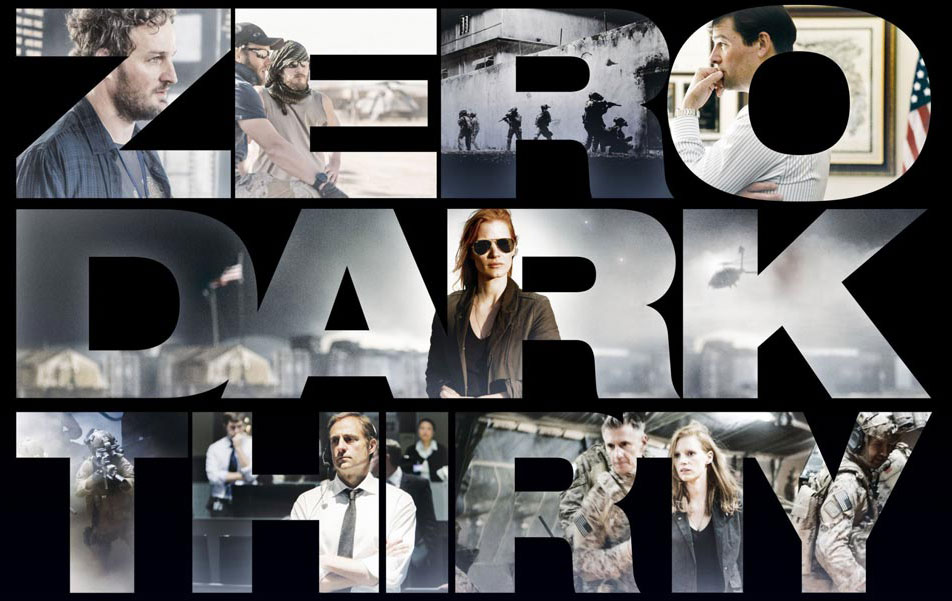
The detective story? Zero Dark Thirty. That’s how I think of it, but sometimes I wonder if I saw the same movie as everyone else. So I’ve really stopped reading anything about it. Yes, it shows torture and that really is bad f*cking news…but it also shows that, whether despite the torture or because of it, terrorist attacks continued. [[Possible spoiler —> Lead agent Maya (Jessica Chastain) gets her initial lead by tricking a suspect. Maya’s boss’s boss George (Mark Strong) sure does get ticked that his team isn’t making more progress. He advocates for more torture and more violence, to no avail. In the end, what does work (in the film anyway) was a methodology worthy of an old episode of Columbo or Agatha Christie’s Miss Marple…cross-checking rediscovered records from Moroccan intelligence. That’s right…bin Laden was found as a result of detective work.]] If this film glorifies torture, then Trainspotting and Requiem for a Dream glorify drugs.

zero-dark-thirty1Maybe the reason ZDT is so controversial is because a woman is the lynchpin of the ultimately successful “greatest manhunt in history.” Maybe it’s because Jason Clarke makes Dan, Maya’s colleague who does a lot of torturing, funny and likable, and that makes people uncomfortable (could just be me). Whatever the reason, the controversy surrounding this film has overshadowed its actual merit. There seems to be more outcry against a fictional piece of entertainment than there was against a real-life U.S. policy. Which is sad because it takes a ton of talent to retell a now-familiar story that is more static than dynamic in such an absorbing and visually stunning way. Yet this didn’t even get a nomination for Cinematography.

Actor — Daniel Day Lewis.

Actress — This is between Jessica Chastain and Jennifer Lawrence, with Lawrence winning it. I guess there’s a small chance they’ll cancel each other out and someone else will take home the statuette, but I doubt it. This is Chastain’s second Oscar nomination and sometimes I wonder if she’ll ever win, because her acting seems so effortless and her looks are so timeless. Hopefully those two attributes provide her with a long career.

I had fun once...

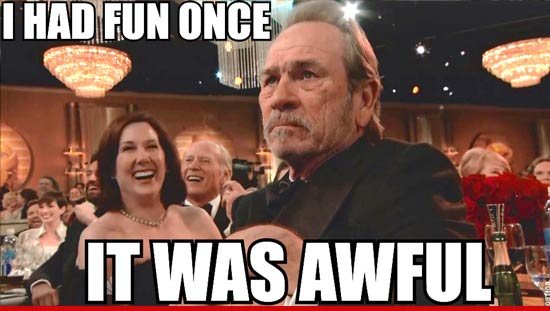
Supporting Actor — I’d like Christoph Waltz to win but I’m thinking it’s going to be Tommy Lee Jones.

Supporting Actress — Anne Hathaway. I don’t get why there’s so much negativity about her.

Director — Even though I’d rather talk about who isn’t in this category, I have the feeling this is a really close race. Or maybe it works the other way around…the race was so close that not all the worthy could be nominated. At any rate, I predict Steven Spielberg.

Foreign Language Film — I don’t really think there’s any doute about this one...Amour.

Animated FeatureFrankenweenie or Brave. Probably Brave.

Cinematography — I’d like Django Unchained or Skyfall (Bond DP Roger Deakins is a perennial nominee who has never won), but I think Life of Pi.

Costume DesignLes Misérables or Anna Karenina. I find this category fascinating, you might want to check out The Hollywood Reporter’s Costume Designers’ Roundtable if you haven’t already.

Original Screenplay — Probably not Zero Dark Thirty or Moonrise Kingdom. I’m thinking Django Unchained.

Adapted Screenplay — I’d like Argo, but I get the feeling it’ll be Lincoln.

Screenplay update: Guess what…both Zero Dark Thirty and Argo won Writers Guild of America awards last night (Feb. 17).

Original Song — “Skyfall” had better win.

Presenting Week 3 of the 31 Days of Oscar Blogathon

The winners, the losers, the snubs, the backstories, the gossip, the players and the games… it’s all about Oscar!

31-Days-450x300The 31 Days of Oscar blogathon, hosted by myself, Aurora of Once Upon A Screen, and Kellee of Outspoken and Freckled, continues. We’ve had two great weeks of submissions covering a wide variety of films from the silent era to this year’s nominees. So if you need more Oscar, you can also check out Week 1 and Week 2.

And now…these are the brilliant Week 3 posts, listed with Twitter handles (where available) so we can all find each other and converse.

Check out my completely random, probably totally wrong 2013 Oscar predictions, including a mini-review of Zero Dark Thirty.

“Glorious to look at, enchanting to listen to – a romance to remember…” My co-host Aurora (@CitizenScreen) reviews Midnight in Paris at Citizen Screenings.

Michael (@le0pard13) from It Rains… You Get Wet was a projectionist for a while, which I think eminently qualifies him to revise Oscar snubs from the 1970s and then make 1980s Oscar wrongs right as well.

Rich (@ratzo318) of Wide Screen World loves a good song and dance…for instance, octuple Oscar winner Cabaret.

The Nitrate Diva (@NitrateDiva) explores the connections between “spiritual sisters” and Oscar cinematography winners Black Narcissus and Apocalypse Now.

The Focused Filmographer (T, aka @FilmsWith_T) spotlights two criminally overlooked Oscar-worthy performances from 2012, one in The Perks of Being a Wallflower, the other in Les Misérables.

Paul (@LassoTheMovies) from Lasso The Movies discusses the similarities between 1940’s and 2012’s Oscar nominees, particularly the diversity of genres.

Pete (@FuriousCinema) from Furious Cinema reviews The Master, “another masterwork from visionary filmmaker Paul Thomas Anderson.”

The Gal Herself discusses “the first time Mr. Lincoln was in the house,” 1940 Best Actor race at One Gal’s Musings.

Angela (@MaterialGirl850) of The Hollywood Revue analyzes and assesses “Oscar’s Most Awkward Year,” 1928-1929.

Murtaza (@apotofvestiges) reviews The Master, “a multifaceted work of cinema that can be enjoyed at so many levels,” at A Potpourri of Vestiges.

Dawn at Noir and Chick Flicks explores why Blood and Sand (1941) won Best Cinematography.

Dan (@PGCooper) from PG Cooper’s Movie Reviews takes a look at 12 classic films that, despite being worthy of Best Picture and Best Director nods, received none at all.

Lê (@startspreading) at Crítica Retrô gives her take on Oscar and the surprising 1950s.

Joel (@joelrwilliams1) of Joel’s Classic Film Passion appraises three Oscar-winning or -nominated foreign films from the 1980s.

R.A. (@925screenings) at Silver Screenings briefs us on why Miriam Hopkins was perfect for the role of Becky Sharp.

Karen (@TheDarkPages) highlights 10 Oscar-Less Dames Their Oscar-Worthy Roles at Shadows and Satin.

Kimberly (@glamamor) at GlamAmor surveys Audrey Hepburn’s amazing, and non-nominated, wardrobe in Two for the Road.

Marlee (@MarleeWalters) of Spoilers bestows the First Annual Muse Awards to Ida Lupino, Gene Tierney, and Gloria Grahame.