Nothing like waiting until the last minute…at any rate, here they are. The one I really wavered over was Best Original Screenplay, I really want Bridesmaids to win but I just don’t think it will.
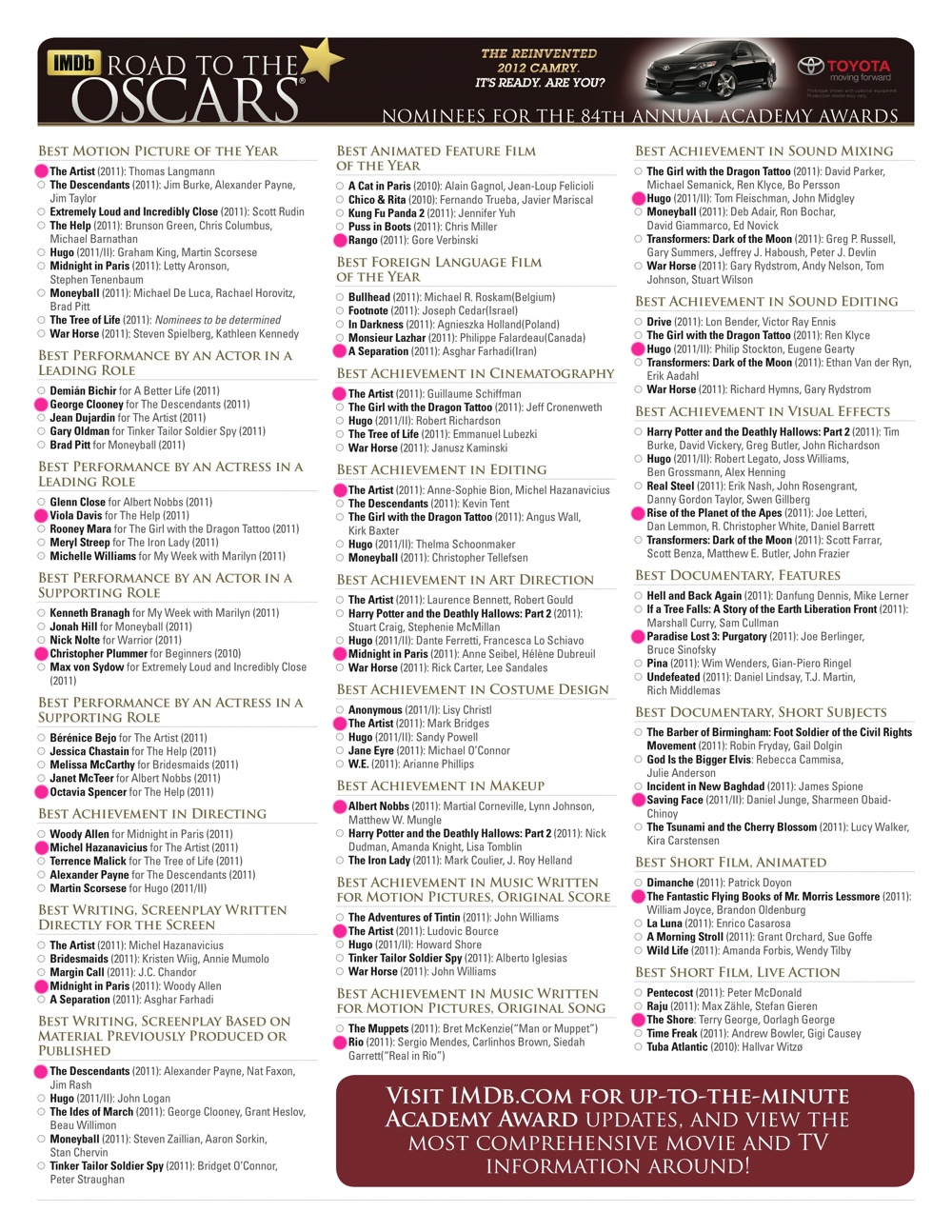

Nothing like waiting until the last minute…at any rate, here they are. The one I really wavered over was Best Original Screenplay, I really want Bridesmaids to win but I just don’t think it will.
With the 2012 Oscars less than a week away, Ruth at Flix Chatter came up with an amazing idea: A bunch of bloggers each pick a past year’s Best Picture winner and defend (or not) its merits and win-worthiness. I chose the year 1961. There’s no question that the Best Picture Oscar race that year was an interesting one. All the films in the contest had mighty talent behind and in front of the camera; some had sweeping scope, literary sources, and/or exotic locations. The eventual winner, The Apartment, relied on a deceptively simple concept and a very focused, contemporary setting to work its magic. The apartment of the title is that owned by C.C. “Bud” Baxter (Jack Lemmon), one of thousands of workers at the bottom of the pecking order at a giant insurance company in New York City. So many people work in the company’s offices that the start and stop times of the business day are staggered, so that there isn’t too massive of a crowd trying to catch the elevators at the same time.
At some point before the movie begins, Bud had lent the key to his conveniently located residence to one of the office higher-ups. Soon the key was in high demand by married execs who needed a place to entertain their mistresses. Bud doesn’t want to rock the boat, and he does want to get ahead, so he’s agreed to every request. Not that it’s easy on him. Bud has to find something else to do between the end of the business day and 8 p.m., when his “tenants” are supposed to be out. They eat all his food, drink all his booze, and leave their dirty dishes around. It seems he’s got it made, though, when he gets promoted after the execs give him rave reviews. Called upstairs to see the sleazy vice president of personnel, Jeff Sheldrake (Fred MacMurray), Bud receives a promotion, complete with an office that has a window. There is only one condition…Bud must now loan his key exclusively to Sheldrake, which Bud agrees to do. Soon after, Bud discovers that the lovely company elevator operator Fran Kubelik (Shirley MacLaine) is Sheldrake’s mistress. Although Bud hasn’t quite figured it out yet, he is in love with Fran. When circumstances throw them together, his life really gets complicated.
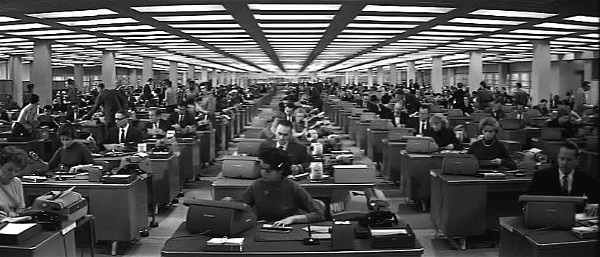
Billy Wilder directed and co-wrote the film and much of the time it has the trademark seriocomic vibe of another Best Picture nominee he wrote and directed, Sunset Blvd. (1950). The Apartment is both a satire of American corporate society, which seems not to have changed much since the late ’50s/early ’60s, and a charming, bittersweet romantic comedy. Wilder uses stunning wide shots of hundreds of desks or a seemingly endless park bench to emphasize the anonymity and facelessness of modern life, while using tight shots to signal the growing intimacy between Bud and Fran. His script laid the groundwork for really memorable, three-dimensional characters. The acting is uniformly great; Lemmon and MacLaine, who have some of the best chemistry ever, are perfect as two neurotics who take a while to realize they’re meant for each other. Fred MacMurray is astonishingly effective as one of the worst cads in a movie ever.
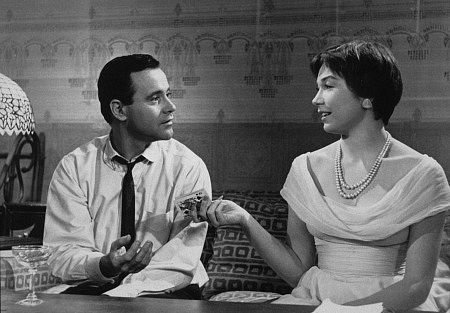
The Academy recognized The Apartment with 10 Oscar nominations, of which it won Best Picture, Director, Screenplay (Written for the Screen), Art Direction, and Editing. Lemmon and MacLaine were both nominated as well, but competition was tough that year. Burt Lancaster, Trevor Howard, Laurence Olivier, and Spencer Tracy received nods for Best Actor, while MacLaine contended with Elizabeth Taylor, Greer Garson, Deborah Kerr, and Melina Mercouri. (Lancaster and Taylor were the winners. MacMurray wasn’t nominated at all, which I find inexplicable.)
In the Best Picture category, The Apartment faced formidable competition from four other excellent films, all of which were set in the past: The Alamo in 1836 Texas, Elmer Gantry in small-town America in 1927, Sons and Lovers in London and Welsh coal mines in the early 20th century, and The Sundowners in 1920s Australia. And I would argue that, The Apartment, set in contemporary New York City, deserved to win, because it has retained its relevance and has the most to say about modern American life.
The questions dealt with in The Apartment — What are you willing to give up to get ahead? Which is more important, love or money? — resonate in everyday life possibly even more today. It’s easy to see oneself in Bud, Fran or possibly even Sheldrake (though I hope not the latter). Even more people are working in offices than in 1960 and can readily relate to its situations and dilemmas. If anything, corporations are even larger and more faceless, and even more depends on a person’s ability to survive workplace politics, doublespeak and backstabbing. If, God forbid, anyone wanted to do a remake set in the 21st century, a different location, a few mobile phones, and some laptops would be all that is necessary to update it.* Yes, elevator operators and giant metal adding machines are a rare sight in 2012. But greed, manipulation, deception, and infidelity, as well as love, friendship, and generosity are all still alive and well. And the small scale and everyday setting of The Apartment makes its comedy and wisdom universal. Oscar-wise, The Apartment was a great choice.
*The location change is absolutely necessary because I don’t believe there is any way an entry-level employee could afford a place in the west Sixties, just half a block from Central Park, but I am told that wild Christmas parties still occur, though I’ve never been to one.
TCM Week spotlights a highly subjective selection of the week’s essential or undiscovered films on the Turner Classic Movies channel to help plan movie viewing, DVR scheduling or TCM Party attendance. All times are EST.
I’m having trouble limiting myself during the 31 Days of Oscar…if I could, I’d call in every day for the month and just watch TCM. But that’s out of the question, so here are my highlights for the week. Remember though, you can’t really go wrong with anything on the channel this month.
Monday, February 13
8:00 p.m. Z (1969)
This French political thriller is a thinly veiled depiction of the 1963 assassination of a Greek pacifist politician and doctor, Grigoris Lambrakis (played by Yves Montand), and the subsequent cover-up by the military dictatorship in power at the time. Any resemblance actual persons and events, the disclaimer reads, is entirely intentional. It has been a while since I saw this, but the questions and fears it raises are still relevant today.
Tuesday, February 14
8:00 p.m. Top Hat (1935)
***TCM PARTY***
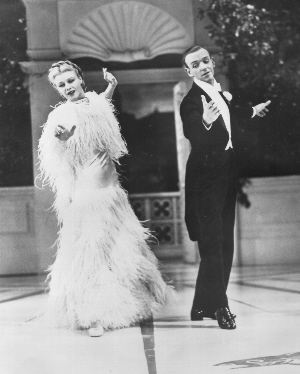
Fred Astaire and Ginger Rogers’ biggest hit is perfect for Valentine’s Day. Mistaken identity leads to true love. It’s also the excuse for great dancing, awesome songs and elaborate sets. Don’t blink or you might miss Lucille Ball in a cameo. Find us on Twitter with hashtag #TCMParty…watch and tweet along!
Wednesday, February 15
1:00 p.m. Air Force (1943)
Just when I think I’ve seen every film Howard Hawks ever directed, I see this in the schedule. And if there ever was a sucker for WWII movies, I am it. With John Garfield and Harry Carey Sr.
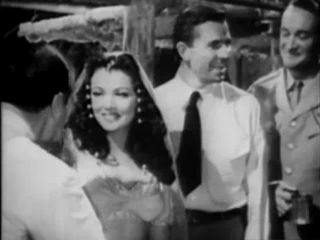
Thursday, February 16
9:00 a.m. Sundown (1941)
In Kenya, a couple of British officers are basically sitting out the war, enjoying the “best part of the day, sundown. Nothing more to do in a place where there’s nothing to do anyway.” That all changes when rules-oriented Major Coombs (George Sanders) takes over the casually-run outpost and Zia (Gene Tierney), a beautiful trader, shows up, eventually helping the British fight the Nazis. Known for “the sumptuous [and Oscar-nominated] black-and-white cinematography of Charles Lang” and the nominated score by Miklós Rózsa.
Friday, February 17
10:30 p.m. Gone with the Wind (1939)
***TCM PARTY***
There’s nothing I can say about this film that hasn’t already been said, except that, although parts of it make me very uncomfortable, I really like it quite a bit; that it was my grandmother’s favorite movie so I’ve seen it so many times that I can recite it from memory; and that I was very proud a few years back when a Facebook quiz told me that the GWTW character I’m most like is Mammy, who I think is the only character with consistently good sense. If you haven’t seen it, you really should. Then come back and watch this clip from The Carol Burnett Show (below). I think it was done with a lot of love. Find us on Twitter with hashtag #TCMParty…watch and tweet along!
In my 2011 Year-End List, I chose The Artist as one of the 2011 movies I was dying to see but couldn’t until 2012. Well, I did get to see it — twice! — and I have to say it’s one of my favorite movies of last year…this year…any year. I even modified my banner…yeah, it’s that good.
The film offers a special thrill for fans of classic movies, because it pays tribute to them, yet it’s thoroughly modern. Without giving too much away, I noted homages to classics like Sunset Boulevard, A Star Is Born, and Singing in the Rain (see below). Director Michel Hazanavicius shot at 22 frames per second, instead of the standard 24, to give the film a little of the jumpiness so characteristic of silent movies. Music is used more centrally than in a sound film, to emphasize moods or events. But the way sound is used and the way shots are framed are thoroughly 21st century. Also, it is a rare silent that has the high contrast of the deep blacks and crisp whites that Hazanavicius and his DP, Guilllaume Schiffman, were able to produce. I don’t want to say too much because I want everyone to see this movie on the big screen if possible…but even at home, it’ll still be stunning.
I so love seeing a movie made by people who love classic movies that I decided to try to put all the references I could think of together. NB: I have a complex about spoiling things for people…I hate to do it! So: There may be spoilers below…if you haven’t seen The Artist you might want to wait until you see it…and then come back and add the movie references you find! I know I’ve missed some.
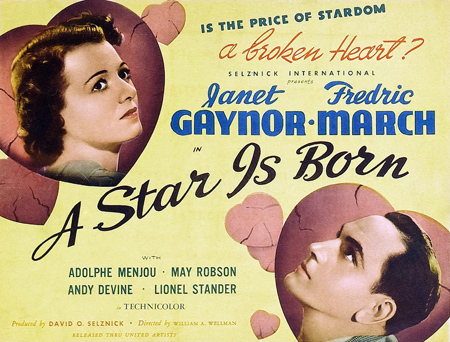
The basic idea that propels the film is familiar to viewers of all three versions of A Star Is Born: a young woman who wants to be an actress (Peppy Miller, played by Bérénice Bejo) works her way up from extra to top-billed talent, aided greatly by an established actor (George Valentin, played by Jean Dujardin), whom she meets in a chance encounter. Her career skyrockets while his is fading. TCM is running the 1937 and 1954 versions of Star on Feb. 26, so if there are any more specific points in common I’ve missed, I might be able to pick them up then.
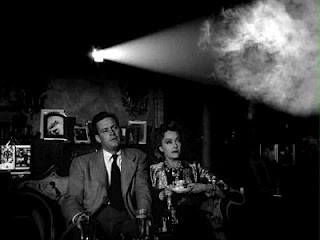
The Artist shares a thread with Sunset Boulevard: The proud (though faded) star who is disdainful of change and has a kind chauffeur. Like Norma Desmond (silent star Gloria Swanson), George Valentin has no use for talkies. Both like to relive their pre-talkie glory days by watching their old movies. I can see him nodding vigorously in agreement as she declaims, “I am big. It’s the pictures that got small” or “We didn’t need dialogue. We had faces!” Unlike the protagonists in the above-named films, thank goodness George is ultimately a more sane and hopeful figure.
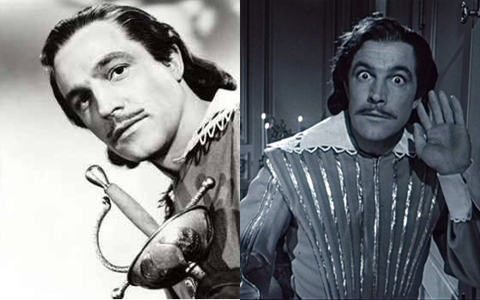 The Artist takes place at around the same time Singin’ in the Rain is set, and in the same context, and there are quite a few similarities between the two films. Like Don Lockwood (Gene Kelly), George has an acting partner, Constance (Missi Pyle), whose transition to talkies was rough. Her sound test reminded me a lot of the work done by Lina Lamont (Jean Hagen) in Singin’ (above). Kelly as an actor seems to have been a major influence. Dujardin gives George the same athletic style of movement as Kelly. I wish I could have found a still of Dujardin in the swordfight scene; with the thin moustache. he really resembles Kelly as D’Artagnan in The Three Musketeers (1948) or in The Dueling Cavalier (the movie within a movie in Singin’).
Early in The Artist, the scene where George is having breakfast with his disapproving soon-to-be ex-wife Doris (Penelope Ann Miller) references the breakfast montage in Citizen Kane. Hazanavicius’ use of mirrors reminds me a lot of Kane. Also, when George finds a room full of belongings that he had to sell (that’s all I’m going to say), it reminded me of the shot at the end of Kane, depicting the dead man’s vast and largely meaningless collection of stuff.
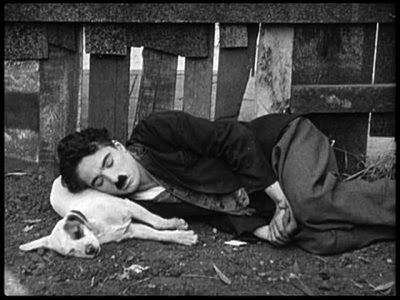 In Charlie Chaplin’s A Dog’s Life, The Little Tramp’s dog is always getting his human out of a jam, as is George’s dog (played by Uggie). I know there are probably references to other silent films, especially the staircase scene where George, on his way down, meets Peppy, on her way up. I have a lot to learn about silents though, so I will have to discover them as I work through them. Many thanks to @tpjost, for his help with this post. If you want to learn or talk about silents, definitely follow him on Twitter.
UPDATE: From sharp-eyed and knowledgeable film fans @caralluch and @Kinetograph (you really should follow them :)): The dance number at the end of The Artist is a lot like Fred Astaire and Eleanor Powell’s tapdance to “Begin the Beguine” in The Broadway Melody of 1940. Also, @caralluch alerted me to Hazanvicius’ use of mirrors, which recalls Ernst Lubitsch’s Trouble in Paradise. And, though @Kinetograph wasn’t the first to notice the use of part of Bernard Hermann’s Vertigo score in the scene where Peppy drives frantically across town to save George, he did give me the heads-up on that and also similarities with 7th Heaven, which I haven’t seen. So there are more specifics in the works.
UPDATE: Vincent from Carole & Co (dedicated to the fabulous Lombard) has written a great review of The Artist that includes some similarities that I missed.
What do you all think? What did movie references in The Artist I miss? Let me know below 🙂
TCM Week spotlights a highly subjective selection of the week’s essential or undiscovered films on the Turner Classic Movies channel to help plan movie viewing, DVR scheduling or TCM Party attendance. All times are EST.
Monday, February 6
Plenty of WWII movies today as TCM takes us to Eastern Europe and The Netherlands as part of the travel-themed 31 Days of Oscar.
4:15 p.m. Once Upon a Honeymoon
The rare Cary Grant movie I haven’t seen, in which his character tries to rescue Ginger Rogers’ from her ill-advised marriage to a Nazi.
6:15 p.m. To Be or Not To Be 1942
A crazy bunch of thespians including Carole Lombard and Jack Benny cope with the Nazi occupation of Poland and attempt in their own eccentric way to aid the Resistance.
8:00 p.m. Foreign Correspondent 1940
***TCM PARTY***
Britain was at war with Germany but the Blitz hadn’t yet begun, and the USA’s entry into WWII was over a year away, when Alfred Hitchcock started shooting Foreign Correspondent. As the newsreel-style trailer suggests, the plot is ripped from the headlines. American newspaperman Johnny Jones (Joel McCrea) is dispatched to Europe to get the truth about the growing international crisis. Jones,with the help of a British reporter (George Sanders), attempts to unravel the asssassination of a Dutch official, as the leader of the Universal Peace Party (Herbert Marshall) and his daughter (Laraine Day) complicate matters. Hitchcock definitely intended to sway US hearts and minds, but he also created a suspenseful, compelling and underrated film, one of my all-time favorites. Find us on Twitter with #TCMParty…watch and tweet along!
Tuesday, February 7
8:00 p.m. Decision Before Dawn 1952
Along with Powell and Pressburgers The Life and Death of Colonel Blimp, this is one of the few films made during or just after WWII that portrayed Germans as potentially noble human beings instead of bloodthirsty killing machines.
Wednesday, February 8
11:45 a.m. The Search 1948
I’ve never seen this film, shot in documentary style in still-ruined Nuremberg after WWII. A boy (Ivan Jandl) who survived a death camp is adopted by an American soldier (pre-stardom Montgomery Clift) while the boy’s mother (Jarmila Novotna) looks for him.
8:00 p.m. State Fair 1933
***TCM PARTY*** Hosted by @hockmangirl
Love and drama among farmers’ sons & daughters at the Iowa state fair in this “affectionate slice of Americana.” Find us on Twitter with #TCMParty…watch and tweet along!
Thursday, February 9
10:45 a.m. The Public Enemy 1931
James Cagney’s portrayal of a volatile street criminal on the South Side of Chicago made him a star.
10:30 p.m. Written on the Wind 1956
Douglas Sirk’s dramatic commentary on the American upper class, starring Rock Hudson, Lauren Bacall and Robert Stack.
Friday, February 10
3:00 a.m. Portrait of Jennie 1948
A starving artist (Joseph Cotten) finds inspiration when he falls in love with a beautiful girl (Jennifer Jones) who just happens to be a ghost.
Saturday, February 11
8:00 p.m. Wait Until Dark 1967
***TCM PARTY***
This movie scares the heck out of me…Audrey Hepburn plays a blind woman held captive in her home by evil thugs. Find us on Twitter with #TCMParty…watch and tweet along!
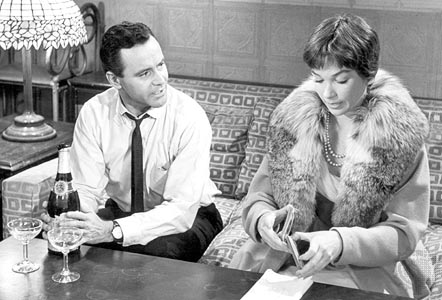
10:00 p.m. The Apartment 1960
***TCM PARTY***
Bud Baxter (Jack Lemmon), an ambitious employee, thinks it’s a good idea to let his married boss (Fred MacMurray) use his apartment for trysts with girls from the office. Until the elevator operator Bud’s in love with (Shirley MacLaine) is one of those seduced and abandoned. It’s a pointed satire of corporate (im)morals, with some comedy, sweetness, and chemistry between Lemmon and MacLaine to take the edge off. Find us on Twitter with #TCMParty…watch and tweet along!
Sunday, February 12
10:15 a.m. It Should Happen to You 1954
Another of my favorite Jack Lemmon movies, it also happens to be his first film, which eerily predicts the rise of reality stars who are famous for being famous, all hype and no talent. Judy Holliday is an unemployed model who gambles with her last dime on a billboard with her name on it and wins. But is fame all it’s cracked up to be?
***TCM PARTY-THON***
There’s so many great movies today, we couldn’t make up our minds. So stop on by anytime.
11:45 a.m. Lover Come Back 1961
1:45 p.m. Seven Little Foys 1955
3:30 p.m. There’s No Business Like Show Business 1954
5:45 p.m. Let’s Make Love 1960
8:00 p.m. Funny Girl 1968
So classic movie fans, what are you watching this week? Leave me an answer in the comments!
I seem to be perpetually short on time so I thought I’d make a nice list instead of those long, drawn-out posts I like so much 😉
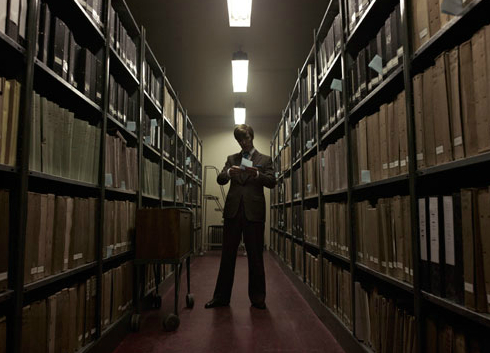
I really liked Tinker Tailor Soldier Spy (4 out of 5 stars). I usually like espionage movies, and of course there is the cast (some of whom are wearing some pretty great suits). Even if just any two of these guys was in it, I’d have gone, plus I am no longer ignorant of Benedict Cumberbatch. (Don’t judge the gaps in my knowledge! OK, go ahead…but at least leave a comment.) There isn’t a lot of shoot-’em-up behavior, but it is suspenseful nonetheless, especially if you get nervous when spies are spying on each other. Shoot-’em-up is fine too, though. This Means War? I’m so there.
I really liked Shame, but in a different way (4.5 out of 5 stars). It’s nearly perfect in itself but I don’t think I could see it again. I found it as depressing as I thought it would be from reading the script, although a lot of stuff in the version I read didn’t make it into the finished film. There’s no question that Michael Fassbender and Carey Mulligan deserved Oscar nominations. Both actors suggested so much in a non-showy way, without much dialogue, and I believe those performances are actually what kept Academy voters away (in addition to the subject matter). I’d have given it 5 stars if there had been just a little bit more backstory about Brandon and Sissy. What is the significance of “New York, New York?” Why is Brandon obsessed with the Standard Hotel? You know that cool girl in your high school that wore vintage years before it was cool and always looked fabulous? That’s Sissy…but what happened to her after that? You won’t find out in this interview Fassbender did on Canadian TV show The Hour but I’m throwing it in here because it’s pretty interesting.
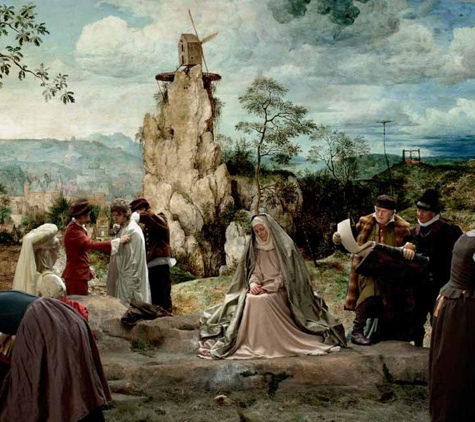
I really liked The Mill and The Cross (4 out of 5 stars). I wish there was a movie like this for every painting. It’s difficult to describe it. Again…not a lot of dialogue. It basically shows Brueghel’s (Rutger Hauer) inspiration for each figure and situation in the work. It’s a meditation on the creative process, a record of the human condition in Flanders in the 16th century (hint: lousy), an invective on humanity’s inhumanity, and a powerful statement in favor of the separation of church and state. If you get a chance to see this on the big screen, definitely go. Much will be lost on even the biggest home TV.
I loved The Artist (5 out of 5 stars), it’s just brilliant. It’s also laden with homages and tributes to Old Hollywood and the early 20th-century silents — a feast for classic movie fans. Still working on a larger post on this theme.
This month I also decided there should be ejector seats in cinemas (5 out of 5 stars). People who are talking/yelling, chomping loudly on gum, crinkling candy wrappers, talking on a cell phone, texting, tweeting or IMing can be removed in a speedy and efficient manner. Alternatively, should ejector seats prove too costly, perhaps two auditoriums can show the movie at the same time — talkers in one, silent types in the other. I’m kidding…sort of 😉 The stillness of Tinker Tailor Soldier Spy and The Mill and The Cross was almost wrecked. That was my non-classic moviegoing month of January 2012, how was yours?

I’ve been waiting to see The Mill and the Cross since last year, so I’m seriously looking forward to seeing it at Detroit Film Theatre this weekend. In this film by director Lech Majewski, the stories, characters and context of Pieter Brueghel’s 1564 painting The Way to Calvary come to life. The idea of being able to see what was going on in an artist’s mind and surroundings as he created a panoramic, detailed work like this is intriguing indeed. Apparently a mix of live action and CGI was used to recreate beautifully-lit visuals that are very similar to the painting’s. Rutger Hauer portrays Brueghel, who, inspired by a spider web, is apparently attempting to capture “everything” in one canvas, while the Inquisition overshadows everyday life in 16th-century Flanders, then governed by Spain.
The trailer reminded me of another film with a visual artist at its center, Peter Greenaway’s The Draughtsman’s Contract.
The Mill and The Cross is at DFT January 20-22 and 27-29, get all the details here.
I was a bit reluctant to see A Dangerous Method. Carl Jung’s ideas about the collective unconscious, synchronicity, archetypes, and the anima/animus were revolutionary at the time and still make a lot of sense to me. If you’ve ever taken a Myers-Briggs Type Indicator, that’s based on Jung’s concept of extroverted vs. introverted personalities. But the trailer sort of made it seem like I was going to have to title this review “Carl Jung Did More Than Feud with Freud and Sleep with His Patients.” Though Jung did have differences (and a messy breakup) with his onetime mentor Sigmund Freud, and at least two extra-marital relationships, there is so much more to the life and work of one of the 20th century’s greatest minds. And thankfully, A Dangerous Method is a better film than its trailer.
It is true, Jung was unique in his time for his emphasis of feminine consciousness, and he had many female patients, students, and colleagues, many of whom worked closely with him when they became analysts and/or researchers in their own right, well before women were the norm in the field. Method is about the relationships between Jung (Michael Fassbender); a woman who was all of the above plus Jung’s mistress, Sabina Spielrein (Keira Knightley); and both of their relationships, a kind of intellectual triangle, with Sigmund Freud (Viggo Mortensen). Also in the mix are a couple of polar opposites —Emma, Jung’s rather uptight wife (Sara Gadon), who knows all, and Otto Gross, a libertine student of Freud’s (Vincent Cassel), who avoids repression of any urge.
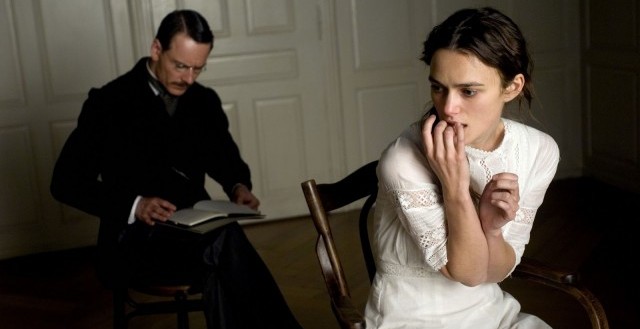
Sabina Spielrein was the first patient Jung attempted to cure with Freud’s “talking cure,” the basis of modern psychoanalysis. The danger of this method is transference, in which the patient transfers their feelings, often romantic or erotic feelings, to the therapist. The film opens as she’s in the midst of a nervous breakdown, being admitted to the Burghölzli, a psychiatric hospital at the University of Zurich in Switzerland, where Jung is assistant director. She’s volatile and disturbed, but she’s smart and educated, not to mention beautiful, and she responds well. Because her stated ambition is to become a doctor, she is soon helping Jung with his research, while he’s still treating her. She is admitted to a university and they work together. Eventually, Jung and Speilrein become lovers.
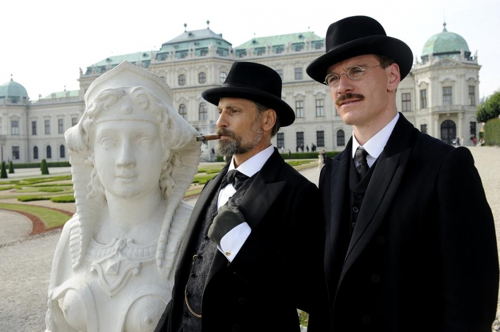
At the beginning of the film, Jung and Freud haven’t yet met. When they do, they have a 17-hour conversation and Jung is deemed heir apparent to Freud. “I’ve simply opened a door,” Freud tells Jung. “It’s for the young men like yourself to walk through it.” But as their collaboration continues, it seems like Freud would rather slam the door shut than let Jung take over. Freud thinks all neurosis has a sexual cause, and Jung believes that there are other factors, including spirituality and individual personality. Freud, almost 20 years older and set in his ways, is more and more reluctant to hear the younger man’s ideas. We see the authoritarian, almost tyrannical, side of him, and the cold and ruthless streak in Jung. Spielrein is caught in the middle — her love is with Jung but her mind takes her nearer to Freud.
The acting is uniformly great. Fassbender and Mortenson are excellent of course. Gadon is appropriately controlled. Cassel has an interesting cameo as Gross, who sets the stage for Jung and Spielrein’s relationship. Gross seems like a representation of Jung’s desires; we never see him talking to anyone else and he says so many things that Jung wants to hear.
But the real surprise to me was Keira Knightley. She shows you Sabina’s struggle, intelligence, and persistence. Even when she’s in full breakdown mode, she manages to suggest that there’s something more there, whatever it was that allowed a mental patient to become an analyst herself. I even liked her accent. I figure that’s what a Russian immigrant in Switzerland would sound like. I thought she deserved a Best Supporting Actress nomination but with the field so crowded with excellent performances, I knew it was a long shot.
Jung’s ideas are fairly abstract but the movie does a good, if somewhat sensationalized, job of explaining both his and Freud’s ideas. Christopher Hampton wrote the screenplay, an adaptation of his own play The Talking Cure, sometimes using Jung’s and Freud’s exact words. The language is beautiful and delivered well, be it smooth, violent, or repressed. Ultimately the film is beautifully shot but never fully sheds its stage-play origins. That’s a small price to pay though, when you’re witnessing a revolution.
PS: If anybody wants to read up on Jung, I highly recommend Introducing Jung written by Maggie Hyde and illustrated by Michael McGuinness. It’s like a comic book and it really explains things in an effective and painless way.
TCM Week spotlights a highly subjective selection of the week’s essential or undiscovered films on the Turner Classic Movies channel to help plan movie viewing, DVR scheduling or TCM Party attendance. All times are EST.
Monday, January 23
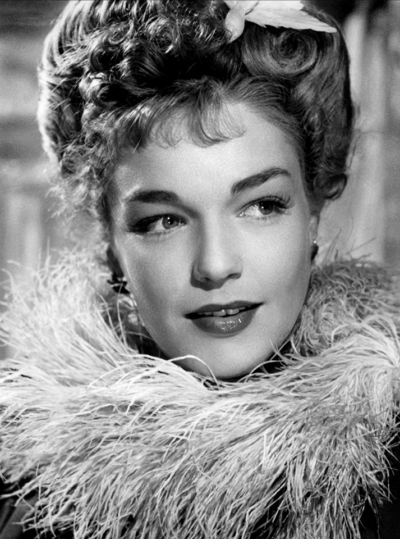
Tonight beginning at 8 p.m., TCM presents six films directed by Max Ophüls in Hollywood. Born in Germany in 1902, Ophüls was a director, creative director and producer in theater, then in films. He fled from the Nazis to France in 1933, and landed in Hollywood via Switzerland and Italy by 1941. He didn’t make a film in the US until five years later, when Robert Siodmak helped him land The Exile (1:00 a.m. Tues.). To me, Ophüls is synonymous with love and destiny, luxurious productions, and the brilliant, saturated color of the tragic Lola Montes. Other films in the block include:
8:00 p.m. The Reckless Moment
9:30 p.m. Caught
11:15 p.m. Letter from an Unknown Woman
1:00 a.m. The Exile
2:45 a.m. La Ronde
4:30 a.m. The Earrings of Madame de…
Tuesday, January 24
11:30 a.m. The Catered Affair (1956)
I’ve always heard, the wedding is for the family and the honeymoon is for the couple, and so it is when a daughter (Debbie Reynolds) gets engaged and her mother (Bette Davis) makes every effort to give the girl a wedding like the mother always wanted.
4:30 p.m. The Dirty Dozen (1967)
If you haven’t yet seen this classic about Aldo Raines Major Reisman (Lee Marvin) and 12 convicts (Telly Savalas, Charles Bronson, Ernest Borgnine, Jim Brown, and George Kennedy, among others) on an impossible mission to blow up a movie theater chateau containing a whole mess of Nazis, set your DVR now. If you don’t have a DVR, call in sick. At least put it in your Netflix queue. I’m serious.
Wednesday, January 25
8:00 p.m. Private Screenings: Angela Lansbury
9:00 p.m. Sweeney Todd: The Demon Barber of Fleet Street (1982)
***TCM Party***
A barber (George Hearn) begins a murderous partnership with the baker downstairs (Angela Lansbury). Find us on Twitter with #TCMParty…watch and tweet along!
Thursday, January 26
Jack Cardiff is best-known as a cinematographer but he was also an Oscar-nominated director (for 1960’s Sons and Lovers). Tonight TCM is showing another five of the 13 films Cardiff directed:
8:00 p.m. Intent to Kill (1958)
9:45 p.m. The Lion (1962)
11:30 p.m. Young Cassidy (1965)
1:30 a.m. The Liquidator (1966)
3:30 a.m. Dark of the Sun (1968)
Friday, January 27
TCM has a block of films directed by James Whale beginning at 8:00 p.m. tonight. I can recommend The Invisible Man and Frankenstein, but I also highly recommend Gods and Monsters, an imagining of the end of Whale’s life. It’s superbly acted by Ian McKellen and Brendan Fraser, and it’s nowhere near as depressing as it sounds.
8:00 p.m. The Great Garrick (1937)
9:45 p.m. One More River (1934)
11:15 p.m. The Invisible Man (1933)
12:30 a.m. (Sat.) Frankenstein (1931)
Saturday, January 28
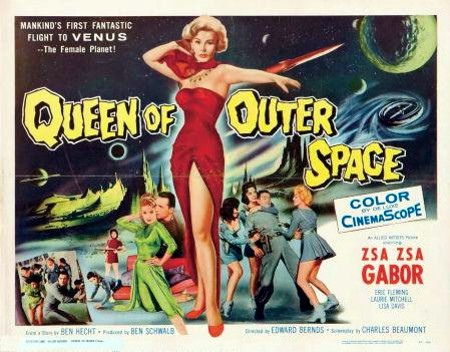
There’s a lot of famous movies scheduled today…Rocky, King Solomon’s Mines, The Misfits, Soylent Green, Rebel Without A Cause, and Guess Who’s Coming To Dinner…but I’m going to try to catch Zsa Zsa Gabor as one of the all-female inhabitants of Venus in a movie that promises to give new meaning to the term “campy,” Queen of Outer Space (7:30 a.m.); and Saratoga (10:15 p.m.), which pairs Clark Gable with Jean Harlow in her last film.
Sunday, January 29
6:00 a.m. The Hard Way (1942)
Yep, it’s early in the morning, but who am I to refuse an Ida Lupino movie?
2:00 a.m. (Mon.) The Vanishing (1988)
“A young man is obsessed with finding the girlfriend who vanished at a rest stop.”
Due to the SOPA blackout, I am a day late with my Cary Grant birthday post, but I am no less sincere. Writer’s block is troubling me for the second time in two weeks as I try to be original about how handsome, charming, and debonair he was, both in his movies and apparently in real life. As Audrey Hepburn said to him in Charade: “Do you know what’s wrong with you? NOTHING.” OK, that was dialogue between their characters…but still. And though at least some of the time American acting is about playing oneself, I also think Grant was a great actor. I’m thinking of Roger O. Thornhill’s disorientation and distress in North by Northwest, Johnny Aysgarth’s furtive shadiness in Suspicion, and John Robie’s desperation in To Catch A Thief.
My favorite Cary Grant moment, right at this moment, is his entrance in Indiscreet. He’s just there suddenly when Anna (Ingrid Bergman) turns around and she reacts pretty much as I would expect. The clip is here, he apparates in (yes, I do mean apparate) around the 7:55 mark.
I think probably the best tribute ever to Cary Grant has been done, by Michael Caine, courtesy of TCM:
So what’s your favorite Cary Grant movie, scene, or line? Leave a comment!
 Paula's Cinema Club