
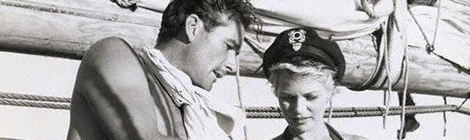
Back in May 2014, when Cinema Detroit was showing Sony Pictures’ 4K restoration of The Lady From Shanghai, I had occasion to research the making of Orson Welles’ classic film noir, and I discovered that, while Errol Flynn is (probably) not in the movie, he was present and was very much involved in the filming.
Call for posts: 31 Days of Oscar Blogathon (2015)
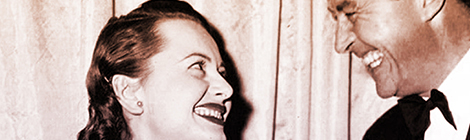
“Oscar and I have something in common. Oscar first came to the Hollywood scene in 1928. So did I. We’re both a little weather-beaten, but we’re still here and plan to be around for a whole lot longer.”
— John Wayne
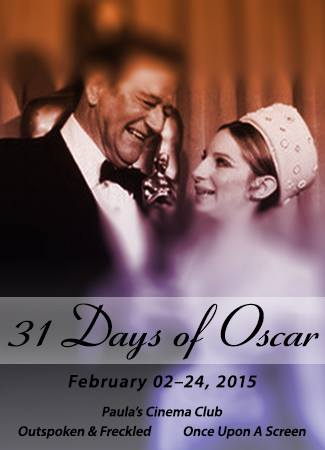
Continuing an Oscars tradition – albeit a much newer one than either the legendary awards or Mr. Wayne’s impressive career – Kellee (@IrishJayHawk66) of Outspoken and Freckled, Aurora (@CitizenScreen) of Once Upon a Screen, and myself, @Paula_Guthat of this blog, are back our Third Annual 31 Days of Oscar Blogathon. Update: Scroll on down to the end of the post to see the list of 2015 participants so far.
Continue reading “Call for posts: 31 Days of Oscar Blogathon (2015)”
Review: HOLLYWOOD OF THE ROCKIES by Michael J. Spencer
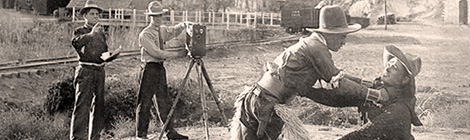
Hollywood of the Rockies: Colorado, the West and America’s Film Pioneers by Michael J. Spencer covers the twenty years that the Centennial State functioned as a movie production center, 1895 through 1915. Spencer thoughtfully begins the book with a brief recap of the “little tragedies and comedies” of America’s nascent film industry. This overview gives welcome context for the more specific history to follow.
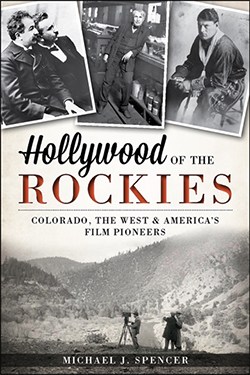 Spencer has an engaging, conversational style, and while there is some repetition, he tells the story in a compulsively readable way. His analogies between our time and a hundred years ago make the book an even more relevant read. For instance, he compares the pre-commercial era of film to the early days of YouTube. Just as with YouTube, there were early adopters. In Colorado’s case, its temporary status as a movie capital was essentially the work of two such individuals, “Colonel” William Selig and Harry “Buck” Buckwalter, who managed to sell folks back East on the desirability of authentic Western scenery for films.
Selig had invented his own projector and in the ’00s, acted as producer and distributor for Buckwalter’s numerous Colorado travelogues. Many of these involved product placement deals, innovative at the time, with railroad companies. Buckwalter’s facility with trains led to his hiring as a consultant on The Great Train Robbery in 1903. This was a “Western” epic, but it was filmed at Thomas Edison’s New Jersey studio. Buckwalter naturally thought that he and Selig could make some bank by providing genuine Western scenery — but they would have to get beyond travelogues.
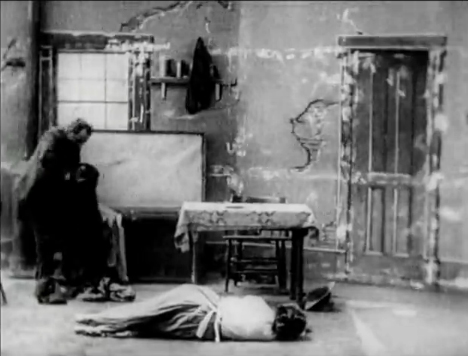
Their first narrative, Tracked by Bloodhounds, or A Lynching at Cripple Creek, featuring Colorado’s bluffs, valleys, and mountain ridges, was gritty and violent — and, Spencer writes, “a tremendous success….Moviegoers would never accept an East Coast backdrop for a Western again.” Much as today’s audiences can spot sketchy CGI in a few seconds, audiences over a hundred years ago could detect bogus scenery. This led to terms like “Eastern Western,” used to describe a film set in the West but obviously shot in the East, by those who had never been east of Pennsylvania.
Spencer also gives the cultural context for the immense popularity of the Western in general. In the U.S., the genre was an archetypal multimedia phenomenon, exemplified by Buffalo Bill’s Wild West live shows. And overseas, by the teens of the 20th century, the West itself as a valuable export. Via motion pictures, its scenery and inhabitants became the dominant representation of America around the world.
Thus Buckwalter, the Coloradan on-location producer and director, and Selig, the Chicago-based distributor and projector salesman, were uniquely positioned to capitalize on the Western craze, but they soon had competition. Gilbert Anderson, later known as “Broncho Billy,” and George Spoor, Selig’s projector rival, formed Essanay Film Manufacturing Company in 1907, and Anderson began producing and directing in Colorado as well. This competition had a personal angle to it: Anderson had briefly worked for Selig and been refused a partnership. Selig and Essanay spurred each other to new heights of production, and by 1912, Selig was churning out five films per week, to answer the high demand of store-front nickelodeons. (Anderson eventually became a huge star in front of the camera, but was supplanted by Selig star Tom Mix.)
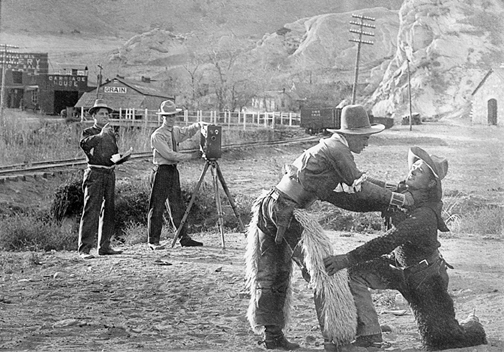 That year was the height of Colorado-based film production. A variety of concurrent factors — the rise of movie palaces, the advent of feature-length films, and World War I among them — conspired to concentrate the movie industry in Hollywood, so that very soon, “In the same way that there wasn’t much…automobile manufacturing outside of Detroit, movie production was becoming a scarce commodity outside Southern California.”
Though Colorado’s movie-making heyday was over, Spencer gives a fascinating account of those who persisted, and helpfully wraps up the book’s first section with an entertaining “Where Are They Now” section, recounting the fates of the major players. The second section of the book is equally valuable. “Before, During and After” details the cultural environment from which cinema emerged in the first place, and serves as one of the most clear and economical summaries of cinematic history I’ve ever read. The third section details where readers may be able to find the films mentioned in the book and gives a suggested reading list.
Hollywood of the Rockies is an informative and fun read about Colorado’s largely unknown chapter of film history. I’d never heard of most of the people involved, and by telling their story in the context of the overall field, Spencer sheds new light on movie-making in general. Highly recommended for the film fan or history buff on your Christmas list, the book is available online here.
THE BETTER ANGELS starts Friday, December 5

Another relatively unknown gem we are presenting at Cinema Detroit…if you dig breathtaking B & W cinematography, you owe it to yourself to see THE BETTER ANGELS on a big screen.

All that I am, or hope to be, I owe to my angel mother. — Abraham Lincoln
At an isolated log cabin in the harsh wilderness of Indiana circa 1817, the rhythms of love, tragedy, and the daily hardships of life on the developing frontier shaped one of our nation’s greatest heroes: Abraham Lincoln. Abe is a thoughtful and quiet boy who spends his days at the side of his beloved mother (Brit Marling) while learning to work the land from his stern father (Jason Clarke). When illness takes his mother, Abe’s new guardian angel comes in the form of his stepmother (Diane Kruger), who sees the potential in the boy and pushes for his further education.
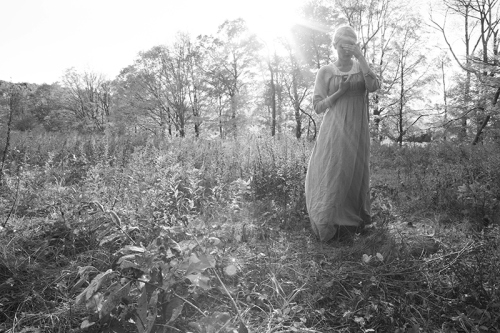
Produced by Terrence Malick and filmed in glorious black and white, The Better Angels sheds new light on the little-explored formative years of the legendary president as well as the women who shaped…
View original post 105 more words
The Big Parade – Historic Views of the Home Front
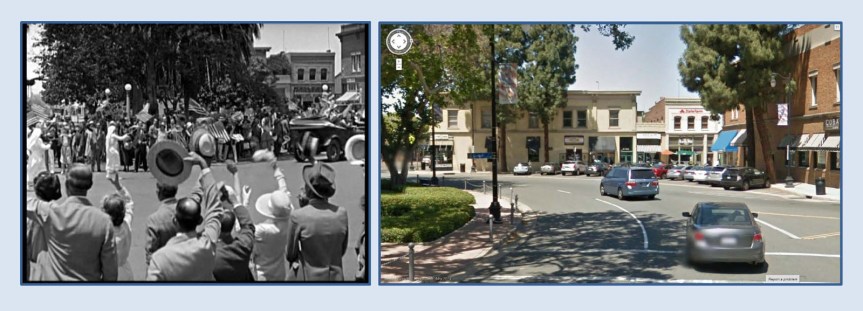
John Bengtson does the most amazing detective work, tracking down the locations where your favorite silents were filmed.

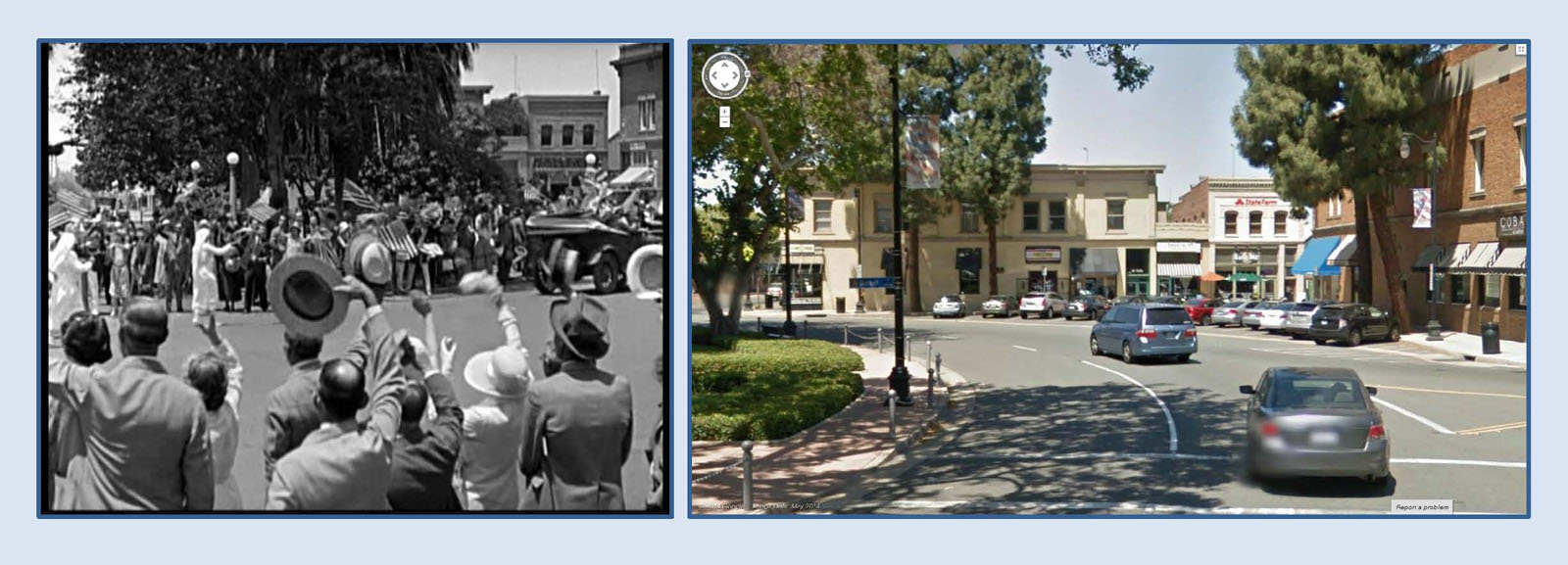 Small-town America (Orange, Calif.) swept up with patriotic fervor – The Big Parade.
 Although most of The Big Parade (1925) is set in the war-torn villages and battlefields of France, the acclaimed World War I drama also provides historic views of early downtown Los Angeles and Orange County. Told from the soldier’s point of view, the epic movie directed by King Vidor follows a trio of men from different walks of life brought together by combat.
Set in the Spring of 1917, the movie intertitles describe America then as a nation occupied in peaceful progression. Mills were humming with activity while buildings climbed skyward, monuments to commerce and progression.
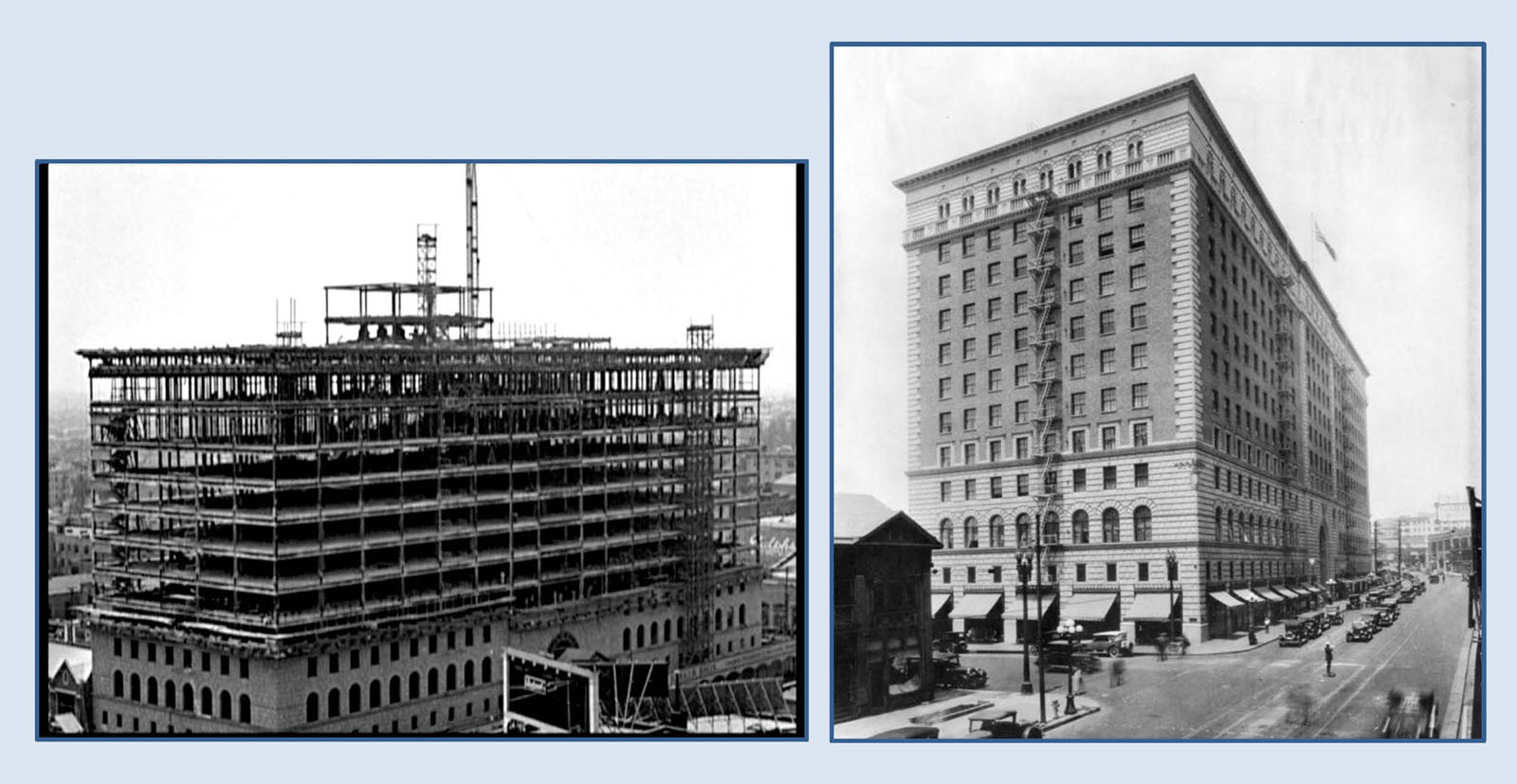 America’s buildings climbing skyward – the extant Barker Brothers Building at 7th and Flower. LAPL.
 The three male leads are introduced by their professions. Construction worker “Slim” (Karl Dane) is one of labor’s millions, building a nation, Bowery saloon-keeper…
View original post 686 more words
So…I’m going to be on TCM next Saturday 11/29

It doesn’t even really seem real, but just about a week from now, if you tune in to Turner Classic Movies (TCM), you’ll see me chatting with Ben Mankiewicz about the Bob Hope Christmas classic, The Lemon Drop Kid. I’m one of four TCM fans introducing favorite films on the afternoon/evening of Saturday, November 29. I am lucky enough to know the other three, Aurora Bugallo, Joel Williams, and Miguel Rodriguez, who are all friends I met first online via the live tweet I co-founded and organize, TCM Party, and then offline at the TCM Film Festival.

The intros were all recorded in August via Skype, which I think is a cool use of technology. Mine took place at Cinema Detroit, the indie theater I co-own with my husband, Tim. While my programming there is mostly contemporary and decidedly indie, we have shown classics like The Lady from Shanghai, A Hard Day’s Night, and a whole mess of noir for Noir Detroit (during CD’s first full month, November 2013). I definitely think my experiences bringing people and movies together online influenced us to try to do the same offline with Cinema Detroit.

So here is the schedule for Fan Favorites on Saturday, November 29 (all times Eastern):
12:30 p.m. Meet Me in St. Louis – Aurora
2:30 p.m. The Lemon Drop Kid – Me
4:15 p.m. The Thing From Another World – Miguel
6:00 p.m. Butch Cassidy and the Sundance Kid – Joel

In case anyone is curious why the The Lemon Drop Kid…TCM producer Courtney O’Brien asked me to submit a list of 10 mostly family-oriented, somewhat holiday-related, classic movies that I would want to introduce. As it is extremely difficult to limit oneself to 10 films, I actually sent more than 10. This was the list I sent, there’s no particular order:
Christmas in Connecticut
It Happened on 5th Avenue
The Lemon Drop Kid
Remember the Night
Holiday Affair
Stand-In (1937)
Show People
The Rains Came
The Lady Vanishes
The 39 Steps
Rio Bravo
Angel and the Badman
There is nothing on here I don’t really love, but I’m glad they went with Lemon Drop Kid. It has a special place in my heart, because Christmas is a tough time for me. My mother passed away a few days after Thanksgiving in 2002 and during the holiday season, I often need a laugh, which this film provides. It does have some sentimental moments, but it’s mostly Hope one-liners, sight gags, and Runyon-esque characters and situations. Damon Runyon wrote the story it’s based on…think Guys and Dolls, Little Miss Marker…like that.
I cannot say enough good things about the people at TCM, who made the whole process easy for me, a total novice. Noralil, Courtney, Mardy and Ben…thanks for your patience and understanding.
So I hope you will tune in on Saturday afternoon, November 29, and check it out. And in the meantime…what would be on your list of 10?
What A Character! 2014 – Ned Sparks

Brusque and grouchy, Ned Sparks’ lovable curmudgeons can usually be found as the still center of a storm of dizzy dancers, temperamental producers, and gangsters in crisis. His onscreen persona was so deadpan that he was reportedly insured with Lloyd’s of London for $100,000 against any photographs taken of him actually smiling. Yet there’s more to this primo supporting player than just a grouchy face…he got his start in show biz as a singer during the 1898 Klondike Gold Rush, and was blacklisted on Broadway for his role in starting the Actors’ Equity Association (AEA).
Edward Arthur Sparkman was born this day in 1883 in clean, friendly, and polite Canada, specifically Guelph, Ontario. He left home at 16 to try gold prospecting in Alaska. When that failed, he joined a musical company in Dawson Creek, and per The New York Times, “knocked around in tent theatricals, medicine shows, and carnivals.” Wouldn’t this be a great movie? Can’t you just hear him complaining? But wait…it gets better… Back in Canada by age 19, he attended a seminary. Briefly. But still. He also worked on a railroad before finally landing in a Toronto theater. 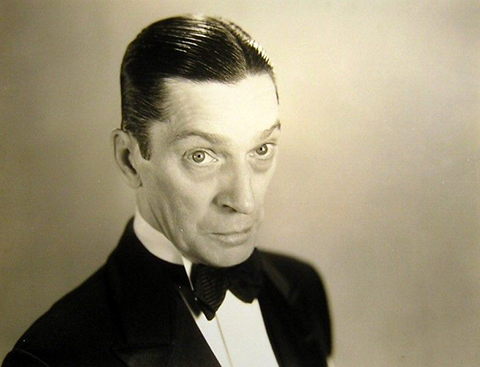 By 1907, he was appearing on Broadway, and the Ned Sparks persona we all now know and love made its first appearance as a “cynical desk clerk” in a play called Little Miss Brown. His stage success earned him a six-picture deal with Louis B. Mayer, and, in his screen debut, a re-make of the play in 1915, he played this same role.
Thus the mid-teens saw Sparks working in both New York and Hollywood. Around this time, he was involved with organizing AEA, which sought to protect stage actors. At the time, producers set working conditions and pay scale; could fire anyone, at any time, for any reason; and there was no compensation for the unlimited rehearsal time. In the late teens, Equity went on strike, which led to improved working conditions. However, many members were blacklisted, and as Sparks was one of the founding members, his Broadway career seems to have been severely curtailed. After working pretty much continuously from his arrival in New York through 1918, he didn’t work onstage again until 1920, appearing in his final production in 1921.
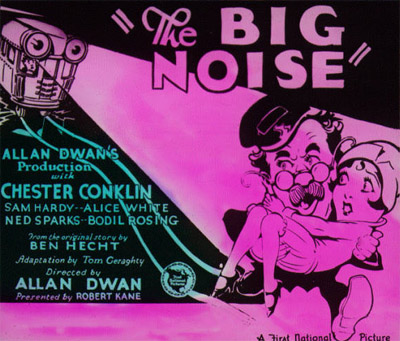 He was still working in silent films though, three or four a year, until his first talkie in 1928, The Big Noise. I won’t lie and tell you I’ve seen any of Sparks’ silents. I’m sure he was good. But his monotone foghorn of a voice and his irritable attitude are so instantly recognizable, and add so much to any picture he’s in, that I can’t imagine he could have affected the audience as much without them. Sound proved a godsend to Sparks’ career, and to us as classic movie fans.
I recommend anything he’s in, but my favorite Sparks year is 1933, and here are three from that year you shouldn’t miss.
42nd Street
Lady for a Day
Gold Diggers of 1933
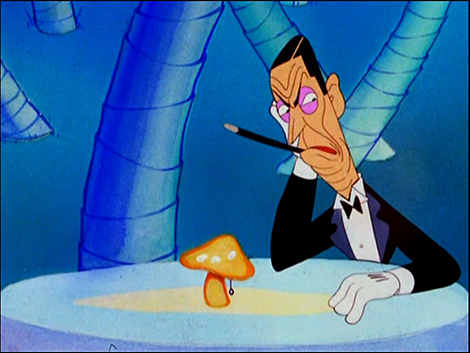
In 1936, Sparks admitted that the $100K Lloyd’s of London insurance policy story was a publicity stunt. He was “only” insured against smiling for $10,000. Though his personal life included a messy divorce and he lost touch with many of his friends after his retirement, his voice and unflappable cantankerousness pretty much guaranteed his immortality, not only in his films, but as a frequently-caricatured figure in the cartoons we can still enjoy.
Bonus video that won’t embed: Cranky Ned in “Malibu Beach Party”
WHAT A CHARACTER! 2014 – Day 2 – Monday posts
The Third Annual WHAT A CHARACTER! Blogathon — hosted by myself, Aurora of Once Upon A Screen, and Kellee of Outspoken and Freckled — is now in its second day of informative and entertaining posts, as the movie blogosphere spotlights those unsung actors on the periphery of the screen, bringing them to the center of attention.

Vienna’s Classic Hollywood give overviews of not one, but two, unsung character performers, Charles Lane and Fritz Feld.
Sister Celluloid declares that Kathleen Howard “as W.C. Fields wife…took henpecking to operatic heights.”
Caftan Woman celebrates Esther Dale‘s “ability to take even a few seconds of screen time…and turn it into something memorable.”
Aurora at Once Upon a Screen sets out to prove that Thomas Mitchell is “synonymous with versatility.”
Joel’s Classic Film Passion takes a look at two of Harry Dean Stanton‘s many important films, Repo Man and The Straight Story.
Grand Old Movies highlights “that darling boy” whose face you know, but name you might not… Chester Clute.
Movies Silently writes that “One saving grace of Souls for Sale [1923] is its wonderful cast of character actors,” including Mae Busch.
Silent-ology pays tribute to the “funniest drunk of them all,” Arthur Housman.
Second Sight Cinema recalls Peter Lorre, “a great artist who is beloved, but only for a fraction of his gift.”
Silver Scenes investigates Dennis Hoey, the actor best known for portraying Inspector Lestrade in Universal’s Sherlock Holmes series.
Amy’s Rib inventories her favorite films among Charles Coburn‘s work.
Tales of the Easily Distracted finds that Agnes Moorehead was “was practically bulletproof with her chameleon dexterity.”
What A Character! 2014 – Chris Cooper by Jack Deth

It is once again my pleasure to post a What A Character! entry on behalf of guest blogger Jack Deth. Be sure to check out his other posts here and over at Flix Chatter.
Greetings all and sundry!
Several months have passed and it’s time to accept another gracious invitation from Paula to break out my miner’s cap and excavation tools. And add my perspective to the ever growing and exceptional list of hard-working, though often unknown, professionals who fill an essential niche in the fine art of story telling.
Those who work their way from the background of crowds and scene fillers. To the realms of comic relief. Or sidekick, best friend and selfless uniformed partner. Their numbers are legion. And are rarely recognized at first glance. It take a few moments of noticing how they move about a set or location. The furrow of a brow. A smile. Until it all comes together with the addition of spoken words. Often not loud. Sometimes conspiratorial. Often friendly. And the light bulb of recognition glows brightly. Rarely giving up a name. But subtly revealing the presence of a Character Actor!

And into the deep end of the diving well we shall plunge. Reveling in the decades long work of one such master craftsman. Who started out on stage. Became a “discovery” of John Sayles and his film, Matewan. Went on to Perform yeoman’s work on many episodic television series (‘Miami Vice, ‘The Equalizer’) of the later 1980s. Before filling the character of Kansas sheriff, July Johnson in ‘Lonesome Dove’ and ‘Return To Lonesome Dove’. Opposite Tommy Lee Jones, Robert Duvall and Danny Glover. Where a sun-baked, deeply-lined face and a dust-dry, rasping voice gave presence and added immensely to a long riding, vengeance seeking lawman.
Supplying the confidence and wherewithal to take the lead in another small John Sayles project that put beaucoup talent on the map. So, allow me a few moments of your time. To wax poetic and meticulously into the inner workings of…
What A Character! Chris Cooper Easily Reaching Beyond His Grasp
People’s Exhibit 1: Lone Star (1996)
From 1996. Its director is proven past master of creating and executing vast, yet intensely intimate independent tales for fractions of what larger major players would spend on a day’s catering, John Sayles.
And this offering has those virtues writ large! Focusing on a once strong and prosperous town and county of Rio. Southwest of Laredo and close to Mexican border. One-time recipient of many military contracts and training bases that have had funding pulled. While the community strives to hold onto its identity opposite the rising tide of Mexicans. Who staked their claim decades ago. Have prospered and wish to make names for themselves. As developers swoop in and wish to cash in on Uncle Sam’s abandoned tracts of land. Trading money for influence.
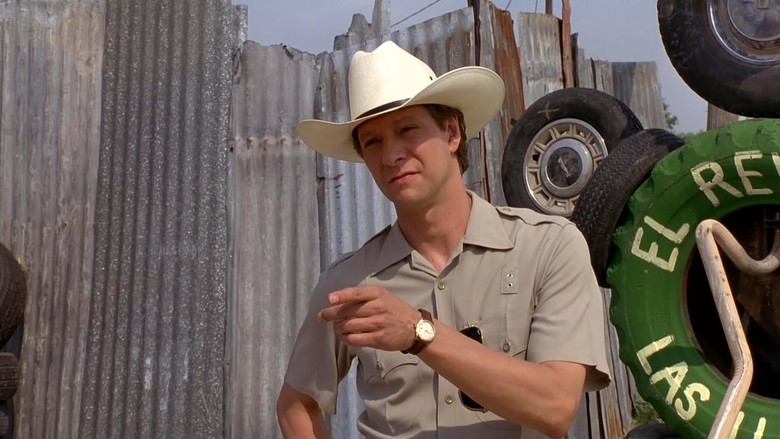
In other words, an American Melting Pot. With all its attendant rivalries and small-scale deals and conspiracies just under the surface. Seen and acknowledged by Mr. Cooper as Sheriff Sam Deeds, son of the town’s beloved Deputy, afterwards Sheriff, Buddy Deeds (Matthew McConaughey in a surprisingly quiet, humane, mature role). Who had spent his years keeping Rio’s racist, bigoted and flatout scary law-unto-himself, Sheriff Charley Wade (Kris Kristofferson portraying evil incarnate. And rarely better!) in check through the 1960s.
There’s an election coming up. Sam’s a law & order kind of guy, and the townfolk like him. but he isn’t his father. And some in town keep reminding him of that, as there is a dedication of a county court house coming up in Buddy’s name. Creating the need to go out amongst the people and perform between pressing flesh and keeping interlopers busy. If not in check. And crossing the path of a long-lost and recently widowed high school sweetheart, Pilar Cruz (Elizabeth Peña), whose mother, Mercedes (Maria Colon) is a rather affluent and influential pillar of the community.
Into this slice of Southern Texas Americana arrives Colonel Delmore Payne (Sayles stalwart Joe Morton), who is the estranged son of after-hours club owner and town historian, Otis “Big O” Payne (Ron Canada). The Colonel has the unwanted duty of going over the inventory, Table of Operations and Equipment (TO&E), of a closing Army base before housing contractors break ground. Creating a small, delaying hiccup when the excavation of one of its rifle ranges reveals skeletal remains, a Masonic ring… and a Rio County Sheriff’s badge.
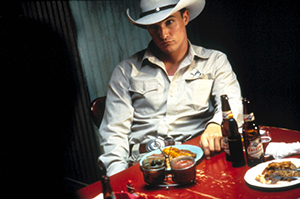
Sending Sam to ask questions of the town’s elders. Otis and Hollis Pogue (Clifton James). Who would rather have sleeping dogs lie than go digging around bad history and childhood nightmares. Some answers are revealed as the badge is traced back to Charley Wade. And Sam starts exploring the legend of Sheriff Wade and his mysterious disappearance after being beaten and run out of town at the hands of dear old dad, Buddy Deeds, decades before.
Since there is statute of limitation for murder, Sam settles into his Gary Cooper niche of asking the right questions and being an extremely adept listener. As forensic evidence unearths a large caliber bullet from what could be his dad Buddy’s revolver. Or an Army .45 ACP.
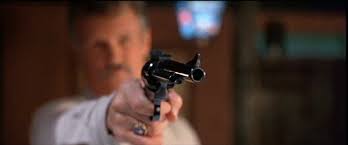
Which sends the film into sublimely scarily edited flashback into the many sins of Charley Wade, who despised Mexicans, and went out of his way to torment, harass, shake down and brutalize them whenever the opportunity presented itself. The deeper Sam digs, the more is revealed about his father’s womanizing ways. And how they will intersect and insert themselves toward the tale’s denouement. Which I won’t reveal, for these details are the succulent meat upon which most of the tale hangs. As Sam takes in small morsels for deeper investigation. Letting his still, lined face speak volumes as clues are fleshed out. And dots are silently, sometimes tragically connected during a final sit down with the town elders.
I’ll leave it right here, for spoilers’ sake.
Now. What Does Mr. Cooper Bring To His Role?
The dust, dry grit and sweat-stained perseverance to work the case. No matter where the evidence and clues lead. Hesitantly at first. As the tossed net is expanded. And tales are told to expand the quest even further. Even if they initially point in the wrong direction. As the twists and turns of lies and legend slowly straighten out and lead back to past sins of the fathers.
And Mr. Kristofferson and McConaughey excel in their respective characters, with Kristofferson blatantly, frighteningly going over the top at times. While Mr. Conaughey sits in the background. Taking it all in and patiently waiting for the proper moment. Unaware that their actions will swing back decades later.
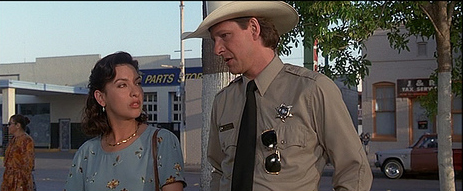
Adding to the weight Mr. Cooper bears as old wounds are reopened. Amidst the busy and slowly expanding town. And sprawling outback near the border as Sam explores past windfalls and re-establishes his relationship with schoolteacher and administrator Pilar. Creating a solid foundation for an expansive tale that travels at its own speed. In a wide and neatly tucked in tale written, directed, edited and produced by Mr. Sayles. Backed by superb cinematography by Stuart Dryburgh. And a rustic, suspenseful soundtrack by Mason Darling. Creating the definition of a critically acclaimed and later, criminally forgotten personal project.
***
Which clears the decks for a small, compact and very worthwhile family tale and period piece, focusing on the world-changing events of 1959. Russia’s launching of Sputnik and its orbiting above post war U.S. soil. Witnessed by a young Homer Hickam as the gauntlet of what would be known as the “Space Race” was thrown down.
Peoples’ Exhibit 2: October Sky (1999)
The place: Coalwood, West Virginia. Coal Country USA, in the waning years of the Eisenhower administration. One of dozens of “company towns” throughout the state. Owned and operated by a large industrial corporation, profits of which provide the housing, police, fire department, schools and church. Producing a meager living for the families, whose men work in the mines.
A township in the valley of two mountain ridges. And a place where most would like to leave. Though the only way out for those young men coming of age is a sports scholarship. Not a great list of options for teenager, Homer (surprisingly good Jake Gyllenhaal), whose older brother, Jim (Scott Miles), has just won a football scholarship out of town.
Overshadowed by the launch, very early in the Cold War, of the first orbital satellite, Sputnik, property of the Russians, the ENEMY. And its ability to be seen in the night sky by Homer and other townspeople. Sending Homer to seek out his friends, math geek Quentin Williams (Chris Owens), inspired machinist Ray Lee Cook (William Lee Scott), and Sherman O’Dell (Chad Lundberg) to take the pulpy science fiction novels and illustrations they love to the drawing board and their next steps. First as a hit-and-miss hobby, as early launches blow up before launching from Homer’s front yard, to a later attempt that launches beautifully, then crashes miles away and sets fire to distant acres of forest.
And through it all, Mr. Cooper’s John Hickam watches from a discreet distance. Not sure what to make of his son’s latest fascination. As small accidents in the mines slow extraction and production. Going the extra mile to keep the workers together as the first whiffs of interest from Unions make themselves known. Uncovering and dealing with small, sometimes innocuous, acts of sabotage.
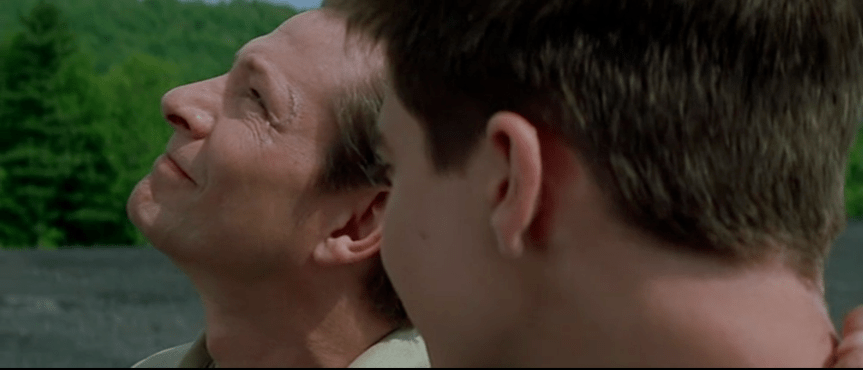
One that may have caused a small cave-in. And sent John to the hospital after rescuing several men deep in the main mine. Looking toward a bleak future while trying to avoid arguments between his wife, Elsie (Natalie Canerday), who wants the best possible future for Homer. And Homer, who has the grades and the backing of his teacher, Miss Riley (Laura Dern). Who knows the ins and outs of academics and its scholarships. And supplies Homer with several books on advanced mathematics and aerodynamic design.
The books come in handy in helping Homer prove that his and his friends’ earlier rocket did not cause he forest fire. Calculating the exact location of the rocket in a stream miles from the disaster. Getting the town folk behind the team. While garnering a very positive story in the local paper. And beyond in the process.
The winning of a Science Fair propel Homer and his friends to new heights. And a much more sophisticated venue in Indianapolis, Indiana. Where their model’s thrust nozzle is stolen. And a new one is machined and delivered early the next morning after a tense all night refinement session. I’ll leave it right here. Lest I tip my hand on one of the better no-frills family films of the 1990s!
What Does Mr. Cooper Bring To This Role?
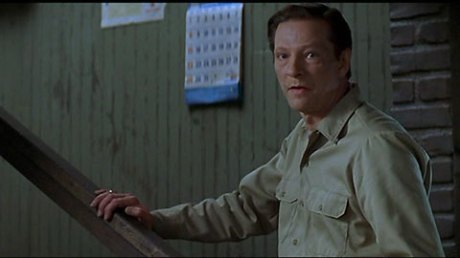 One of the most complete and fully fleshed-out Dads of the 1950s. Hard-working and -loving. Though acutely aware of his family’s situations. And its slim odds of something, anything better, who goes to the mines every morning to put food on the table and clothes on their backs. Though, while convalescing after a cave-in, not really sold on the idea of his youngest taking up the baton and riding the cage down.
Pulled in several directions at once. Amidst anger from fellow miners, The disruption of life long friendships over a tragic mistake. And its following retribution. Mr. Cooper does what he does best! Adds depth, shadow and presence to a roughly sketched character. Embodies it with his worn, lined visage and slow, never hurried gait. And makes it his own.
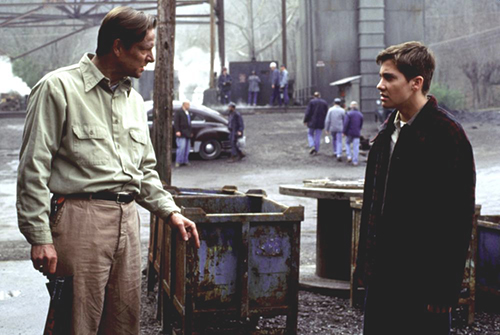 Creating a believable foundation for Mr. Gyllenhaal to lash out with teen angst in discovering he is good at and enjoys its pursuit, no matter how harebrained to may seem to his Dad. Also notable for how reined in and respectful Mr. Gyllenhaal’s Homer is in this regard. Explaining a future he and his father cannot fully comprehend. And how he wants to fit into it.
Very high marks for Joe Johnston for fluidly juggling the main story. Which is Mr. Gyllenhaal’s to carry. As well as so many subplots that swirl about. And reel themselves in so nicely long before the final credits. A capability that will pay off so well in later films, Hidalgo and Captain America: The First Avenger. Aided by cinematography by Fred Murphy. Editing by Robert Dalva. Superb hardscrabble and dirty art direction by Tony Fanning, making parts of Eastern Kentucky look so much like the smoky hills of West Virginia. Aided by a memorable, period-tinged soundtrack by Mark Isham.
Third Annual What A Character! Blogathon 2014 Schedule

The 2014 What a Character Blogathon schedule has been set, and the blogathon is underway. There’s still plenty of time to join though. If you want to participate, check out the announcement immediately following, and contact one of us ASAP.
Sunday, November 16 – Hosted by Kellee
Ann Doran and Lurene Tuttle – Theresa on Once Upon a Screen
Billie Burke – Girls Do Film
Burgess Meredith – The Last Drive-In
Charles Durning – Movie Movie Blog Blog
Chris Cooper – Jack Deth on Paula’s Cinema Club
Christopher Lloyd – The Movie Rat
Dame Edith Evans – Margaret Perry
Edna May Oliver – Portraits by Jenni
Elsa Lanchester – Blog of the Damned
Frank McHugh – (This) Girl Friday
Leo Carrillo – Phantom Empires
Richard Widmark – Danny’s Reviews
Thomas Mitchell – Once Upon a Screen
Tony Randall – A Shroud of Thoughts
Monday, November 17 – Hosted by Paula
Agnes Moorehead – Tales of the Easily Distracted
Arthur Housman – Silent-ology
Charles Coburn – Amy’s Rib
Charles Lane & Friz Feld – Vienna’s Classic Hollywood
Chester Clute – Grand Old Movies
Dennis Hoey – Silver Scenes
Esther Dale – Caftan Woman
Harry Dean Stanton – Joel’s Classic Film Passion
John Ridgely – Comet Over Hollywood
Kathleen Howard – Sister Celluloid
Mae Busch – Movies, Silently
Peter Lorre – Second Sight Cinema
Rochelle Hudson – Bunnybun’s Classic Movie Blog
Tuesday, November 18 – Hosted by Aurora
Ann Dvorak – A Person in the Dark
Beulah Bondi – A Thousand Words
C. Aubrey Smith – Critica Retro
Cecil Kellaway – The Lady Eve’s Reel Life
C. Aubrey Smith – Critica Retro
Don Beddoe – Christy’s Inkwells
Edward Everett Horton – Outspoken & Freckled
Eric Blore – The Blonde at the Film
Grant Mitchell – Immortal Ephemera
Henry Travers – Movie Fan Fare
Iris Adrian – Speakeasy
Karl Malden – Oh Rachel Leigh
Melville Cooper – Classic Movie Hub
Ned Sparks – Paula’s Cinema Club
Raymond Burr – Shadows and Satin
Thelma Ritter – Cinephiled
Wallace Shawn – Moon in Gemini
Original announcement:
I was only a leading man for a minute; now I’m a character actor. — Robin Williams
In 2012, we – by that I mean myself, Aurora, and Kellee – borrowed a catchphrase from our beloved Turner Classic Movies (TCM) in order to host a blogathon dedicated to those amazing actors whose faces are familiar but whose names few remember.
The phrase is WHAT A CHARACTER, and the individuals concerned rarely got leading parts, exhibiting instead a versatility and depth many star players wished they had. We never tire of seeing them or paying them tribute, and if the previous two installments of this event are any indication, neither do you.
So, here we are with the Third Annual WHAT A CHARACTER! Blogathon.
To say we’re thrilled is an understatement. We hope you’ll join us in spotlighting the Edward Arnolds, Alan Mowbrays, and Alice Bradys of the world, oft-forgotten names that never appeared above the title.
If this is right up your movie alley, then give us a shoutout…
Me (leave a comment below) — Paula at Paula’s Cinema Club or tweet (@Paula_Guthat)
Kellee at Outspoken & Freckled | (@IrishJayHawk66)
Aurora at Once Upon a Screen | (@CitizenScreen)

We ask that you adhere to the following guidelines:
- Let one of the hosts know which character actor is your choice. Since there are so many greats worthy of mention, we won’t take any repeats and we’re not limiting these to “classic” actors. Great character actors have made their mark both before and since the end of the classic era and contemporary talents deserve some attention as well, so the field is wide open.
- Please include your twitter and/or FB tag, email address and blog name & URL.
- Publish the post for either November 16, 17 or 18. Let us know if you have a date preference, otherwise we’ll split publicizing duties equally among the three days.
- Please include one of the blogathon graphics in this post on your blog to help us publicize the event.
- Include the graphic and link to the host sites in your WHAT A CHARACTER! post
- If possible, please send any of the hosts the direct link to your WHAT A CHARACTER! post by the day before your due date. Otherwise we’ll simply link to your site’s home page.
- HAVE FUN and spread the word! There are so many great characters worthy of attention, we would like to honor as many as possible.
Check out some of the 2012 and 2013 posts. Also find out who’s who with this Key to the WHAT A CHARACTER! graphic.
 Paula's Cinema Club
