
31 Days of Oscar update

Time for an update on the 31 Days of Oscar blogathon (full rundown at the original post). We’re a little more than a couple of weeks out from the first deadline. Publish your post and email me the link by any one of the following dates: January 31, February 7, February 14, February 21 and February 28.

The nominations were announced on Jan. 10, providing as much fodder for blog posts as any other’s, maybe more. Right away, I was aware of what I consider to be one major snub: Ben Affleck for Argo, and now that I’ve seen Zero Dark Thirty, I think Kathryn Bigelow was snubbed as well. Of course, the format of the Best Picture nominations, where 5-10 movies are tapped, virtually guarantees that there will be snubs. Is the Academy crazy, or crazy like a fox? Sounds like an idea for a blog post, speaking of which here’s some topic prompts (new ones at the end of the list):

  • Is there a film, performance or art or technical work the non-nomination of which you feel is a crime? Tell us about it.
  • Sometimes the Oscar seems to hinder, not help, someone’s career, including but not limited to the “Best Supporting Actress Curse.” Discuss.
  • Special Achievement Awards and Board of Governors’ Honorary Oscars…do you dare go there? Who should have gotten a competitive Oscar, and/or who might win an honorary Oscar the future?
  • Spotlight on sound editing and sound mixing, or any other unfairly neglected award.
  • Your favorite/the most influential Best Costume winners/nominees/should-have-beens through the years, or just focus on one.
  • Short films are often given short shrift…throw some love on your favorite.
  • Cinematography and editing vs.directing…the auteur theory, etc. Discuss, using Oscar-winning examples.
  • The Oscars still create the most hoopla, but should we be paying more attention to other awards, such as the Golden Globes or (fill in the blank)?

NEW:

  • The Academy’s rules for selection of the Best Picture dictate that any film receiving 5 percent or more of first place votes is nominated, so that a minimum of 5 and a maximum of 10 are in the running each year. This year there are 9 nominees, but there are still only 5 Best Director nods. Discuss the implications and ramifications of this set-up.
  • Judi Dench famously won a Oscar for her 6 flawless minutes in Shakespeare in Love. If there was an Oscar for cameos, who would be nominated, and who would win?
  • It’s generally accepted that actors and directors, and possibly other filmmakers, may receive an Oscar for a previous year’s, or an entire career’s, work, sometimes referred to as a “cumulative Oscar.” Do you think this is legit or totally unfair? Discuss.
  • Academy…why so serious? Certain genres are overlooked every year, generally speaking comedy, adventure, and science fiction are rarely given nods. Is this due to the overall age of the Academy, or other factor(s)?
  • Final Oscar ballots aren’t due until the Tuesday before Oscar Sunday; this year that is Feb. 19. Any answer to this question is likely to be pure speculation but: Do the other awards influence voting?
  • As reported last year, the Academy is overwhelmingly white, male and over the age of 60. Only 2% of the Academy is under the age of 40. Discuss.

If you’d like to participate, leave me a comment or email me at paula.guthat[at]gmail.com. So far our Oscar bloggers, in addition to myself, Kellee at Outspoken & Freckled, and Aurora of Once Upon A Screen are…

Fernando – Committed to Celluloid
R. A. Kerr – Silver Screenings
Ruth – Flix Chatter
Lê – Critica Retro
Kevin aka “Jack Deth”
Paddy – Caftan Woman
Vanessa – Black & White All Over
Iba – I luv cinema
Le0pard13 – It Rains, You Get Wet
Joel – Joel’s Classic Film Passion
Lindsey – The Motion Pictures
The Gal herself – One Gals’ Musings
Paul – Lasso The Movies
Ivan – Thrilling Days of Yesteryear 
Jessica – Comet Over Hollywood
Kay – Movie Star Makeover
The Lady Eve – The Lady Eve’s Reel Life
Kimberly – GlamAmor

What A Character: Richard Jaeckel by Jack Deth

by Jack Deth

Greetings, all and sundry! Being more than a fan and somewhat short of a student of cinema, it is not often that I have been granted the opportunity to wax poetic and in detail about the many building blocks and structures of the fine art of visual storytelling. Directors ride herd and guide projects. Writers, of course. supply the words and the mood. Lead actors are often the heroes and the focus of attention. But what about the myriad other familiar faces in the background?

The faces we recognize either right away, or within a few minutes, after one of their limited number of lines. Not necessarily the fresh-faced, too-young-to-shave kid who gets killed in the last reels of a war film, but the other guy.

The guy who nods sagely to the Sergeant’s or Lieutenant’s words of advice. The kid brother who tries to stop his hot-headed older sibling from seeking revenge on a cattle rustler. The always-smiling Army GI who’s young enough and smart enough to jump at the offer to spend some time off the front lines of the frozen Ardennes forest during the Battle of the Bulge. The quiet blacksmith in a dusty, middle-of-nowhere Texas town. Or one of two twin brothers who sign up for the Marine Corps after Pearl Harbor to fight the “heathen Japanese” in the Pacific islands theater of WWII.

Yeah. That guy! Stocky, Not too tall. Blonde hair. Blue eyes. Sometimes a quick wit, though more often not. A little headstrong. With good hands that can also be fast and righteous. Made for any number of uniforms. Or jeans, a flannel shirt, and a sweat-stained Stetson or baseball cap. You’ve seen him in many films. And remember him fondly in one or two, but can’t place his name. Well, let me tighten up your memory receptors and critique one of his best and most memorable roles.

Richard Jaeckel: Sgt. Bowren. Top Kick of ‘The Dirty Dozen’.
First seen in full Garrison uniform, pistol belt, sidearm and white MP helmet liner. Jaeckel’s Sgt. Bowren brooks little nonsense when lining up twelve diverse convicts for his new boss, Major Reisman (Lee Marvin). Then introducing the good Major to each after the twelve have dressed and covered according to height. Reading names and sentences that range from decades of hard labor to death by hanging. After a failed attempt at close order drill, caused by upstart Victor Franko (John Cassavetes) and an appropriate thumping by the Major. The remainder show a renewed attention to commands. Giving the first glimmers of light to the possibility that the Major may just be able to pull this cockamamie idea off.

Reinforced a bit more as the Major conducts face to face interviews and asks what Bowren thinks. Sgt. Bowren answers the way he thinks the Major wants, And the Major tells him to try again. Bowren replies, ” I think the first chance one of those lovers gets, he’s going to shoot the Major right in the head… sir.”

The two understand each other a bit more. As Bowren later chastises one of his own MPs for an off color remark made to R.T.Jefferson (Jim Brown). An African-American awaiting the gallows for killing a white man who had tried to lynch him. Then responding to a ruckus between the convicts in the prison gym. Brought on by Maggot’s (Telly Savalas) use of the ‘N word’ regarding Jefferson. Only to be delayed by Major Reisman, who explains that those involved are discussing seating arrangements and place settings. Sgt. Bowren picks up on the implied message and starts an impromptu discussion about baseball as the convicts noisily work their aggressions out.

And Sgt. Bowren begins to slowly evolve into the Major’s bodyguard. Official watcher of the convicts during training and off site compound’s layout and construction. As well as taking on the role of Major Reisman’s unofficial enforcer and Executive Officer. Always close by with his hand covering his flap holstered .45 should things get a little tense between the Major and his convicts. Or to add strength to his boss’s directive that the convicts will no longer shave, bathe or have hot food or hot water, courtesy of Victor Franko. Pointing out that the saved time will be devoted to training and sarcastically coming up with the colloquial, ‘Dirty Dozen’.

About the only time Sgt. Bowren falters is when the convicts are sent to another base for parachute training and Pinkley (Donald Sutherland) embarrasses Colonel Everett Dasher Breed (Robert Ryan). West Point graduate and ring knocker during an inspection of his troops. The Colonel wants to know more after three of his biggest and baddest fail to get answers from Wladislaw (Charles Bronson) alone in a latrine. Jefferson and Posey (Clint Walker) intercede. Jefferson breaks one of the goon’s hand and jaw with his helmet. While Wladislaw and Posey
leave the other two unconscious. The explanation for Wladislaw’s bruises? “He slipped on a bar of soap”.

Infuriated, Colonel Breed and a squad of armed paratroopers storm the convicts’ compound and disarm Sgt Bowren at its drop gate, Though he does get some satisfaction after Major Reisman infiltrates the compound. And stops Breed and his men in their tracks with aimed bursts of fire from an M-3 Grease Gun. Bowren unleashes his convicts to get some payback. Admiring their measured use of force and working as a team as paratroop are left muddied, hurt and their weapons piled neatly out of reach. All prelude to a ‘Graduation Party’ for the convicts, a live fire exercise, attached as an independent unit. Whose objective is capturing Colonel Breed and his staff. And their final mission…

What does Jaeckel’s Sgt. Bowren bring to the film?
A much-needed and well-executed dash of maturity and adherence to rules. As displayed in his well-turned-out Garrison uniform, tie, Ike jacket and bloused, and polished boots. Someone who is proud of his profession and rank. And shows it. Not exactly a ‘Lifer’, but one who adapts to changing situations and keeps ahead of the curve. Until Major Reisman shows up and the twelve convicts are led out to the prison’s small exercise yard.

Sgt. Bowren does what he can to maintain order among the lackadaisical convicts. Who think they have the upper hand until Franko makes a jail house lawyer fool of himself before the unamused OSS (Office of Strategic Services. Forerunner of the CIA) Major Reisman. And every thing changes. Unit cohesion starts to make itself known and Bowren can use that and build on it as he is given more autonomy. Progress is slow and Bowren remains aloof until at least an effort is made to rise close to his and the Army’s standards. Which begins with Franko’s
revolt and its resulting lack of hot food and water. And ends with the take down of Colonel Breed and his troopers.

A small role, but an essential one, to be sure. With time well divided out amongst a grounded, diverse and memorable ensemble cast. In one of the better character driven WWII films of the 1970s. That added another notch on the resume and body of work of one of the late, great, grand masters in the firmament of character actors!

WHAT A CHARACTER! Monday posts

Happy Monday! It’s difficult to believe it’s already Day 3 of the WHAT A CHARACTER! blogathon.

The WAC blogathon, hosted by myself, Kellee of Outspoken and Freckled, and Aurora of Once Upon A Screen, is our tribute to those supporting players who manage to steal nearly every scene of the classic movie they’re in, but didn’t always get their due in terms of fame, money, or awards.

Although most never played leading roles, we look forward to their appearances — as the butler, the maid, the hotel manager, or the ever-loyal best friend — almost as much as those of the major stars, or in some cases, even more. Today’s posts honor the following lesser-known, but well-loved, thespians:

Richard Jaeckel in The Dirty DozenJack Deth

Walter Brennan & Mercedes McCambridge — 

Porter HallJoel

Virginia WeidlerNikki

Victor MooreKari

Ward BondTonya

Una MerkelKevyn

Lupe VelezWill

William DemarestSean

Victor JoryJacqueline

David LandauCliff

Thelma RitterAurora

Eve ArdenKellee


Also you might want to take a look at the previous days’ WHAT A CHARACTER! posts:

Day 1 posts at Outspoken and Freckled

Day 2 posts at Once Upon A Screen

What A Character: S.Z. Sakall

With his assortment of lovable supporting roles — befuddled yet helpful uncles and friends, slightly curmudgeonly shop owners, eccentric producers — S.Z. “Cuddles” Sakall is pretty much the definition of a Hollywood character actor. His variations on a discombobulated theme, often tinged with sly wit, charmed American audiences from the early ’40s through the mid-’50s, yet he’d been acting for 30 years before he ever set foot in Hollywood.


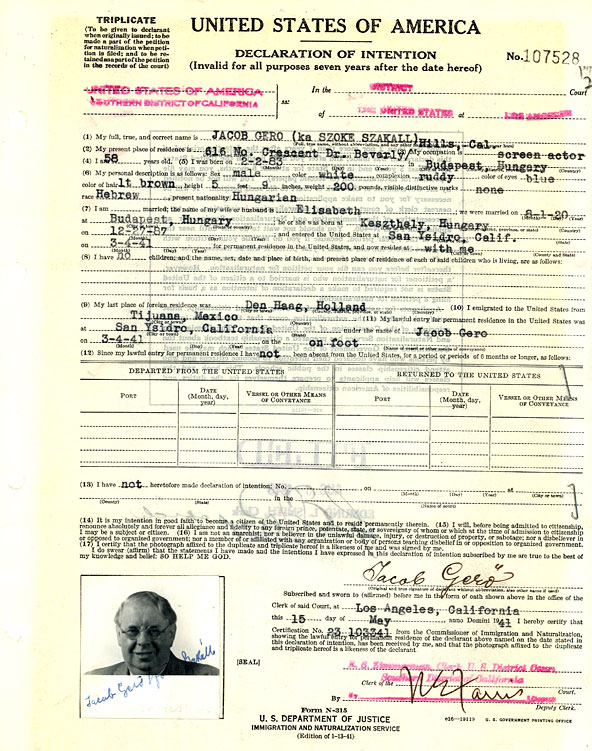
Who the heck is Gerö Jenö? That is S.Z. Sakall’s birth name, sometimes translated from his native Hungarian as “Jacob Gerö,” which is what appeared on his U.S. citizenship paperwork. Most sources say he was born in 1883, on February 2 in Budapest. (In case you were wondering, he was a Capricorn Aquarius.) Edit: Someone rightly commented that Feb. 2 is Aquarius, it’s squarely in the sign, not sure I got Capricorn from.

By the early 1900s, Gerö Jenö was writing scripts for musical-comedy theatre in Hungary. Several sources mention that he took his stage name, S.Z. Sakall, from the Hungarian phrase “szoke szakall,” in English “blond beard,” which he apparently grew to look older. He started acting at the age of 18. In the early ’20s, he moved to Berlin and appeared in his first film in 1927.

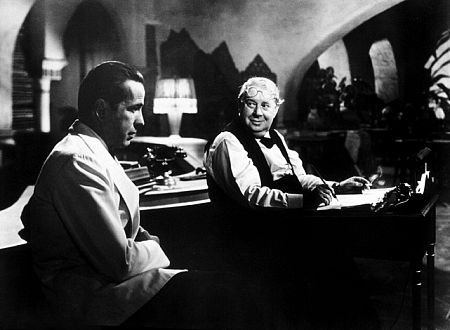
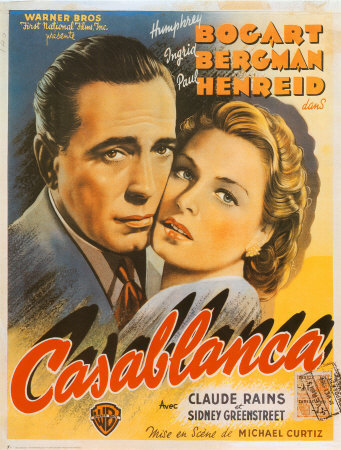
He continued working on stage and in film in Vienna and Berlin, and briefly had a production company, until 1933, when the Nazis took over Germany. Sakall, who was Jewish, had to go back to Hungary. In 1940, Hungary joined the Axis, giving the Nazis control of most of Europe.  Many — Jews and others who objected to the regime — who were able to leave, did so. Those in the film industry made their way to either London or Hollywood, and formed an essential part of American and western European moviemaking for the next two decades, exerting tremendous influence on both the style and content of films. A look at the cast and crew list for Casablanca (1942) has a fair proportion of these refugees: director Michael Curtiz; composer Max Steiner; and actors Paul Henreid, Conrad Veidt, Peter Lorre, and Sakall.


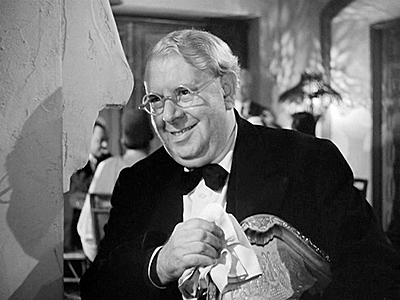
RENAULT: Carl, see that Major Strasser gets a good table, one close to the ladies.
CARL: I have already given him the best, knowing he is German, and would take it anyway.

I can’t help but wonder how Sakall was affected by these lines and others in Casablanca. Perhaps the proximity of art to life was the reason Sakall at first refused the role of Carl the math-professor-turned-headwaiter, even though his Yankee Doodle Dandy director and fellow Hungarian Curtiz was helming, and the cast included top-name talent. Pure speculation on my part. What I do know is that all three of his sisters, his niece, and his wife’s brother and sister were murdered by the Nazis.

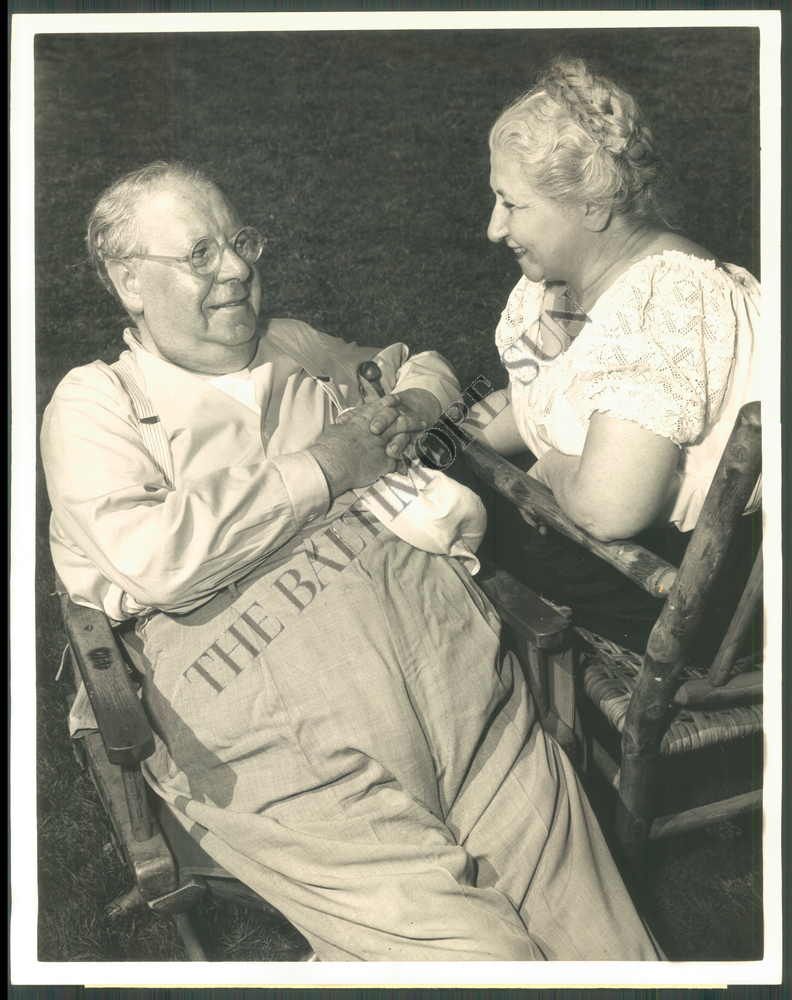
1948 photo from The Baltimore Sun: HAPPY HOLLYWOOD WEDLOCK — S.Z. (“Cuddles”) Sakall and his spouse Boeszike (he can pronounce it) have enjoyed nearly 30 years of wedded bliss. Boeszike comes to work with Cuddles nearly every day to help him with his lines, and bits of business, and for them love’s young dream is still way up there on rosy cloud No. 1. Cuddles, assisted by Boeszike, is soon to be seen in Warner Bros.’ “Whiplash.” / From: Warner Bros. Studio / Burbank, California

I don’t know for sure when Sakall acquired his famous nickname, Cuddles, or who gave it to him — his TCM clip cites Jack Warner as the source, but I’ve also heard that Doris Day coined it. He was first credited as “S.Z. ‘Cuddles’ Sakall” in 1945’s San Antonio.* I’ve read that he wasn’t fond of his nickname, and also that his charm, basic niceness and, um, cuddly exterior made it entirely appropriate both in film and in life.
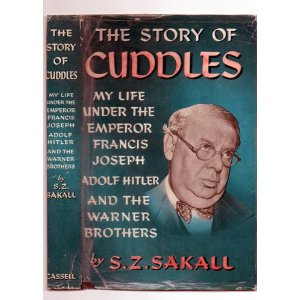
In 1954, Sakall published his wonderfully-titled memoir, The Story of Cuddles: My Life Under the Emperor Francis Joseph, Adolph Hitler and the Warner Brothers. The book is out of print and the one used copy I could find goes for $480.10. If anyone wants to buy me this for Christmas…I’m just saying. He passed away from heart failure in 1955.

It wouldn’t be going out on much of a limb to say Cuddles is best-known for Casablanca. So it is fitting that Humphrey Bogart, Sidney Greenstreet, John Qualen, the film’s producer Hal Wallis, its director Michael Curtiz, its composer Max Steiner, and S.Z. “Cuddles” Sakall were all laid to rest in Forest Lawn Memorial Park in Glendale, California.**

My Top Three Cuddles Roles

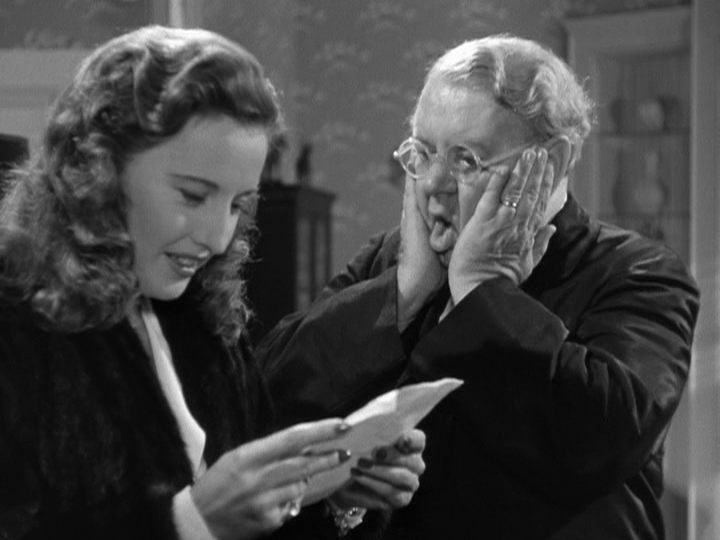
Ball of Fire Sakall plays one of 7 professors attempting to produce an encyclopedia. Because they’ve been cloistered in a mansion for 9 years, the group reacts strongly when showgirl Sugarpuss O’Shea (Barbara Stanwyck) turns up. As kindly physiology professor Magenbruch, he delivers many of his lines with a touch of mischief…his area of academic study is sex.

Christmas in Connecticut Sakall reunited with Stanwyck for this screwball comedy about a homemaking columnist who isn’t married and doesn’t have any kids. Cuddles plays her good friend, a chef named Felix, who is soon promoted to uncle. In my opinion, this is the quintessential Cuddles role, featuring all the befuddlement and exasperation for which he is known, together with the classic phrase, “It’ll be hunky-dunky,” Cuddle-ese for “hunky-dory.”

Casablanca As mentioned above, Sakall was unwilling to appear in this film. He tried to get Warner Brothers to pay him four weeks’ work, but the studio would only agree to three. His name was misspelled in the credits. But the character is essential to the story and serves as a sympathetic counterpoint to Humphrey Bogart’s brusque Rick.

*San Antonio starred Errol Flynn as a cowboy fighting cattle rustlers and Alexis Smith as the singer who falls in love with him. Sakall plays the singer’s manager, who repeatedly refers to riderless horses as “empty horses.” This phrase was most likely borrowed from, and a dig at, Casablanca director Michael Curtiz, with whom Flynn and David Niven notoriously clashed while filming Charge of the Light Brigade. (Niven called his second autobiography Bring on the Empty Horses.) There is at least one other connection to Casablanca: Dan Seymour, who played the bouncer Abdul, appears uncredited in San Antonio. The entire film is available on YouTube.

** Sakall’s nearest famous neighbors at Forest Lawn are the Ruggles brothers. Actor Charlie is in the same row; director Wesley is in the next row, across from Charlie.

Universal Studios Backlot Blogathon: DRACULA (Spanish version, 1931)

In which I explain how the Spanish-language version of Dracula led to American Pie. This post is part of the Universal Backlot Blogathon, hosted by Kristen at Journeys in Classic Film.

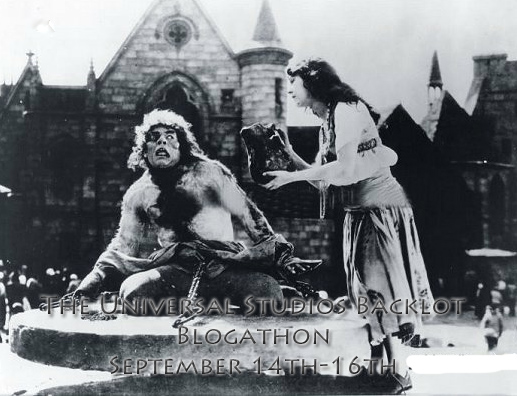
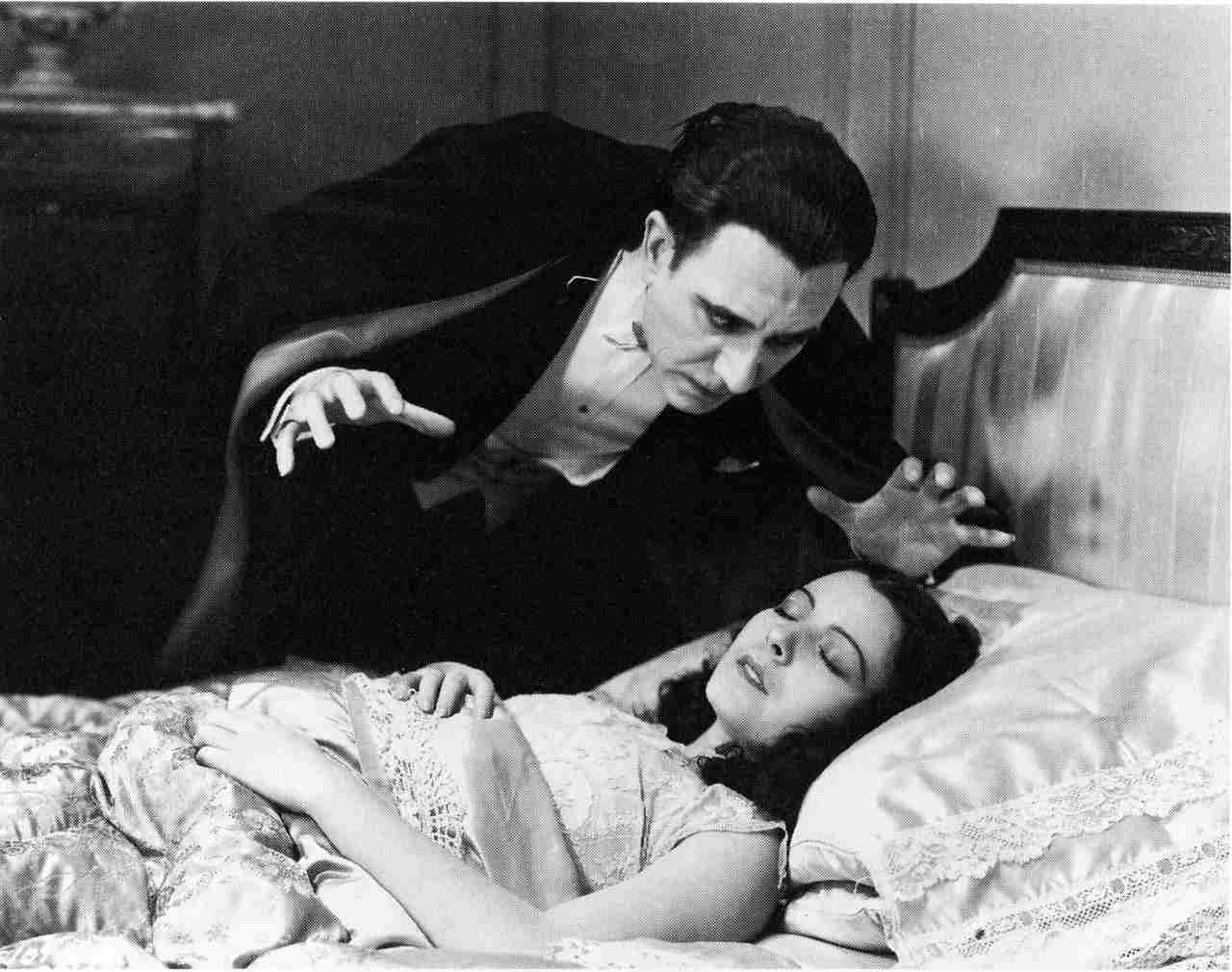
It seems to me that most film fans are familiar with Universal’s 1931 version of Dracula. Starring Bela Lugosi in the role that made him a star, it’s still a popular choice at Halloween, and it’s still capable of creeping you out. However, many are unaware of, and fewer still have seen, Universal’s Drácula, a Spanish-language version, also from 1931. Instead of Lugosi in the title role and Helen Chandler as Mina, en el versión español there are Carlos Villarias and 21-year-old Lupita Tovar as Eva (like Mina, but, as we’ll see, different). While Tod Browning shot the English version during the day, George Melford helmed the Spanish version by night on the same sets. The two productions also shared some of the same crew, who were able to learn from any mishaps or discoveries that occurred during the day. Browning’s version began filming on September 29, 1931; Melford’s on October 23.

Drácula (Carlos Villarias) menaces Eva (Lupita Tovar) in Universal’s Spanish-language version of DRACULA (1931).

The Depression had taken a slice of Universal’s profit pie, and, with the advent of sound, producing films for the once-lucrative foreign markets had gotten more expensive. A silent film could play anywhere in the world with an update to the titles, but effective dubbing was in the future. From The Vampire Book:

Universal’s Czechoslovakian-born executive Paul Kohner suggested a solution to the studio’s head, Carl Laemmle, Jr.: shoot foreign language versions of motion pictures simultaneously with the English versions, thus cutting costs by using the sets more than once. Kohner also argued that salaries for foreign actors and actresses were far less than those of Americans. Laemmle appointed Kohner head of foreign productions. The first result was a Spanish version of The Cat Creeps, a talkie remake of The Cat and the Canary, which Universal had originally done as a silent film. Released in 1930 as La Voluntad del Muerto, it was an overwhelming success in Mexico and made actress Lupita Tovar a star.
Kohner decided to make a Spanish version of Dracula and moved quickly to secure the youthful Tovar for the lead before she could return to Mexico. He chose Carlos Villarias (or Villar) for the role of Dracula, and secured a capable supporting cast with Barry Norton (“Juan” or Jonathan Harker) , Eduardo Arozamena (Abraham Van Helsing), and Pablo Alvarez Rubio (R. N. Renfield).

Not all was smooth sailing. In 2008, at the age of 98, Tovar recalled the vampire-like hours the Spanish-language cast and crew kept, plus another slight detail…Melford didn’t speak Spanish.

Despite any difficulties during the shoot, the Spanish-language version has everything the English-language version has, and more. The camera shakes off that early-talkie stasis and actually moves, following characters in pans or swooping tracking shots. The lighting is more complicated and the scenes which rely on effects are technically better; for instance, when Dracula appears out of a cloud of smoke. Tovar’s characterization of Eva is more dynamic, and she was given a more realistic wardrobe, than Chandler as Mina.

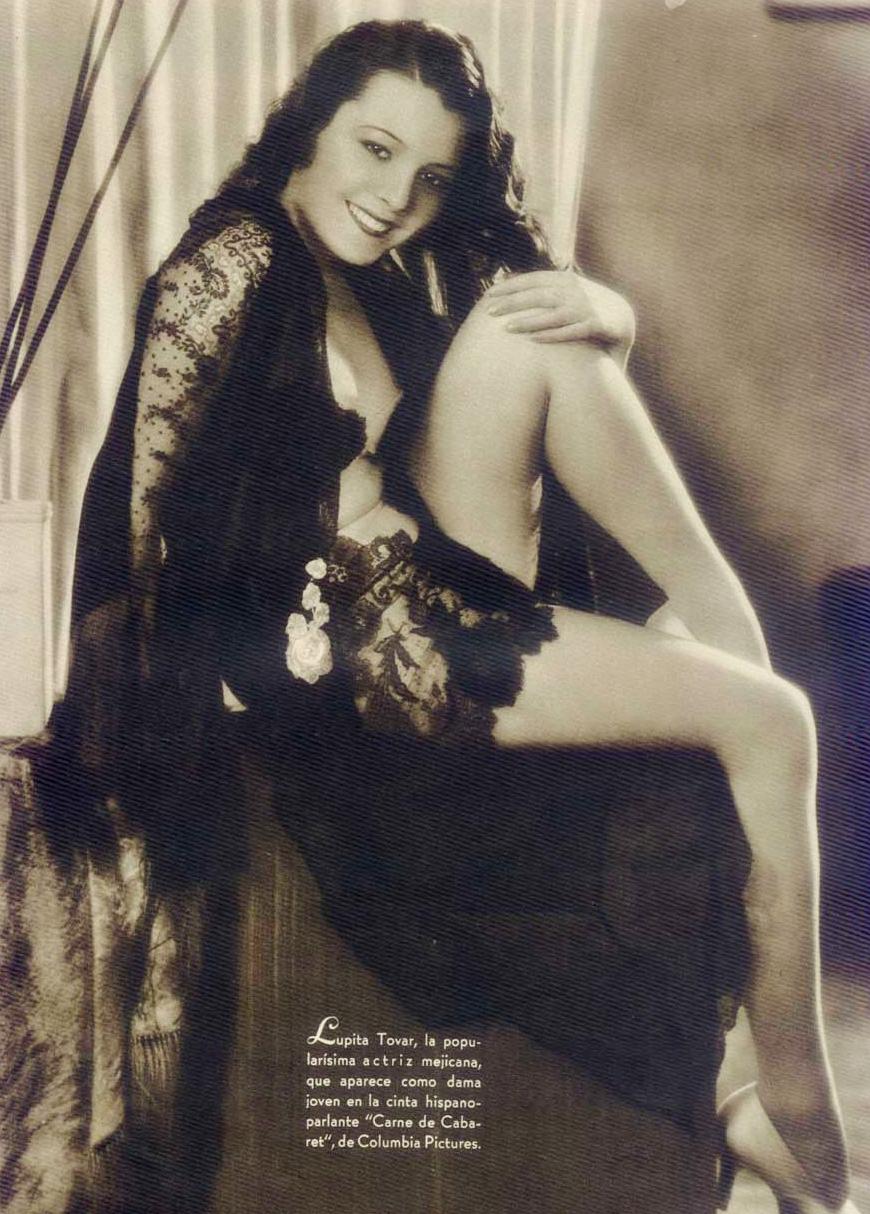
Lupita Tovar, c. 1930.

The only deficiency in Drácula is unfortunately…Dracula himself. Villarias’ performance, especially when compared with Lugosi’s, seems exaggerated and tends to evoke more laughter than fear. When I saw the film on the big screen a couple of years ago, the audience couldn’t help but laugh, during even the most suspenseful and/or horrifying scenes. I guess it could have been just a bunch of people catching the giggles from each other; you can judge for yourself because the whole movie is on YouTube. [Edit: It’s no longer on YouTube, watch for it at your local arthouse.]

Villarias aside, Kohner certainly delivered value for money at Universal. Drácula cost just a tenth of what the English-language version had. Though it disappeared for a while in the mid-twentieth century, a revival in the 1990s returned it to prominence and many critics now rate it more highly than its English-language counterpart.

According to Michael Mallory, writing in Universal Studios Monsters: A Legacy of Horror, Kohner had another motive besides saving money for making Dracula in Spanish: preventing Lupita Tovar from resuming her career in Mexico. Mallory maintains that Kohner was “madly stricken” with Tovar, who wanted to pursue opportunities at home, and that the producer’s thrifty idea was at least in part a scheme concocted to keep the beautiful actress in the U.S. and on the lot. Whether this is true or not, Kohner and Tovar married in 1932 and remained together until Kohner’s death in 1988. Their daughter, Susan Kohner, who played Sarah Jane in Imitation of Life, had two sons — Paul and Chris Weitz, the writer/directors responsible for About a Boy, In Good Company, and yes, American Pie.

Happy birthday, #TCMParty!

Some of you may know that I run #TCMParty, a live tweet of movies shown on TCM, but you may not know that today, September 3, 2012, is the one year anniversary of the first-ever TCM Party.

TCMP-feat-imgWhile I wasn’t present on that occasion, I did start tweeting along soon afterwards, on September 11, 2011. The film was Casablanca. I remember my first ever #TCMParty tweet was something like, “Bring out the private stock,” or words to that effect.

#TCMParty was actually the brainchild of Kathleen Callaway, aka @hockmangirl. A group of her friends on Twitter were tweeting along to classic movies, so she figured, why not use a hashtag so everyone could see everyone else’s tweets. She began “hosting,” i.e. picking a specific movie from the TCM schedule, promoting the date and time it would be on to get as many people together as possible, and tweeting information about it during the air time.

I started hosting TCM Parties sometime in October, and soon after decided we needed a separate Twitter account, so we wouldn’t blow up our followers’ feeds while we were feverishly tweeting about a movie some of them might not care about at all. If you’ve ever wondered why there’s an underscore in @TCM_Party, it’s because @tcmparty was taken. We also started a Facebook page and a tumblr, which are still going strong.

I guess it was destiny…I have this poster in my office at work

In March 2012, Kathleen decided to concentrate on her handcrafts and animal rescue work. My nickname for her is “Wonder Woman” for all the stuff she gets done. I had persuaded silent film connoisseur Trevor Jost, aka @tpjost, to guest host Sunrise (1927), and he offered to help with TCM Party on the regular. I am glad that he did, because I have a huge gap in my knowledge of both silents and most films made before “the magic year” 1939. (Actually…if you look carefully enough…there’s tweets and Examiner movie columns around in which I declare my dislike of silent films. What can I say…at least I have the courage to admit publicly that I was wrong.)

From CASABLANCA to TO HAVE AND HAVE NOT, Humphrey Bogart is a recurring TCM Party theme

TCMP has less to do with Trevor and I than it does with everybody who shows up and tweets. In the year that people have been gathering around #TCMParty, we’ve trended nationally a few times and brought countless new fans to TCM and classic films. By “we,” I mean all the TCM Party people. I’ve learned so much from everyone and had a ton of fun along the way. I hope it will continue to make more people aware of how really great most classic films are. (I’d be shirking my duties if I didn’t mention that our next #TCMParty is Wednesday, September 5 at 8 p.m. Eastern, To Have and Have Not, starring TCM’s Star of the Month, Lauren Bacall. Make sure to follow @TCM_Party for further updates.)

I’d like to thank everyone who has “attended” our virtual shindigs, helped get the word out, and/or guest-hosted over the past year.

So…what’s your favorite #TCMParty memory?


Dana Andrews Blogathon: BOOMERANG!

Dana Andrews and the films he made have long been favorites of mine so I was delighted when I found out that Steve Reginald (aka @sreggie) of Classic Movie Man was putting together a Dana Andrews Blogathon. The following is my contribution; see the rest of the excellent posts here.

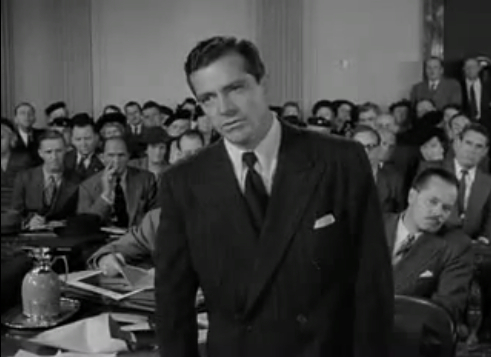
I’ve chosen Boomerang! (1947), directed by Elia Kazan. The film is based on an actual case of an innocent man being convicted of murder in Connecticut in 1928 (though the city was changed from Stamford to Bridgeport). Kazan wanted to meld the documentary style of a newsreel with Hollywood moviemaking techniques, and he succeeded — this film is the direct ancestor of the “fact-based” docudramas with which we’re so familiar today. It was supervised by the same producer as the March of Time newsreels, Louis de Rochemont, much of it was shot on the run in real locations, and there’s no score. Despite this, Kazan later expressed dissatisfaction with the film, and with his star.

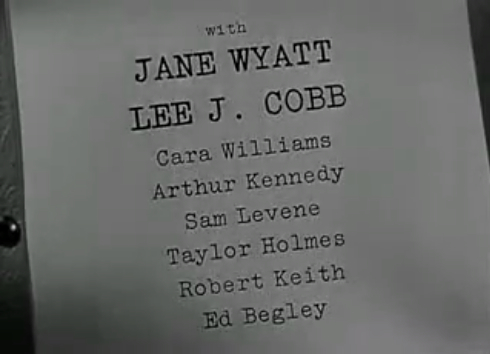
The no-nonsense credits — names typewritten on the plain white pages of a script, turned by an unseen hand — reflect the bare-bones staging of the film. The voice-over introduction makes it clear that arresting an the wrong person can happen anywhere: “people are the same everywhere,” it admonishes. Then the fast-paced action kicks off with the murder: The victim, a minister, is shot off-screen. The townspeople react with shock, disbelief and sadness that such a well-known and beloved man could be shot to death just like that; even the local hoodlums throw some money together for a wreath. We see the minister’s life in an economical flashback. He was part of the “reform” government that cleaned up the town, and he knew a lot of peoples’ secrets. The perpetrator could have been anyone. The description of the murderer is appropriately vague: “a man in a dark coat, light hat, medium build.”

Andrews plays State’s Attorney Henry Harvey, who is based on the DA in the real case. He’s first seen around 10 minutes in, when police chief “Robbie” Robinson (Lee J. Cobb) goes to Harvey’s office to give him an update. It’s clear that the case is already a pressure cooker. The local paper, a property of the reform government’s opposition, is taking the opportunity to make the police, and by extension, the incumbents, look incompetent. Editorials in print and on the radio are agitating the citizenry, neighbors are bickering, and even Harvey’s wife Madge (Jane Wyatt) is after him about the case. It’s no surprise that the shadow side of human nature would begin to dominate. When a “tramp” matching the description is found in Ohio, with a gun of the same caliber that killed the minister, and admitting to having left town when the murderer supposedly would have, he’s arrested and brought back to Connecticut. He’s actually a WWII veteran named Waldron (Arthur Kennedy), who is right out of the Army and can’t find a job. The police torture a confession out of him and the case goes to an inquest, which proceeds as you might expect.

Harvey is at first keen to convict Waldron, practically bounding up the stairs to tell the Chief that ballistics says the bullet and the gun match. But before he takes the next step in the process and indicts Waldron, the attorney decides to chat with him in his cell. This scene is when Andrews really begins to shine. He starts out stern, but as he listens to the prisoner’s story — Waldron has had a lot of bad luck after five years in the military — he shows us the faint glimmers of doubt beginning to creep into Harvey’s mind. Something just isn’t right.  It soon becomes even more clear that the “authorities” are concerned with something other than justice — staying in office, getting elected, escaping public ridicule — except Harvey. Because when court is in session, and everyone is expecting an indictment, Harvey declares that Waldron is innocent. The rest of the film is a kind of trial, as Harvey recalls witnesses from the inquest and introduces new evidence to prove his statement true, all the while ending his political career.

Andrews is always underrated, but never more than by the director of Boomerang! Kazan is quoted on the TCM site as saying,

There was very little you could do with Dana….He could learn three pages in five minutes. He had a fantastic memory, even though he’d been up late drinking the night before. He’d come to work, dress up, and we’d roll him out. His style was okay in the movie, because he was playing a lawyer, and essentially there wasn’t supposed to be too much going on inside of him. But unfortunately that kind of acting leaves you with the feeling that there was nothing really personal at stake.

Maybe Kazan felt this way because this was an early work (his third feature), and he was still perfecting his style, but I can’t help but think he’s seeing a different film. Maybe he forgot to watch Andrews in the scene in the courtroom where, in order to recreate the crime, Harvey has one of his assistants shoot him with the loaded murder weapon. Andrews certainly isn’t melodramatic (though at one point, as Harvey deals with a gun-toting, blackmailing political hack, we do see a flash of Lt. McPherson from Laura). His performance is subtle and controlled, as in appropriate for a prosecutor, but it’s a very authentic. His Harvey isn’t perfect, just that rare person who will temper his ambition to see justice served. One of the ways Andrews makes him real is that he behaves differently at home than he does at work. (Most people do, maybe even you.)

This film isn’t on DVD, and Fox pulled most of it down from YouTube (hence the mediocre screenshots), so keep an eye for it on TCM. You don’t want to miss one of Dana Andrews’ best performances.

UPDATE: Boomerang! is actually available from ClassicFlix or via Amazon. You could do a lot worse than buying this film. Thanks Stephen!

Who's the Boss? Ida Lupino

In my research for tonight’s TCM Party, Woman in Hiding (1950), I found an abundance of interesting information about the film’s star, Ida Lupino, that is way too long for a tweet and much better suited to a blog post. This is very far from comprehensive but I hope it will pique interest in this fascinating woman who was a pioneer in so many ways. I was aware that she was one of the few female directors and was the only one working in Hollywood in the late ’40s through the mid ’50s, but I didn’t know that she also wrote film and television scripts and directed television shows throughout the ’50s and ’60s, including episodes of The Fugitive, Bewitched, and Gilligan’s Island.

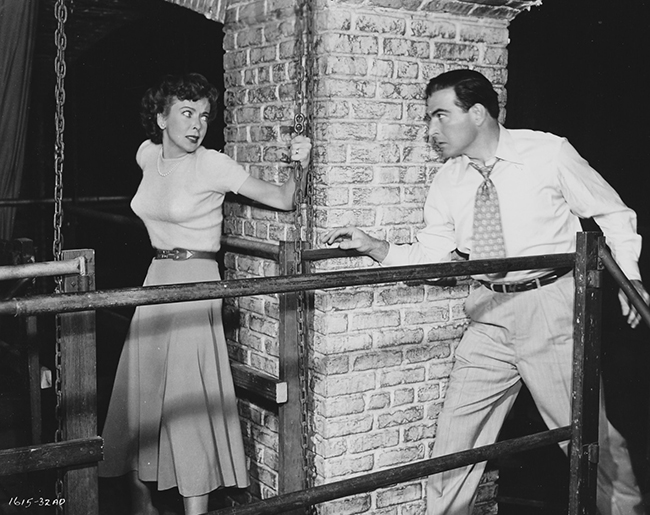
Ida Lupino is the woman hiding from Stephen MacNally

Lupino was born in Camberwell, London, England in 1918 (though the year is variously given as 1916 or 1914). Her mother was an actress; her father was a comedian from a famous theatrical family. Her uncle, Lupino Lane, was an acrobat. She wrote a play for school at the age of seven and trained for a year at the Royal Academy of Dramatic Art. She was in five films in England before moving to Hollywood in 1933, when she was hired to make two films at Columbia.

She often played tough but sympathetic women who had their share of hard luck. Her role in one of my favorite films noir Road House (1948) with Richard Widmark and Cornel Wilde seems to be a fairly typical one for her; she plays Lily, a worldly-wise singer caught between her boss Jefty and his childhood friend Pete. When Lily falls for Pete and turns down Jefty’s marriage proposal, Jefty frames Pete for embezzlement, he’s convicted, and they are trapped. It’s a really concise, enjoyable noir, with Widmark at his crazy-bad best. Lupino did her own singing, which included Johnny Mercer’s “One for My Baby (and One More for the Road).” Two other favorites of mine are High Sierra (1941) with Humphrey Bogart and Devotion (1946), about the Brontë family, in which Lupino plays Emily.

She was cast against type in Escape Me Never (1947) as an impoverished single mom being taken care of by Errol Flynn’s character. The picture flopped but Lupino and Flynn became good friends and stayed close. Her nickname for him was “The Baron” and he called her “Mad Idsy.” [tcm.com]

Lupino often referred to herself as “the poor man’s Bette Davis.” While under contract with Warner Brothers, she would pass on Davis’ seconds, often getting herself suspended. Bored during this down time, she developed a curiosity about filmmaking and began to linger on sets, learning the craft of directing.  [imdb.com]

She became a director accidentally, taking over Not Wanted (1949) for Elmer Clifton, who had a heart attack three days into filming, though she did not give herself director credit. She was already producing and had co-written the script about an unmarried pregnant girl who gives her baby up for adoption. Her films, whether she worked as director, writer, producer or all of the above, often dealt with subjects that weren’t openly discussed in US society at the time, such as pregnancy outside marriage, rape (Outrage (1950)), and bigamy (The Bigamist (1953)).  It seems to me that Lupino was the unintentional model for today’s writer/director/producer/actors who at times take jobs in front of the camera to secure funding so they can be behind it for their next projects. Sean Penn and Sarah Polley are two I thought of. The production company Lupino formed with her husband Collier Young, The Filmakers [sic], made a total of 12 films.

As a director, Lupino is known for her ability to create suspense, a talent that served her well as she moved into television work in the mid-’50s and ’60s. Her fifth film, The Hitch-hiker (1953), is about a couple of guys on their way to a fishing trip in Mexico who, as you might guess, pick up a murderous hitchhiker. Lupino builds tension by confining some of the action to the interior of the car going through the isolated Mexican desert. Even when they’re not in the car, the buddies are cornered by the psychopath and his gun. Hitch-hiker is available to watch for free on YouTube or at Internet Archive.

Just as Nora Ephron blazed a trail for Diablo Cody, so did Ida Lupino for the women who came after her.

More on Ida Lupino:

Profile on tcm.com

The Museum of Broadcast Communications Bio

Women Directors…Special Tribute to Ida Lupino at Once Upon a Screen

Future Classic Movies: CITY OF LIFE AND DEATH

By Mark

One of the major problems with war movies is they can tend to be a little revisionist – or blatently laced with nationalistic propaganda – to the point that they shouldn’t be taken too seriously by any discerning future filmgoer. Strangely enough, an exception to this rule is an epic Chinese film made in 2009 about a seminal event which took place in the lead up to the Second World War. A masterpiece in every sense of the term, Lu Chuan’s poignant City of Life and Death is a worthy entry in Paula’s Cinema Club’s Future Classic Movies blogathon.

When it comes to military atrocities of the 20th century, not too many can top the brutality of Japan’s invasion of the Chinese city of Nanking during the late 1930s. In the six weeks following Nanking’s capture in mid December 1937, the Imperial Japanese Army systematically killed somewhere between 250,000 and 300,000 people – including an estimated 57,000 prisoners of war on the banks of the Yangtze River in what has since been coined the Shaw String Massacre.

While this infamous mass murder of unarmed POWs does not occur until a third of the way through City of Life and Death, it more or less serves as a starting point for the remainder of the film’s grim narrative, which concerns itself not only with the plight of Nanking’s remaining citizens as they are forced to endure the barbarous and cruel occupation, but also the reaction of the invaders to their own behaviour while they execute their savage agenda.

As it works its way towards the Yangtze River slaughter, the movie follows the fortunes of two brave soldiers – Chinese lieutenant Lu Jianxiong (Liu Ye) and Japanese super private Kadokawa Masao (Nakaizumi Hideo), both of whom are key figures in a final, but somewhat futile, skirmish before the city’s inevitable capitulation.

The story then focuses on the dismantling of the Nanking Safety Zone – a 3.85 square kilometre refuge that had been set up by a group of foreign interests led by German (and Nazi) businessman John Rabe (John Paisley) just before the invaders arrived – after its inhabitants are betrayed by Rabe’s Chinese business assistant Tang “Mr Tang” Tianxiang (Fan Wei) as he attempts to negotiate his family’s passage to safety. (Interestingly the real life Rabe has been credited with saving 100,000 Chinese lives, putting him in the same league as fellow countryman Oskar Schindler, although the film does not really dwell on this point.)


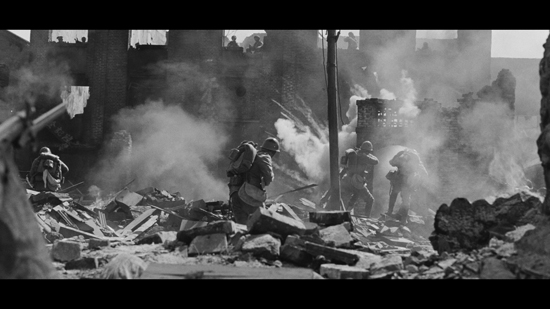
By dividing the film into these two parts, writer/director Chuan convincingly paints a comprehensive picture of war at its very worst – firstly via one of the grittiest combat scenes seen in the cinema since the fight for Ramelle in Steven Spielberg’s Saving Private Ryan, and then through the painful depiction of the Japanese occupation in which women are procured as sex slaves and repeatedly raped, prisoners are hung and/or beheaded (or, in one painful sequence, buried alive), a small child is ruthlessly thrown from an attic window, and injured soldiers are summarily executed in cold blood by makeshift firing squads.

Had City been in the hands of a lesser filmmaker, it’s possible that it might not have fully recovered after Jianxiong’s execution, such is the strength of Liu’s opening performance as the battle hardened Chinese soldier who, along with a few others, initially tries to stop most of his comrades from fleeing the city before making a desperate final stand against the Japanese invaders.

There are, however, too many other good things working for the film which keeps it in masterpiece territory for its two hour-plus running time. These include its stunning black-and-white cinematography (by Cao Yu and He Lei), its set design of mass destruction, as well as the strong performances of the supporting cast – perhaps the most noteworthy being Fan (as the hapless collaborator who ultimately redeems himself), Qin Lan (his wife “Mrs Tang”), Gao Yuanyuan (as Jian Shuyun, one of the zone’s Chinese administrators who defiantly stands up to the occupiers) and Japanese actor Kohata Ryu (playing the brutally pragmatic Second Lieutenant Osamu).

If anything, sitting through City of Life and Death is sort of akin to watching an extended version of the sacking of Vladimir by the Tartars in Andrei Tarkovsky’s 1966 classic Andrei Rublev. At the end of the day it’s not so much the human spirit that triumphs, but rather the horror.

Future Classic Movies: Round 2

To recap really quickly, the Future Classic Movies (FCM) Blogathon involves predicting films that will still be drawing audiences on TV, or a chip in our brains, or whatever form of communication exists, 30 or 40 years from now. All of the films were made during or after 2000; these will be as old then as the ones we watch on TCM now.

My FCM Round 2 pick is Moneyball (2011). It begins with a playoff disaster. In the 2001 post-season, the Oakland A’s squander their two-game lead over the New York Yankees, who win three games in a row. Their general manager, Billy Beane (Brad Pitt), sits in the home stadium, flicking a transistor radio on and off, almost afraid to hear what’s going on. A couple weeks later, losing his best players on the free agent market, Beane is begging the A’s owner for more money. No way, he’s told. Make do with the lowest payroll in the league. His scouts are all older guys whose info on the players is half speculation and half gossip. When Beane takes a meeting with Mark Shapiro of the Cleveland Indians, he notices that all the older guys always look to Peter Brand (Jonah Hill), a “player analyst” in the front office.

After the meeting, Beane grills Brand (in a parking garage à la “Deep Throat” in All The President’s Men). The latter admits that he has a radical, economics-and-statistics-based system for baseball: buying wins. That is, buying runs. Brand says, “Baseball thinking is medieval. They are asking all the wrong questions.” Beane is impressed. He hires Brand away from Cleveland and together they start to remake the A’s for the 2002 season. But there’s plenty of resistance, naysaying, and defiance from the scouts and the manager, Art Howe (Philip Seymour Hoffman), who is on a 1-year contract and knows a poor season could end his career. He’s downright insulting about this new way of putting a team together. The big scary doubts of the fans on talk radio are interleaved with flashbacks from Beane’s crash-and-burn career and scenes from his current complicated personal life (ex-wife with smug husband, sweet daughter he doesn’t see enough).

Pitt and Hill were both nominated for Oscars and I was surprised by this when I finally saw the movie. The acting in this film is pretty much the definition of natural, which the Academy doesn’t always reward. I definitely agree with whoever said that unless Brad Pitt is in a movie right at the moment, everyone forgets that he is in fact a great actor. He is excellent here. Hill adds little touches — fidgeting, nervous looks — that make his Brand real (though the character is a composite). One of my favorite moments is when Brand is on his way out of Howe’s office and says, “You want this door closed?” Chris Pratt as catcher (turned first baseman) Scott Hatteberg gives an authentic performance as a guy scared out of his mind.

The film’s cinematography is beautifully done by Wally Pfister, probably better known for his work with Christopher Nolan.

I’m not the biggest baseball fan in the world (though I do like going to Comerica Park) but if you like baseball, there’s enough behind-the-scenes intrigue about how deals are done to keep you interested. (“He’s talking to Dave Dombrowski! Wow, Steve Schott!”) Moneyball is really three movies, and Bennett Miller’s command of music, sound and closeups prove that there is crying in baseball, at least for me: the rise and fall and rise of a washed-up baseball player (Beane); a behind-the-scenes history of a baseball revolution; and the eternal struggle of originality and creativity against “we’ve always done it this way.”

Because if The Artist is about dealing with change, so is Moneyball. Or more accurately, it’s about the perseverance, determination and courage to not just adapt, but to change the rules, the situation, the world. That is of course what Beane did — he may have doubts about the new system, but he never really wavers. The film is a dramatization but his concepts were adopted by the Boston Red Sox and, two years later, they broke their 86-year World Series drought. And some underfunded political campaigns have been taking a look at Bill James’ “sabermetrics”, which paved the way for Beane’s system, and applying the former to their election races. And that is some consolation to anyone trying to find their way in a constantly changing world. And that is why, in 30 years, people will still be watching Moneyball, along with these other FCMs:
Big Fish, Happy Accidents, The Namesake, The Science of Sleep, and Walk the LineThe Motion Pictures

The 40-Year-Old VirginImpassioned Cinema

Requiem for a DreamThe Warning Sign

Eternal Sunshine of the Spotless MindPG Cooper’s Movie Reviews

Almost FamousJourneys in Classic Film

City of Life and Death – Mark

Pride and Prejudice and Tinker Tailor Soldier SpyReveal Something More

NorthforkLeft to my own devices