
To recap really quickly, the Future Classic Movies (FCM) Blogathon involves predicting films that will still be drawing audiences on TV, or a chip in our brains, or whatever form of communication exists, 30 or 40 years from now. All of the films were made during or after 2000; these will be as old then as the ones we watch on TCM now.
 My FCM Round 2 pick is Moneyball (2011). It begins with a playoff disaster. In the 2001 post-season, the Oakland A’s squander their two-game lead over the New York Yankees, who win three games in a row. Their general manager, Billy Beane (Brad Pitt), sits in the home stadium, flicking a transistor radio on and off, almost afraid to hear what’s going on. A couple weeks later, losing his best players on the free agent market, Beane is begging the A’s owner for more money. No way, he’s told. Make do with the lowest payroll in the league. His scouts are all older guys whose info on the players is half speculation and half gossip. When Beane takes a meeting with Mark Shapiro of the Cleveland Indians, he notices that all the older guys always look to Peter Brand (Jonah Hill), a “player analyst” in the front office.
After the meeting, Beane grills Brand (in a parking garage à la “Deep Throat” in All The President’s Men). The latter admits that he has a radical, economics-and-statistics-based system for baseball: buying wins. That is, buying runs. Brand says, “Baseball thinking is medieval. They are asking all the wrong questions.” Beane is impressed. He hires Brand away from Cleveland and together they start to remake the A’s for the 2002 season. But there’s plenty of resistance, naysaying, and defiance from the scouts and the manager, Art Howe (Philip Seymour Hoffman), who is on a 1-year contract and knows a poor season could end his career. He’s downright insulting about this new way of putting a team together. The big scary doubts of the fans on talk radio are interleaved with flashbacks from Beane’s crash-and-burn career and scenes from his current complicated personal life (ex-wife with smug husband, sweet daughter he doesn’t see enough).
Pitt and Hill were both nominated for Oscars and I was surprised by this when I finally saw the movie. The acting in this film is pretty much the definition of natural, which the Academy doesn’t always reward. I definitely agree with whoever said that unless Brad Pitt is in a movie right at the moment, everyone forgets that he is in fact a great actor. He is excellent here. Hill adds little touches — fidgeting, nervous looks — that make his Brand real (though the character is a composite). One of my favorite moments is when Brand is on his way out of Howe’s office and says, “You want this door closed?” Chris Pratt as catcher (turned first baseman) Scott Hatteberg gives an authentic performance as a guy scared out of his mind.

I’m not the biggest baseball fan in the world (though I do like going to Comerica Park) but if you like baseball, there’s enough behind-the-scenes intrigue about how deals are done to keep you interested. (“He’s talking to Dave Dombrowski! Wow, Steve Schott!”) Moneyball is really three movies, and Bennett Miller’s command of music, sound and closeups prove that there is crying in baseball, at least for me: the rise and fall and rise of a washed-up baseball player (Beane); a behind-the-scenes history of a baseball revolution; and the eternal struggle of originality and creativity against “we’ve always done it this way.”
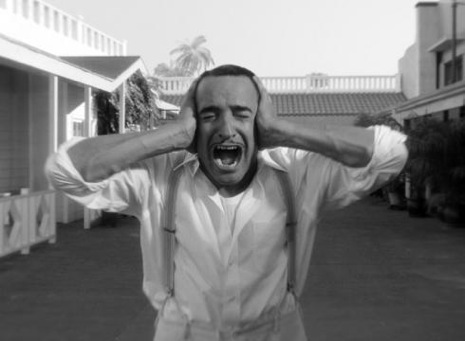
Because if The Artist is about dealing with change, so is Moneyball. Or more accurately, it’s about the perseverance, determination and courage to not just adapt, but to change the rules, the situation, the world. That is of course what Beane did — he may have doubts about the new system, but he never really wavers. The film is a dramatization but his concepts were adopted by the Boston Red Sox and, two years later, they broke their 86-year World Series drought. And some underfunded political campaigns have been taking a look at Bill James’ “sabermetrics”, which paved the way for Beane’s system, and applying the former to their election races. And that is some consolation to anyone trying to find their way in a constantly changing world. And that is why, in 30 years, people will still be watching Moneyball, along with these other FCMs:
Big Fish, Happy Accidents, The Namesake, The Science of Sleep, and Walk the Line — The Motion Pictures
The 40-Year-Old Virgin — Impassioned Cinema
Requiem for a Dream — The Warning Sign
Eternal Sunshine of the Spotless Mind — PG Cooper’s Movie Reviews
Almost Famous — Journeys in Classic Film
City of Life and Death – Mark
Pride and Prejudice and Tinker Tailor Soldier Spy – Reveal Something More

 Paula's Cinema Club