
What A Character: Richard Jaeckel by Jack Deth

by Jack Deth

Greetings, all and sundry! Being more than a fan and somewhat short of a student of cinema, it is not often that I have been granted the opportunity to wax poetic and in detail about the many building blocks and structures of the fine art of visual storytelling. Directors ride herd and guide projects. Writers, of course. supply the words and the mood. Lead actors are often the heroes and the focus of attention. But what about the myriad other familiar faces in the background?
The faces we recognize either right away, or within a few minutes, after one of their limited number of lines. Not necessarily the fresh-faced, too-young-to-shave kid who gets killed in the last reels of a war film, but the other guy.

The guy who nods sagely to the Sergeant’s or Lieutenant’s words of advice. The kid brother who tries to stop his hot-headed older sibling from seeking revenge on a cattle rustler. The always-smiling Army GI who’s young enough and smart enough to jump at the offer to spend some time off the front lines of the frozen Ardennes forest during the Battle of the Bulge. The quiet blacksmith in a dusty, middle-of-nowhere Texas town. Or one of two twin brothers who sign up for the Marine Corps after Pearl Harbor to fight the “heathen Japanese” in the Pacific islands theater of WWII.

Yeah. That guy! Stocky, Not too tall. Blonde hair. Blue eyes. Sometimes a quick wit, though more often not. A little headstrong. With good hands that can also be fast and righteous. Made for any number of uniforms. Or jeans, a flannel shirt, and a sweat-stained Stetson or baseball cap. You’ve seen him in many films. And remember him fondly in one or two, but can’t place his name. Well, let me tighten up your memory receptors and critique one of his best and most memorable roles.

Richard Jaeckel: Sgt. Bowren. Top Kick of ‘The Dirty Dozen’.
First seen in full Garrison uniform, pistol belt, sidearm and white MP helmet liner. Jaeckel’s Sgt. Bowren brooks little nonsense when lining up twelve diverse convicts for his new boss, Major Reisman (Lee Marvin). Then introducing the good Major to each after the twelve have dressed and covered according to height. Reading names and sentences that range from decades of hard labor to death by hanging. After a failed attempt at close order drill, caused by upstart Victor Franko (John Cassavetes) and an appropriate thumping by the Major. The remainder show a renewed attention to commands. Giving the first glimmers of light to the possibility that the Major may just be able to pull this cockamamie idea off.

Reinforced a bit more as the Major conducts face to face interviews and asks what Bowren thinks. Sgt. Bowren answers the way he thinks the Major wants, And the Major tells him to try again. Bowren replies, ” I think the first chance one of those lovers gets, he’s going to shoot the Major right in the head… sir.”

The two understand each other a bit more. As Bowren later chastises one of his own MPs for an off color remark made to R.T.Jefferson (Jim Brown). An African-American awaiting the gallows for killing a white man who had tried to lynch him. Then responding to a ruckus between the convicts in the prison gym. Brought on by Maggot’s (Telly Savalas) use of the ‘N word’ regarding Jefferson. Only to be delayed by Major Reisman, who explains that those involved are discussing seating arrangements and place settings. Sgt. Bowren picks up on the implied message and starts an impromptu discussion about baseball as the convicts noisily work their aggressions out.

And Sgt. Bowren begins to slowly evolve into the Major’s bodyguard. Official watcher of the convicts during training and off site compound’s layout and construction. As well as taking on the role of Major Reisman’s unofficial enforcer and Executive Officer. Always close by with his hand covering his flap holstered .45 should things get a little tense between the Major and his convicts. Or to add strength to his boss’s directive that the convicts will no longer shave, bathe or have hot food or hot water, courtesy of Victor Franko. Pointing out that the saved time will be devoted to training and sarcastically coming up with the colloquial, ‘Dirty Dozen’.

About the only time Sgt. Bowren falters is when the convicts are sent to another base for parachute training and Pinkley (Donald Sutherland) embarrasses Colonel Everett Dasher Breed (Robert Ryan). West Point graduate and ring knocker during an inspection of his troops. The Colonel wants to know more after three of his biggest and baddest fail to get answers from Wladislaw (Charles Bronson) alone in a latrine. Jefferson and Posey (Clint Walker) intercede. Jefferson breaks one of the goon’s hand and jaw with his helmet. While Wladislaw and Posey
leave the other two unconscious. The explanation for Wladislaw’s bruises? “He slipped on a bar of soap”.

Infuriated, Colonel Breed and a squad of armed paratroopers storm the convicts’ compound and disarm Sgt Bowren at its drop gate, Though he does get some satisfaction after Major Reisman infiltrates the compound. And stops Breed and his men in their tracks with aimed bursts of fire from an M-3 Grease Gun. Bowren unleashes his convicts to get some payback. Admiring their measured use of force and working as a team as paratroop are left muddied, hurt and their weapons piled neatly out of reach. All prelude to a ‘Graduation Party’ for the convicts, a live fire exercise, attached as an independent unit. Whose objective is capturing Colonel Breed and his staff. And their final mission…

What does Jaeckel’s Sgt. Bowren bring to the film?
A much-needed and well-executed dash of maturity and adherence to rules. As displayed in his well-turned-out Garrison uniform, tie, Ike jacket and bloused, and polished boots. Someone who is proud of his profession and rank. And shows it. Not exactly a ‘Lifer’, but one who adapts to changing situations and keeps ahead of the curve. Until Major Reisman shows up and the twelve convicts are led out to the prison’s small exercise yard.

Sgt. Bowren does what he can to maintain order among the lackadaisical convicts. Who think they have the upper hand until Franko makes a jail house lawyer fool of himself before the unamused OSS (Office of Strategic Services. Forerunner of the CIA) Major Reisman. And every thing changes. Unit cohesion starts to make itself known and Bowren can use that and build on it as he is given more autonomy. Progress is slow and Bowren remains aloof until at least an effort is made to rise close to his and the Army’s standards. Which begins with Franko’s
revolt and its resulting lack of hot food and water. And ends with the take down of Colonel Breed and his troopers.

A small role, but an essential one, to be sure. With time well divided out amongst a grounded, diverse and memorable ensemble cast. In one of the better character driven WWII films of the 1970s. That added another notch on the resume and body of work of one of the late, great, grand masters in the firmament of character actors!
WHAT A CHARACTER! Monday posts

Happy Monday! It’s difficult to believe it’s already Day 3 of the WHAT A CHARACTER! blogathon.

The WAC blogathon, hosted by myself, Kellee of Outspoken and Freckled, and Aurora of Once Upon A Screen, is our tribute to those supporting players who manage to steal nearly every scene of the classic movie they’re in, but didn’t always get their due in terms of fame, money, or awards.

Although most never played leading roles, we look forward to their appearances — as the butler, the maid, the hotel manager, or the ever-loyal best friend — almost as much as those of the major stars, or in some cases, even more. Today’s posts honor the following lesser-known, but well-loved, thespians:

Richard Jaeckel in The Dirty DozenJack Deth

Walter Brennan & Mercedes McCambridge — 

Porter HallJoel

Virginia WeidlerNikki

Victor MooreKari

Ward BondTonya

Una MerkelKevyn

Lupe VelezWill

William DemarestSean

Victor JoryJacqueline

David LandauCliff

Thelma RitterAurora

Eve ArdenKellee


Also you might want to take a look at the previous days’ WHAT A CHARACTER! posts:

Day 1 posts at Outspoken and Freckled

Day 2 posts at Once Upon A Screen

What A Character: S.Z. Sakall

With his assortment of lovable supporting roles — befuddled yet helpful uncles and friends, slightly curmudgeonly shop owners, eccentric producers — S.Z. “Cuddles” Sakall is pretty much the definition of a Hollywood character actor. His variations on a discombobulated theme, often tinged with sly wit, charmed American audiences from the early ’40s through the mid-’50s, yet he’d been acting for 30 years before he ever set foot in Hollywood.


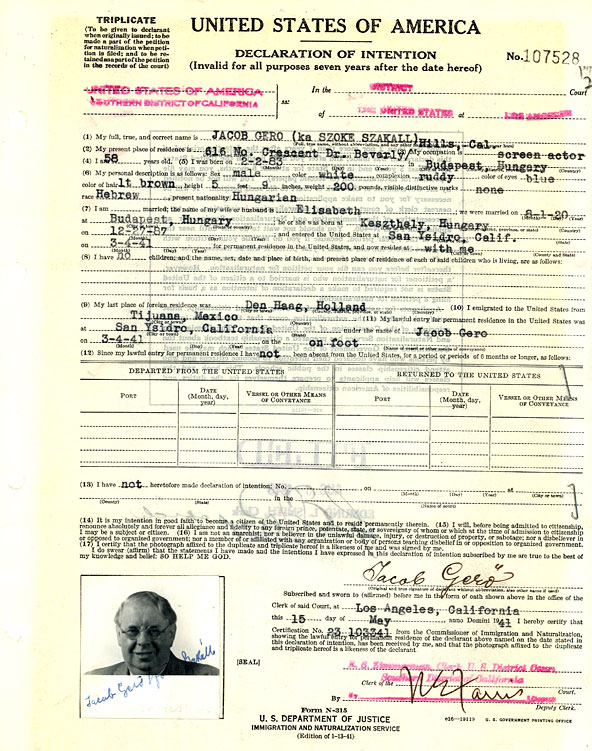
Who the heck is Gerö Jenö? That is S.Z. Sakall’s birth name, sometimes translated from his native Hungarian as “Jacob Gerö,” which is what appeared on his U.S. citizenship paperwork. Most sources say he was born in 1883, on February 2 in Budapest. (In case you were wondering, he was a Capricorn Aquarius.) Edit: Someone rightly commented that Feb. 2 is Aquarius, it’s squarely in the sign, not sure I got Capricorn from.

By the early 1900s, Gerö Jenö was writing scripts for musical-comedy theatre in Hungary. Several sources mention that he took his stage name, S.Z. Sakall, from the Hungarian phrase “szoke szakall,” in English “blond beard,” which he apparently grew to look older. He started acting at the age of 18. In the early ’20s, he moved to Berlin and appeared in his first film in 1927.

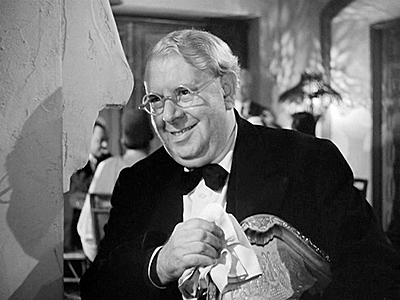
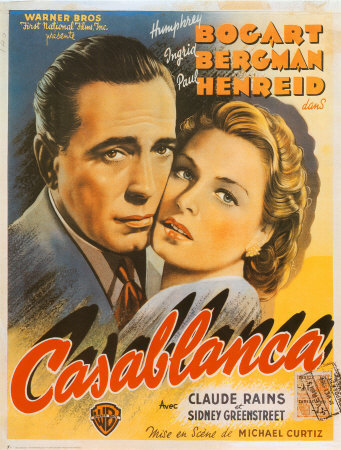
He continued working on stage and in film in Vienna and Berlin, and briefly had a production company, until 1933, when the Nazis took over Germany. Sakall, who was Jewish, had to go back to Hungary. In 1940, Hungary joined the Axis, giving the Nazis control of most of Europe.  Many — Jews and others who objected to the regime — who were able to leave, did so. Those in the film industry made their way to either London or Hollywood, and formed an essential part of American and western European moviemaking for the next two decades, exerting tremendous influence on both the style and content of films. A look at the cast and crew list for Casablanca (1942) has a fair proportion of these refugees: director Michael Curtiz; composer Max Steiner; and actors Paul Henreid, Conrad Veidt, Peter Lorre, and Sakall.


RENAULT: Carl, see that Major Strasser gets a good table, one close to the ladies.
CARL: I have already given him the best, knowing he is German, and would take it anyway.

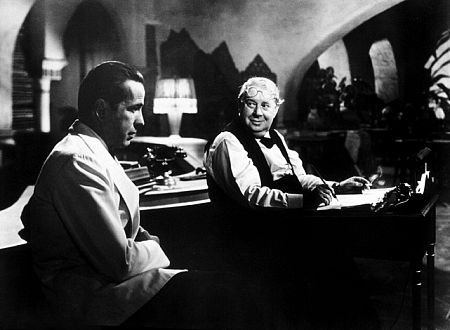
I can’t help but wonder how Sakall was affected by these lines and others in Casablanca. Perhaps the proximity of art to life was the reason Sakall at first refused the role of Carl the math-professor-turned-headwaiter, even though his Yankee Doodle Dandy director and fellow Hungarian Curtiz was helming, and the cast included top-name talent. Pure speculation on my part. What I do know is that all three of his sisters, his niece, and his wife’s brother and sister were murdered by the Nazis.

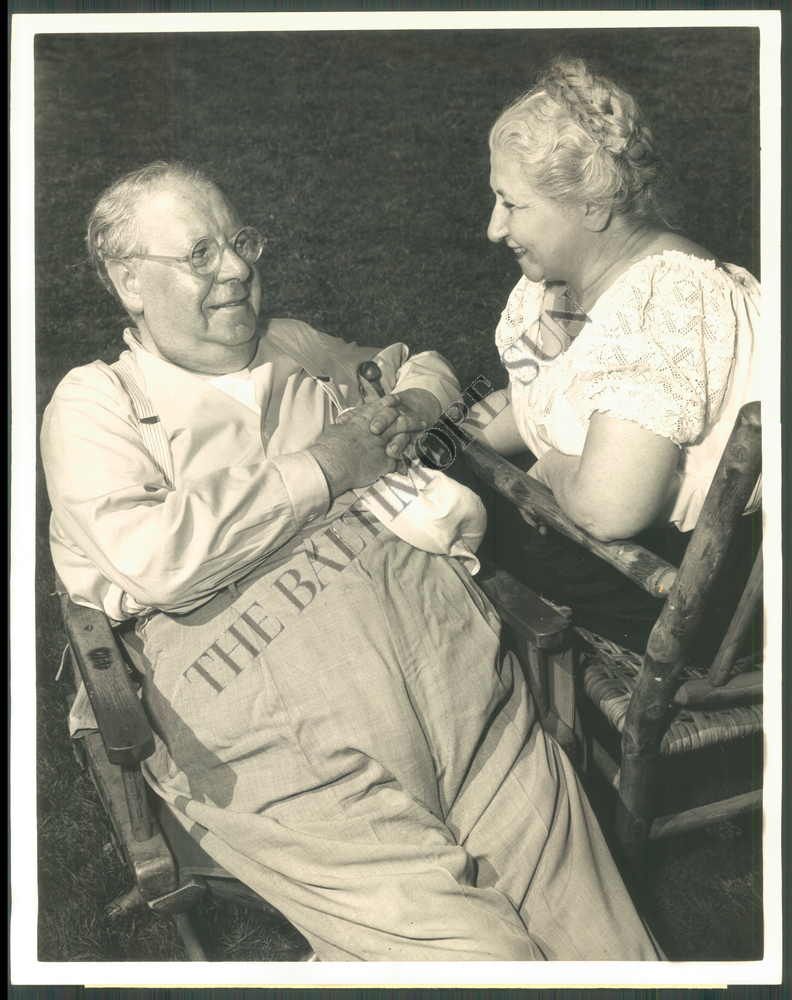
1948 photo from The Baltimore Sun: HAPPY HOLLYWOOD WEDLOCK — S.Z. (“Cuddles”) Sakall and his spouse Boeszike (he can pronounce it) have enjoyed nearly 30 years of wedded bliss. Boeszike comes to work with Cuddles nearly every day to help him with his lines, and bits of business, and for them love’s young dream is still way up there on rosy cloud No. 1. Cuddles, assisted by Boeszike, is soon to be seen in Warner Bros.’ “Whiplash.” / From: Warner Bros. Studio / Burbank, California

I don’t know for sure when Sakall acquired his famous nickname, Cuddles, or who gave it to him — his TCM clip cites Jack Warner as the source, but I’ve also heard that Doris Day coined it. He was first credited as “S.Z. ‘Cuddles’ Sakall” in 1945’s San Antonio.* I’ve read that he wasn’t fond of his nickname, and also that his charm, basic niceness and, um, cuddly exterior made it entirely appropriate both in film and in life.
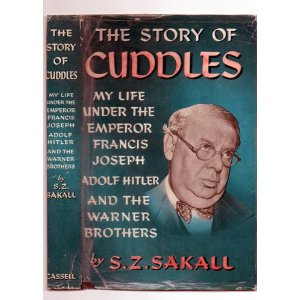
In 1954, Sakall published his wonderfully-titled memoir, The Story of Cuddles: My Life Under the Emperor Francis Joseph, Adolph Hitler and the Warner Brothers. The book is out of print and the one used copy I could find goes for $480.10. If anyone wants to buy me this for Christmas…I’m just saying. He passed away from heart failure in 1955.

It wouldn’t be going out on much of a limb to say Cuddles is best-known for Casablanca. So it is fitting that Humphrey Bogart, Sidney Greenstreet, John Qualen, the film’s producer Hal Wallis, its director Michael Curtiz, its composer Max Steiner, and S.Z. “Cuddles” Sakall were all laid to rest in Forest Lawn Memorial Park in Glendale, California.**

My Top Three Cuddles Roles

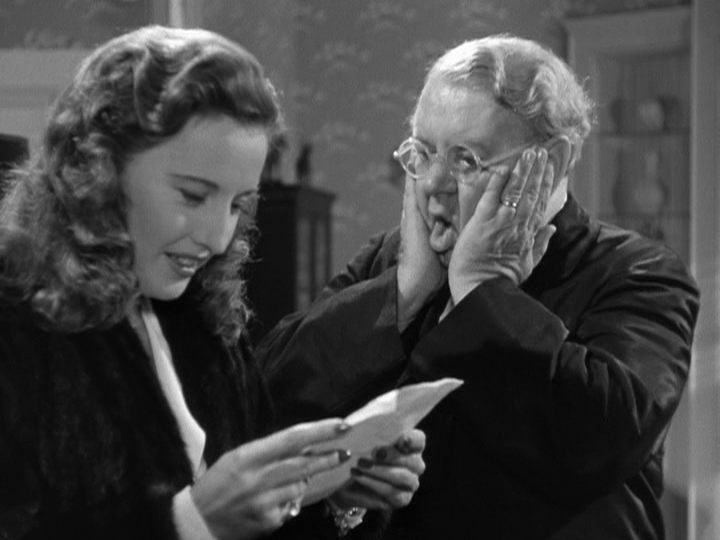
Ball of Fire Sakall plays one of 7 professors attempting to produce an encyclopedia. Because they’ve been cloistered in a mansion for 9 years, the group reacts strongly when showgirl Sugarpuss O’Shea (Barbara Stanwyck) turns up. As kindly physiology professor Magenbruch, he delivers many of his lines with a touch of mischief…his area of academic study is sex.

Christmas in Connecticut Sakall reunited with Stanwyck for this screwball comedy about a homemaking columnist who isn’t married and doesn’t have any kids. Cuddles plays her good friend, a chef named Felix, who is soon promoted to uncle. In my opinion, this is the quintessential Cuddles role, featuring all the befuddlement and exasperation for which he is known, together with the classic phrase, “It’ll be hunky-dunky,” Cuddle-ese for “hunky-dory.”

Casablanca As mentioned above, Sakall was unwilling to appear in this film. He tried to get Warner Brothers to pay him four weeks’ work, but the studio would only agree to three. His name was misspelled in the credits. But the character is essential to the story and serves as a sympathetic counterpoint to Humphrey Bogart’s brusque Rick.

*San Antonio starred Errol Flynn as a cowboy fighting cattle rustlers and Alexis Smith as the singer who falls in love with him. Sakall plays the singer’s manager, who repeatedly refers to riderless horses as “empty horses.” This phrase was most likely borrowed from, and a dig at, Casablanca director Michael Curtiz, with whom Flynn and David Niven notoriously clashed while filming Charge of the Light Brigade. (Niven called his second autobiography Bring on the Empty Horses.) There is at least one other connection to Casablanca: Dan Seymour, who played the bouncer Abdul, appears uncredited in San Antonio. The entire film is available on YouTube.

** Sakall’s nearest famous neighbors at Forest Lawn are the Ruggles brothers. Actor Charlie is in the same row; director Wesley is in the next row, across from Charlie.

WHAT A CHARACTER! Blogathon update

Hello Film Loving Characters!

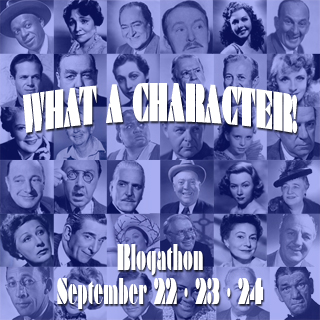
It’s almost time for the first-ever WHAT A CHARACTER! Blogathon. Hosted by Aurora of Once Upon A Screen, Kellee of Outspoken and Freckled and Paula of Paula’s Cinema Club, we are excited to host this fun inaugural blogging event. We have set up a schedule (below) for the bloggers who have signed up thus far for next weekend, September 22, 23 and 24.

Remember, this blogathon is all about those scene-stealing delightful character actors that we all love to see on the big screen. We’re anxious to read all of these wonderful posts. So many great character actors have been chosen so far. However, there are many great ones yet unspoken for. So, feel free to join in the film blogging fun while there’s still time! If interested, please contact one of us ASAP with your character choice and contact info so we can add you to the list. We will need all links to be provided and live no later than 24 hours prior to your assigned date to allow for formatting and promotion time.

Plus… don’t forget that we have provided a lovely banner (above) to go with your character blog post and we encourage you to proudly display it on your site.

THANKS SO MUCH!!

Aurora aka Once Upon A Screen
Kellee aka Outspoken & Freckled
Paula aka Paula’s Cinema Club

Saturday, September 22 — Kellee

Aline MacMahon Emma Lets Misbehave
Ann Miller Kay Kay Star Style
Beulah Bondi Janet Coulon
Charles McGraw Ivan Thrilling Days of Yesteryear
Eddie “Rochester” Anderson Terry A Shroud of Thoughts
Edgar Kennedy Gregory Maupin
Edward Everett Horton Jill Blake Sittin On A Backyard Fence
Eli Wallach PG Cooper PG Cooper’s Movie Review
Elsa Lanchester Beth Ann Spellbound By Movies
Eric Blore Lindsey The Motion Pictures
Erik Rhodes and Alan Hale Annmarie Classic Movie Hub
Felix Bressart Kristina Speakeasy
Eve Arden Kellee Outspoken & Freckled

Sunday, September 23 — Aurora

Lucille Wilson and Maude Eburne Patricia Nolan Caftan Woman
Frank McHugh Dorian Tales of the Easily Distracted
Gail Patrick Laurie One Gal’s Musings
Grady Sutton Jessica Comet Over Hollywood
Hume Cronyn in Shadow of a Doubt Jackie Jaxbra Tumblr
John Qualen Kristen Sales on Film
Lee J. Cobb in We Raid Calais Tonight Ruth Silver Screenings
Lew Ayres in Holiday Marya Cinematic Fanatic
Louise Beavers Margaret The Great Katherine Hepburn
Marjorie Main Lucy Secluded Charm
Mary Wickes Brandie True Classics
Sam Levene Duke Picture Spoilers
Thelma Ritter Aurora Once Upon A Screen

Monday, September 24 — Paula

David Landau Cliff Immortal Ephemera
Margaret Dumont Manish Once Upon A Screen
Porter Hall Joel Joel’s Classic Film Passion
Richard Jaeckel Jack Deth Paula’s Cinema Club
S.Z. Sakall Paula Paula’s Cinema Club
Una Merkyl Kevyn The Most Beautiful Fraud In The World
Una O’Connor Anthony Strand Zeppo Marxism
Victor Jory Jacqueline T. Lynch Another Old Movie Blog
Victor Moore Kari What Happened 2 Hollywood
Virginia Weidler Nikki Lynn All Things Classic Film
Walter Brennan & Mercedes Cambridge Le Critica Retro
Ward Bond Tonya GoosePimply Allover
William Demarest Sean The Joy and Agony of Movies

Universal Studios Backlot Blogathon: DRACULA (Spanish version, 1931)

In which I explain how the Spanish-language version of Dracula led to American Pie. This post is part of the Universal Backlot Blogathon, hosted by Kristen at Journeys in Classic Film.

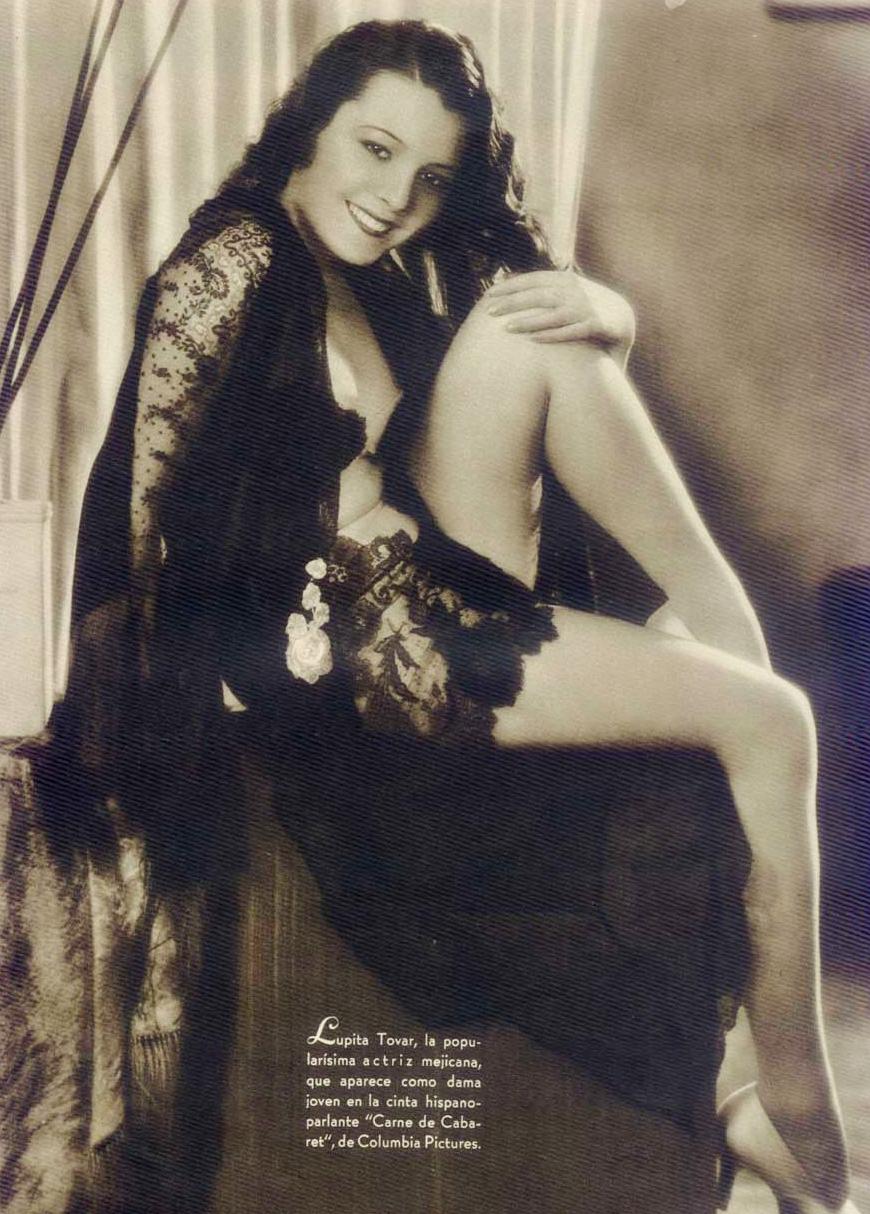
It seems to me that most film fans are familiar with Universal’s 1931 version of Dracula. Starring Bela Lugosi in the role that made him a star, it’s still a popular choice at Halloween, and it’s still capable of creeping you out. However, many are unaware of, and fewer still have seen, Universal’s Drácula, a Spanish-language version, also from 1931. Instead of Lugosi in the title role and Helen Chandler as Mina, en el versión español there are Carlos Villarias and 21-year-old Lupita Tovar as Eva (like Mina, but, as we’ll see, different). While Tod Browning shot the English version during the day, George Melford helmed the Spanish version by night on the same sets. The two productions also shared some of the same crew, who were able to learn from any mishaps or discoveries that occurred during the day. Browning’s version began filming on September 29, 1931; Melford’s on October 23.

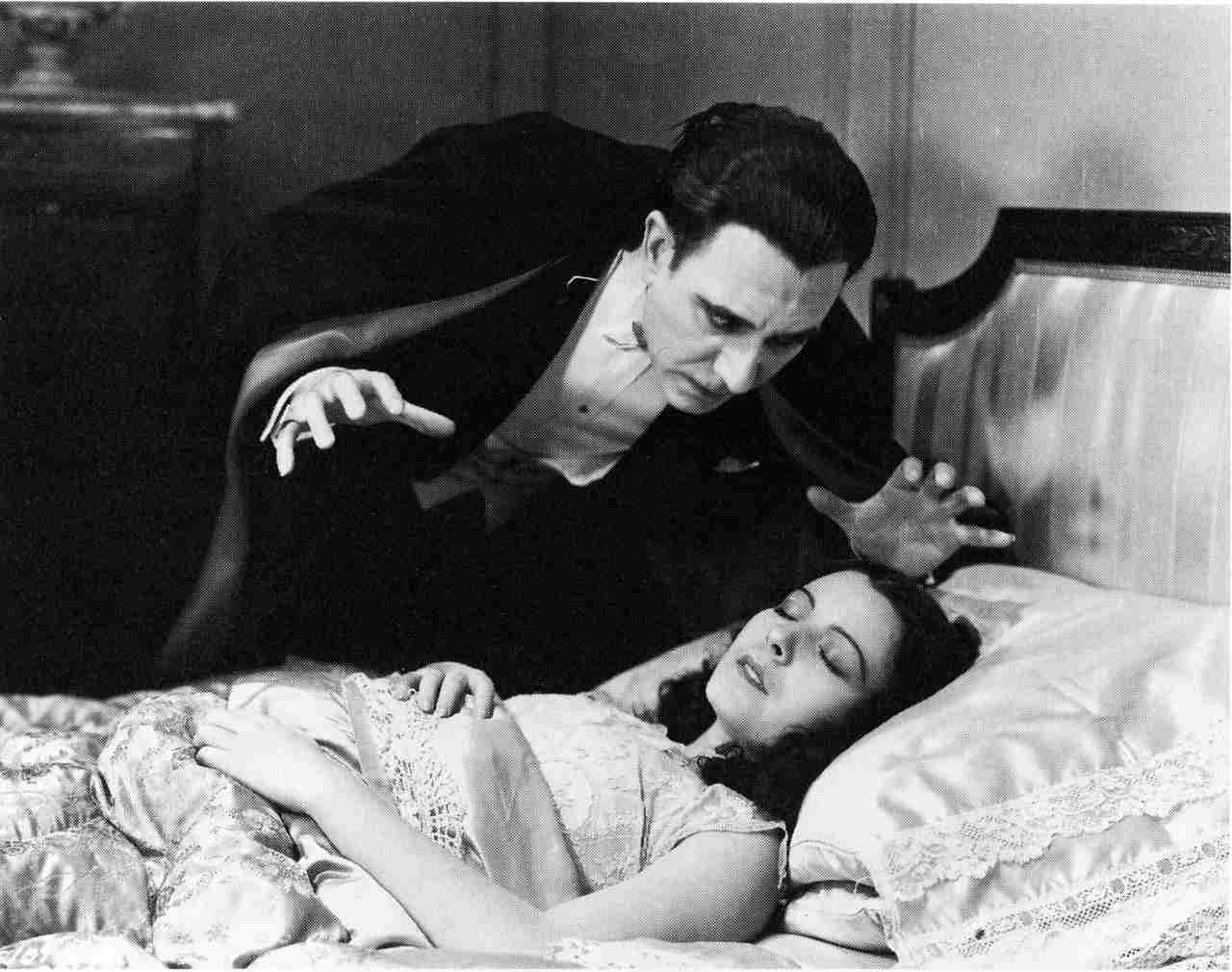
Drácula (Carlos Villarias) menaces Eva (Lupita Tovar) in Universal’s Spanish-language version of DRACULA (1931).

The Depression had taken a slice of Universal’s profit pie, and, with the advent of sound, producing films for the once-lucrative foreign markets had gotten more expensive. A silent film could play anywhere in the world with an update to the titles, but effective dubbing was in the future. From The Vampire Book:

Universal’s Czechoslovakian-born executive Paul Kohner suggested a solution to the studio’s head, Carl Laemmle, Jr.: shoot foreign language versions of motion pictures simultaneously with the English versions, thus cutting costs by using the sets more than once. Kohner also argued that salaries for foreign actors and actresses were far less than those of Americans. Laemmle appointed Kohner head of foreign productions. The first result was a Spanish version of The Cat Creeps, a talkie remake of The Cat and the Canary, which Universal had originally done as a silent film. Released in 1930 as La Voluntad del Muerto, it was an overwhelming success in Mexico and made actress Lupita Tovar a star.
Kohner decided to make a Spanish version of Dracula and moved quickly to secure the youthful Tovar for the lead before she could return to Mexico. He chose Carlos Villarias (or Villar) for the role of Dracula, and secured a capable supporting cast with Barry Norton (“Juan” or Jonathan Harker) , Eduardo Arozamena (Abraham Van Helsing), and Pablo Alvarez Rubio (R. N. Renfield).

Not all was smooth sailing. In 2008, at the age of 98, Tovar recalled the vampire-like hours the Spanish-language cast and crew kept, plus another slight detail…Melford didn’t speak Spanish.

Despite any difficulties during the shoot, the Spanish-language version has everything the English-language version has, and more. The camera shakes off that early-talkie stasis and actually moves, following characters in pans or swooping tracking shots. The lighting is more complicated and the scenes which rely on effects are technically better; for instance, when Dracula appears out of a cloud of smoke. Tovar’s characterization of Eva is more dynamic, and she was given a more realistic wardrobe, than Chandler as Mina.

Lupita Tovar, c. 1930.

The only deficiency in Drácula is unfortunately…Dracula himself. Villarias’ performance, especially when compared with Lugosi’s, seems exaggerated and tends to evoke more laughter than fear. When I saw the film on the big screen a couple of years ago, the audience couldn’t help but laugh, during even the most suspenseful and/or horrifying scenes. I guess it could have been just a bunch of people catching the giggles from each other; you can judge for yourself because the whole movie is on YouTube. [Edit: It’s no longer on YouTube, watch for it at your local arthouse.]

Villarias aside, Kohner certainly delivered value for money at Universal. Drácula cost just a tenth of what the English-language version had. Though it disappeared for a while in the mid-twentieth century, a revival in the 1990s returned it to prominence and many critics now rate it more highly than its English-language counterpart.

According to Michael Mallory, writing in Universal Studios Monsters: A Legacy of Horror, Kohner had another motive besides saving money for making Dracula in Spanish: preventing Lupita Tovar from resuming her career in Mexico. Mallory maintains that Kohner was “madly stricken” with Tovar, who wanted to pursue opportunities at home, and that the producer’s thrifty idea was at least in part a scheme concocted to keep the beautiful actress in the U.S. and on the lot. Whether this is true or not, Kohner and Tovar married in 1932 and remained together until Kohner’s death in 1988. Their daughter, Susan Kohner, who played Sarah Jane in Imitation of Life, had two sons — Paul and Chris Weitz, the writer/directors responsible for About a Boy, In Good Company, and yes, American Pie.

MHDL'S Fan Magazine Collection takes you back in movie time

A while back, I happened upon possibly the only site that may be a bigger time suck than tumblr….the Fan Magazine Collection put together by Media History Digital Library (MHDL). This remarkable archive contains full-page scans of magazines that you can browse through or even download to your computer for later consumption.

All’s well at M-G-M “the happy lot:” (L to R) Madge Evans, Robert Montgomery, Marie Dressler, John Gilbert, Anita Page, Joan Crawford and Clark Gable. Photoplay, May 1932.

The star of the show is MHDL’s complete set of Photoplay magazine, comprising all the issues from 1914 until 1940. These magazines are a gold mine for the classic movie fan…in just one issue, I found publicist-approved info like Mary Pickford’s secret for staying slim (hint: skip lunch), Clark Gable’s explanation of some pesky rumors, Myrna Loy and Carole Lombard’s hairdo tips, and addresses for all the stars, plus tons of images. They are also fascinating cultural artifacts, a window into U.S. society’s past concerns (which haven’t actually changed all that much.) This site will occupy more of your time than you probably can spare.

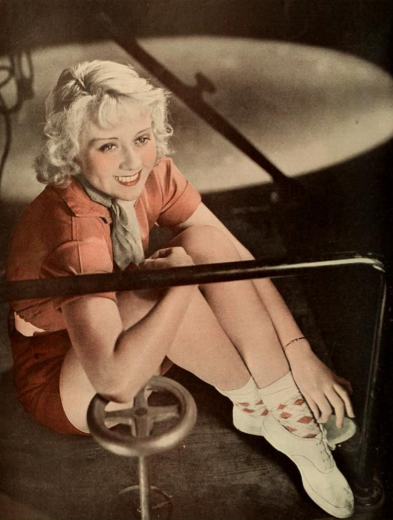
Joan Blondell. Photoplay, May 1932.


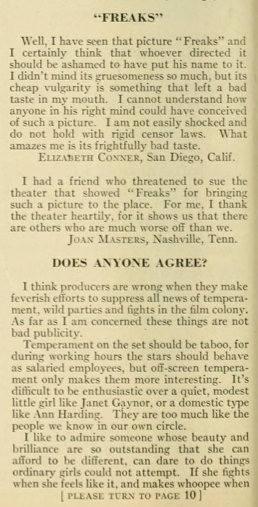
One of Photoplay’s interesting and often hilarious features is “The Audience Talks Back,” in which fans air their critiques and grievances. It’s like Twitter…only longer and on paper:

“No matter what the critics write, the audience always has the final word” — Letters to Photoplay, May 1932.


I cannot even imagine the work that went into scanning these, and MHDL has even more collections…for instance, the Early Cinema archive covers several publications from 1904 to 1919. All the collections are listed here. MHDL is a non-profit organization, “dedicated to digitizing collections of classic media periodicals that belong in the public domain for full public access…We have currently scanned over 400,000 pages, and that number is growing.” The scanning is paid for by collectors and donors, so if you see the value in any of this, please support their work — there’s a “Donate” button in the right sidebar.

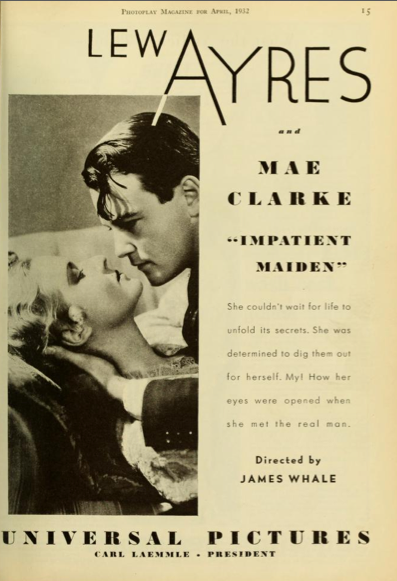
Photoplay, April 1932.

Happy birthday, #TCMParty!

Some of you may know that I run #TCMParty, a live tweet of movies shown on TCM, but you may not know that today, September 3, 2012, is the one year anniversary of the first-ever TCM Party.

TCMP-feat-imgWhile I wasn’t present on that occasion, I did start tweeting along soon afterwards, on September 11, 2011. The film was Casablanca. I remember my first ever #TCMParty tweet was something like, “Bring out the private stock,” or words to that effect.

#TCMParty was actually the brainchild of Kathleen Callaway, aka @hockmangirl. A group of her friends on Twitter were tweeting along to classic movies, so she figured, why not use a hashtag so everyone could see everyone else’s tweets. She began “hosting,” i.e. picking a specific movie from the TCM schedule, promoting the date and time it would be on to get as many people together as possible, and tweeting information about it during the air time.

I started hosting TCM Parties sometime in October, and soon after decided we needed a separate Twitter account, so we wouldn’t blow up our followers’ feeds while we were feverishly tweeting about a movie some of them might not care about at all. If you’ve ever wondered why there’s an underscore in @TCM_Party, it’s because @tcmparty was taken. We also started a Facebook page and a tumblr, which are still going strong.

I guess it was destiny…I have this poster in my office at work

In March 2012, Kathleen decided to concentrate on her handcrafts and animal rescue work. My nickname for her is “Wonder Woman” for all the stuff she gets done. I had persuaded silent film connoisseur Trevor Jost, aka @tpjost, to guest host Sunrise (1927), and he offered to help with TCM Party on the regular. I am glad that he did, because I have a huge gap in my knowledge of both silents and most films made before “the magic year” 1939. (Actually…if you look carefully enough…there’s tweets and Examiner movie columns around in which I declare my dislike of silent films. What can I say…at least I have the courage to admit publicly that I was wrong.)

From CASABLANCA to TO HAVE AND HAVE NOT, Humphrey Bogart is a recurring TCM Party theme

TCMP has less to do with Trevor and I than it does with everybody who shows up and tweets. In the year that people have been gathering around #TCMParty, we’ve trended nationally a few times and brought countless new fans to TCM and classic films. By “we,” I mean all the TCM Party people. I’ve learned so much from everyone and had a ton of fun along the way. I hope it will continue to make more people aware of how really great most classic films are. (I’d be shirking my duties if I didn’t mention that our next #TCMParty is Wednesday, September 5 at 8 p.m. Eastern, To Have and Have Not, starring TCM’s Star of the Month, Lauren Bacall. Make sure to follow @TCM_Party for further updates.)

I’d like to thank everyone who has “attended” our virtual shindigs, helped get the word out, and/or guest-hosted over the past year.

So…what’s your favorite #TCMParty memory?


Carol Burnett loves old movies

There’s a few sure things in life, and one is that I’ll watch A Stolen Life, a mistaken-identity melodrama in which Bette Davis plays twins, every time it’s on TCM. A while ago, my friend Tonya from Goosepimply Allover sent me a link to a parody of the film, called “A Swiped Life,” from The Carol Burnett Show. If you’ve  seen the film, you’ll find it hilarious. You can tell Burnett really studied Ms. Davis’ speech patterns and facial expressions…and then way over-emphasized them.

They also did a parody of Double Indemnity, called “Double Calamity.”

And one more…a “tribute” to Fred and Ginger. Roddy McDowall is excellent in the Edward Everett Horton role:


What really strikes me about these spoofs is that, at some point, these movies were well-known enough for jokes and references about them to be understood by enough people that it was a regular feature on a national network TV show. Now with the wide variety of entertainment options, there isn’t any one film, TV show, book or musical act that everyone is familiar with.

Also, even though I’ve enjoyed the occasional episode of Jersey Shore, I can’t help but wish there was something as smart and fun as The Carol Burnett Show on TV now.

UPDATE: In the interests of completism, here is the immortal Carol Burnett Gone With The Wind parody, “Went With The Wind:”