January Movies (whew!)

I seem to be perpetually short on time so I thought I’d make a nice list instead of those long, drawn-out posts I like so much 😉
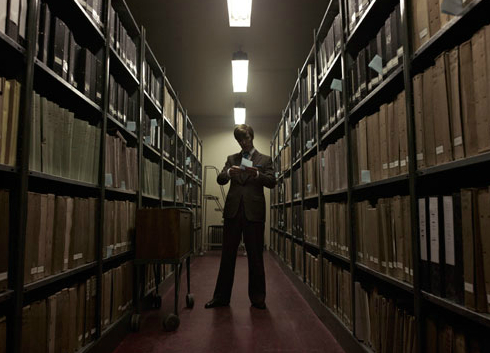
Dude, get out of there! Hurry!

I really liked Tinker Tailor Soldier Spy (4 out of 5 stars). I usually like espionage movies, and of course there is the cast (some of whom are wearing some pretty great suits). Even if just any two of these guys was in it, I’d have gone, plus I am no longer ignorant of Benedict Cumberbatch. (Don’t judge the gaps in my knowledge! OK, go ahead…but at least leave a comment.) There isn’t a lot of shoot-’em-up behavior, but it is suspenseful nonetheless, especially if you get nervous when spies are spying on each other. Shoot-’em-up is fine too, though. This Means War? I’m so there.

I really liked Shame, but in a different way (4.5 out of 5 stars). It’s nearly perfect in itself but I don’t think I could see it again. I found it as depressing as I thought it would be from reading the script, although a lot of stuff in the version I read didn’t make it into the finished film. There’s no question that Michael Fassbender and Carey Mulligan deserved Oscar nominations. Both actors suggested so much in a non-showy way, without much dialogue, and I believe those performances are actually what kept Academy voters away (in addition to the subject matter). I’d have given it 5 stars if there had been just a little bit more backstory about Brandon and Sissy. What is the significance of “New York, New York?” Why is Brandon obsessed with the Standard Hotel? You know that cool girl in your high school that wore vintage years before it was cool and always looked fabulous? That’s Sissy…but what happened to her after that? You won’t find out in this interview Fassbender did on Canadian TV show The Hour but I’m throwing it in here because it’s pretty interesting.

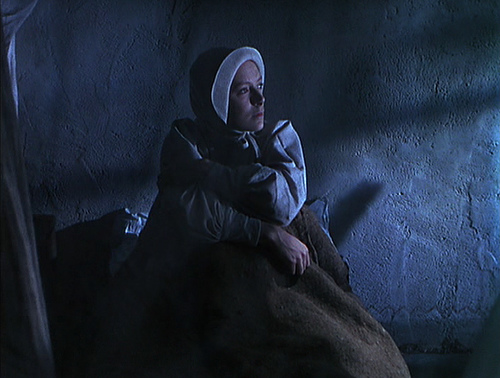
Charlotte Rampling as Mary (center)

I really liked The Mill and The Cross (4 out of 5 stars). I wish there was a movie like this for every painting. It’s difficult to describe it. Again…not a lot of dialogue. It basically shows Brueghel’s (Rutger Hauer) inspiration for each figure and situation in the work. It’s a meditation on the creative process, a record of the human condition in Flanders in the 16th century (hint: lousy), an invective on humanity’s inhumanity, and a powerful statement in favor of the separation of church and state. If you get a chance to see this on the big screen, definitely go. Much will be lost on even the biggest home TV.

I loved The Artist (5 out of 5 stars), it’s just brilliant. It’s also laden with homages and tributes to Old Hollywood and the early 20th-century silents — a feast for classic movie fans. Still working on a larger post on this theme.

This month I also decided there should be ejector seats in cinemas (5 out of 5 stars). People who are talking/yelling, chomping loudly on gum, crinkling candy wrappers, talking on a cell phone, texting, tweeting or IMing can be removed in a speedy and efficient manner. Alternatively, should ejector seats prove too costly, perhaps two auditoriums can show the movie at the same time — talkers in one, silent types in the other. I’m kidding…sort of 😉 The stillness of Tinker Tailor Soldier Spy and The Mill and The Cross was almost wrecked. That was my non-classic moviegoing month of January 2012, how was yours?



Preview: The Mill and the Cross

I’ve been waiting to see The Mill and the Cross since last year, so I’m seriously looking forward to seeing it at Detroit Film Theatre this weekend. In this film by director Lech Majewski, the stories, characters and context of Pieter Brueghel’s 1564 painting The Way to Calvary come to life. The idea of being able to see what was going on in an artist’s mind and surroundings as he created a panoramic, detailed work like this is intriguing indeed. Apparently a mix of live action and CGI was used to recreate beautifully-lit visuals that are very similar to the painting’s. Rutger Hauer portrays Brueghel, who, inspired by a spider web, is apparently attempting to capture “everything” in one canvas, while the Inquisition overshadows everyday life in 16th-century Flanders, then governed by Spain.

The trailer reminded me of another film with a visual artist at its center, Peter Greenaway’s The Draughtsman’s Contract.

The Mill and The Cross is at DFT January 20-22 and 27-29, get all the details here.

Review: A Dangerous Method

I was a bit reluctant to see A Dangerous Method. Carl Jung’s ideas about the collective unconscious, synchronicity, archetypes, and the anima/animus were revolutionary at the time and still make a lot of sense to me. If you’ve ever taken a Myers-Briggs Type Indicator, that’s based on Jung’s concept of extroverted vs. introverted personalities. But the trailer sort of made it seem like I was going to have to title this review “Carl Jung Did More Than Feud with Freud and Sleep with His Patients.” Though Jung did have differences (and a messy breakup) with his onetime mentor Sigmund Freud, and at least two extra-marital relationships, there is so much more to the life and work of one of the 20th century’s greatest minds. And thankfully, A Dangerous Method is a better film than its trailer.

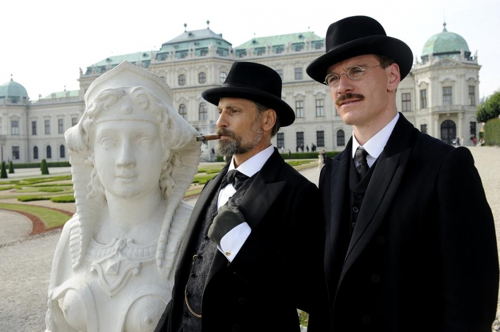
It is true, Jung was unique in his time for his emphasis of feminine consciousness, and he had many female patients, students, and colleagues, many of whom worked closely with him when they became analysts and/or researchers in their own right, well before women were the norm in the field. Method is about the relationships between Jung (Michael Fassbender); a woman who was all of the above plus Jung’s mistress, Sabina Spielrein (Keira Knightley); and both of their relationships, a kind of intellectual triangle, with Sigmund Freud (Viggo Mortensen). Also in the mix are a couple of polar opposites —Emma, Jung’s rather uptight wife (Sara Gadon), who knows all, and Otto Gross, a libertine student of Freud’s (Vincent Cassel), who avoids repression of any urge.

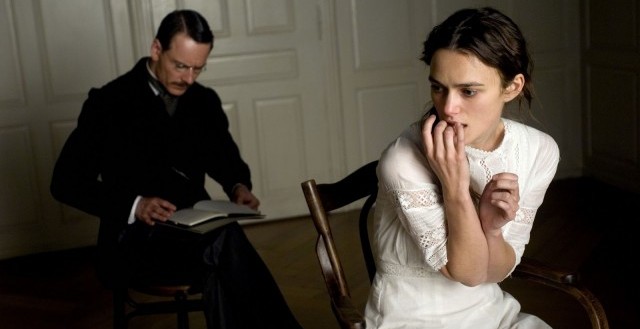
Michael Fassbender as Carl Jung, Keira Knightley as Sabina Spielrein.

Sabina Spielrein was the first patient Jung attempted to cure with Freud’s “talking cure,” the basis of modern psychoanalysis. The danger of this method is transference, in which the patient transfers their feelings, often romantic or erotic feelings, to the therapist. The film opens as she’s in the midst of a nervous breakdown, being admitted to the Burghölzli, a psychiatric hospital at the University of Zurich in Switzerland, where Jung is assistant director. She’s volatile and disturbed, but she’s smart and educated, not to mention beautiful, and she responds well. Because her stated ambition is to become a doctor, she is soon helping Jung with his research, while he’s still treating her. She is admitted to a university and they work together. Eventually, Jung and Speilrein become lovers.

Freud and Jung before it all went downhill.

At the beginning of the film, Jung and Freud haven’t yet met. When they do, they have a 17-hour conversation and Jung is deemed heir apparent to Freud. “I’ve simply opened a door,” Freud tells Jung. “It’s for the young men like yourself to walk through it.” But as their collaboration continues, it seems like Freud would rather slam the door shut than let Jung take over. Freud thinks all neurosis has a sexual cause, and Jung believes that there are other factors, including spirituality and individual personality. Freud, almost 20 years older and set in his ways, is more and more reluctant to hear the younger man’s ideas. We see the authoritarian, almost tyrannical, side of him, and the cold and ruthless streak in Jung. Spielrein is caught in the middle — her love is with Jung but her mind takes her nearer to Freud.

The acting is uniformly great. Fassbender and Mortenson are excellent of course. Gadon is appropriately controlled. Cassel has an interesting cameo as Gross, who sets the stage for Jung and Spielrein’s relationship. Gross seems like a representation of Jung’s desires; we never see him talking to anyone else and he says so many things that Jung wants to hear.

But the real surprise to me was Keira Knightley. She shows you Sabina’s struggle, intelligence,  and persistence. Even when she’s in full breakdown mode, she manages to suggest that there’s something more there, whatever it was that allowed a mental patient to become an analyst herself. I even liked her accent. I figure that’s what a Russian immigrant in Switzerland would sound like. I thought she deserved a Best Supporting Actress nomination but with the field so crowded with excellent performances, I knew it was a long shot.

Jung’s ideas are fairly abstract but the movie does a good, if somewhat sensationalized, job of explaining both his and Freud’s ideas. Christopher Hampton wrote the screenplay, an adaptation of his own play The Talking Cure, sometimes using Jung’s and Freud’s exact words. The language is beautiful and delivered well, be it smooth, violent, or repressed. Ultimately the film is beautifully shot but never fully sheds its stage-play origins. That’s a small price to pay though, when you’re witnessing a revolution.

PS: If anybody wants to read up on Jung, I highly recommend Introducing Jung written by Maggie Hyde and illustrated by Michael McGuinness. It’s like a comic book and it really explains things in an effective and painless way.


TCM Week: Jan. 23-29

TCM Week spotlights a highly subjective selection of the week’s essential or undiscovered films on the Turner Classic Movies channel to help plan movie viewing, DVR scheduling or TCM Party attendance. All times are EST. 

Simone Signoret in La Ronde

Monday, January 23
Tonight beginning at 8 p.m., TCM presents six films directed by Max Ophüls in Hollywood. Born in Germany in 1902, Ophüls was a director, creative director and producer in theater, then in films. He fled from the Nazis to France in 1933, and landed in Hollywood via Switzerland and Italy by 1941. He didn’t make a film in the US until five years later, when Robert Siodmak helped him land The Exile (1:00 a.m. Tues.). To me, Ophüls is synonymous with love and destiny, luxurious productions, and the brilliant, saturated color of the tragic Lola Montes. Other films in the block include:
8:00 p.m. The Reckless Moment
9:30 p.m. Caught
11:15 p.m. Letter from an Unknown Woman
1:00 a.m. The Exile
2:45 a.m. La Ronde
4:30 a.m. The Earrings of Madame de…

Tuesday, January 24
11:30 a.m. The Catered Affair (1956)
I’ve always heard, the wedding is for the family and the honeymoon is for the couple, and so it is when a daughter (Debbie Reynolds) gets engaged and her mother (Bette Davis) makes every effort to give the girl a wedding like the mother always wanted.


4:30 p.m. The Dirty Dozen (1967)
If you haven’t yet seen this classic about Aldo Raines Major Reisman (Lee Marvin) and 12 convicts (Telly Savalas, Charles Bronson, Ernest Borgnine, Jim Brown, and George Kennedy, among others) on an impossible mission to blow up a movie theater chateau containing a whole mess of Nazis, set your DVR now. If you don’t have a DVR, call in sick. At least put it in your Netflix queue. I’m serious.

Wednesday, January 25
8:00 p.m. Private Screenings: Angela Lansbury

9:00 p.m. Sweeney Todd: The Demon Barber of Fleet Street (1982)
***TCM Party***
A barber (George Hearn) begins a murderous partnership with the baker downstairs (Angela Lansbury). Find us on Twitter with #TCMParty…watch and tweet along!

Thursday, January 26
Jack Cardiff is best-known as a cinematographer but he was also an Oscar-nominated director (for 1960’s Sons and Lovers). Tonight TCM is showing another five of the 13 films Cardiff directed:
8:00 p.m. Intent to Kill (1958)
9:45 p.m. The Lion (1962)
11:30 p.m. Young Cassidy (1965)
1:30 a.m. The Liquidator (1966)
3:30 a.m. Dark of the Sun (1968)

Friday, January 27
TCM has a block of films directed by James Whale beginning at 8:00 p.m. tonight. I can recommend The Invisible Man and Frankenstein, but I also highly recommend Gods and Monsters, an imagining of the end of Whale’s life. It’s superbly acted by Ian McKellen and Brendan Fraser, and it’s nowhere near as depressing as it sounds.
8:00 p.m. The Great Garrick (1937)
9:45 p.m. One More River (1934)
11:15 p.m. The Invisible Man (1933)
12:30 a.m. (Sat.) Frankenstein (1931)

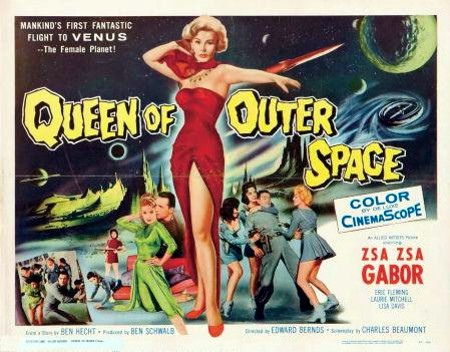
ZsaZsa Gabor in Queen of Outer Space

Saturday, January 28
There’s a lot of famous movies scheduled today…Rocky, King Solomon’s Mines, The Misfits, Soylent Green, Rebel Without A Cause, and Guess Who’s Coming To Dinner…but I’m going to try to catch Zsa Zsa Gabor as one of the all-female inhabitants of Venus in a movie that promises to give new meaning to the term “campy,” Queen of Outer Space (7:30 a.m.); and Saratoga (10:15 p.m.), which pairs Clark Gable with Jean Harlow in her last film.

Sunday, January 29
6:00 a.m. The Hard Way (1942)
Yep, it’s early in the morning, but who am I to refuse an Ida Lupino movie?

2:00 a.m. (Mon.) The Vanishing (1988)
“A young man is obsessed with finding the girlfriend who vanished at a rest stop.”


Belated but sincere Cary Grant birthday post

Due to the SOPA blackout, I am a day late with my Cary Grant birthday post, but I am no less sincere. Writer’s block is troubling me for the second time in two weeks as I try to be original about how handsome, charming, and debonair he was, both in his movies and apparently in real life. As Audrey Hepburn said to him in Charade: “Do you know what’s wrong with you? NOTHING.” OK, that was dialogue between their characters…but still. And though at least some of the time American acting is about playing oneself, I also think Grant was a great actor. I’m thinking of Roger O. Thornhill’s disorientation and distress in North by Northwest, Johnny Aysgarth’s furtive shadiness in Suspicion, and John Robie’s desperation in To Catch A Thief.

My favorite Cary Grant moment, right at this moment, is his entrance in Indiscreet. He’s just there suddenly when Anna (Ingrid Bergman) turns around and she reacts pretty much as I would expect. The clip is here, he apparates in (yes, I do mean apparate) around the 7:55 mark.

I think probably the best tribute ever to Cary Grant has been done, by Michael Caine, courtesy of TCM:

So what’s your favorite Cary Grant movie, scene, or line? Leave a comment!

TCM Week – Jan. 16-22

TCM Week spotlights a highly subjective selection of the week’s essential or undiscovered films on the Turner Classic Movies channel to help plan movie viewing, DVR scheduling or TCM Party attendance. All times are EST. 

Monday, January 16 — Before Spike (Lee)
For Martin Luther King, Jr. Day, TCM is featuring a day of films related to how Americans dealt with race and racial issues. My top choice is The Defiant Ones (1958) at 6:15 p.m. Tony Curtis and Sidney Poitier play two men—one white, the other black— who escape from prison in the South. They despise each other, but they are literally chained together and have to learn to cooperate if they’re going to survive. At the time, American films hardly ever addressed racial inequity and almost never starred African-Americans. Neither actor was afraid to play against their usual likability; both Curtis and Poitier were nominated for Best Actor Oscars. The film also received nominations for Best Actor in a Supporting Role (Theodore Bikel), Best Actress in a Supporting Role (Cara Williams), Best Director (Stanley Kramer), Best Film Editing (Frederic Knudtson), and Best Picture. It won Best Black-and-White Cinematography and Best Writing, Story and Screenplay – Written Directly for the Screen. There’s no question that it’s an old-fashioned movie; Spike Lee felt that Poitier’s character was the prototype of the “Magical Negro.” But it does propose that if we don’t get to know those who are different from us, we’ll never respect or like each other either…something that as a society we still need to work on.

Tuesday, January 17
6:15 p.m. Saturday Night and Sunday Morning
Everybody’s workin’ for the weekend…especially Arthur Seaton (Albert Finney), a rebellious young Brit who works in a factory all week and just wants to unwind with a few pints and his best friend’s wife on his days off. Based on Alan Sillitoe’s novel of the same name, both book and film were part of the Angry Young Man movement in literature and cinema trending in Britain from the mid-’50s to the early-’60s. Saturday Night shares the same sensibility as Look Back in Anger, Room at the Top, A Taste of HoneyBilly Liar and The Loneliness of the Long Distance Runner. They’re a bit melodramatic, but these were the first British films to focus on the working class and portray their everyday lives. You might find the mood or some of the dialogue in Saturday Night familiar…this film and its movement have been an enduring influence on British (and thus, eventually, American) popular culture. For example, Morrissey of The Smiths borrowed lines directly from Saturday Night and generally made the AYM attitude a lifestyle; both the Stranglers and the Arctic Monkeys have albums named after this film.

1:30 a.m. (Wed.) Diary of a Chambermaid (1946)
Paulette Goddard plays a maid who records her impressions of the houses where she works. A rare chance to see Jean Renoir’s version of a novel of the same name by French writer Octave Mirbeau. Remade in 1964 by Luis Buñuel.

Wednesday, January 18 — Happy Birthday, Cary Grant
TCM honors the birthday of one of my favorite actors of all time with 12 hours of movies beginning at 6:15 a.m. If you can only watch one or two of these, my personal advice would be to choose from those in which sparks fly between Grant and his female co-stars, all great talents in their own right.
8:15 a.m. Topper (Constance Bennett)
10:00 a.m. Holiday (Katharine Hepburn)
noon In Name Only (Carole Lombard)
1:45 p.m. My Favorite Wife (Irene Dunne)
Happy birthday to all you hardworking, stylish Capricorns out there as well. Take some time for you and watch your knees. Love you guys.

8:00 p.m. The World of Harry Orient
***TCM Party***
Last night I saw a clip on TCM of Star of the Month Angela Lansbury describing her character in this as less than intelligent and not very nice. Sounds like a departure from type for her (although she wasn’t very pleasant in State of the Nation). She also said that she and co-star Peter Sellers improvised most of their dialogue, so this should be pretty interesting. Find us on Twitter with #TCMParty…watch and tweet along!

Thursday, January 19
Though his best-known films were done with Powell & Pressburger, cinematographer-director-genius Jack Cardiff had a lot of career outside of that collaboration. Tonight TCM has four films in which Cardiff worked with other directors, and while they might not be the greatest in terms of direction, acting, or writing, they certainly have effective and beautiful cinematography. If Faber & Faber are reading this, please bring out another edition of Cardiff’s book Magic Hour…the cheapest copy I can find is around $100!
8:00 p.m. Under Capricorn I see what you did there TCM
10:15 p.m. The Master of Ballantrae Roger Livesey Alert
midnight The Prince and the Showgirl The making of this film was apparently fraught with tension between stage-trained Laurence Olivier and Method proponent Marilyn Monroe. It formed the basis for the book and the film My Week with Marilyn.
2:00 a.m. Pandora and the Flying Dutchman

Friday, January 20
Bright Leaf (11:15 a.m.) caught my eye. I’ve never seen it but the cast includes Gary Cooper and Lauren Bacall, although she is apparently not the female lead; Patricia Neal is. It was directed by Michael Curtiz (Casablanca). Also of note is tonight’s Essential, A Letter to Three Wives. Joseph L. Mankiewicz (All About Eve, Suddenly Last Summer) wrote and directed this soapy look at three different crumbling marriages.


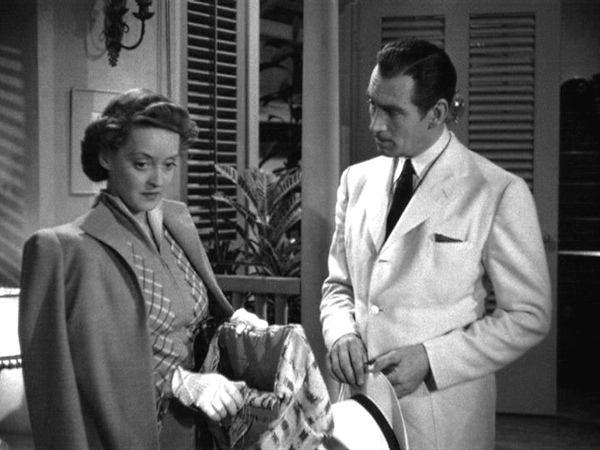
Was it self-defense or…gasp!…murder? Bette Davis and James Stephenson in The Letter

Saturday, January 21
midnight The Letter (1940)
Ms. Bette Davis is at her best as a woman claiming it was self-defense when she shot and killed a man one night in Malaysia. My favorite Bette Davis movie.

Sunday, January 22
8:00 p.m. Murders in the Rue Morgue (1932)
One of three films tonight starring Bela Lugosi, who along with Boris Karloff, provided many of Universal’s thrills and chills during the early ’30s.

2:00 a.m. (Mon.) Night of Cabiria
I’m not really all that familiar with Federico Fellini’s work, having only seen La Dolce Vita, but I wanted to give those who are a heads up.

So TCM fans…what are you watching this week? Any favorite Cary Grant movies? Leave me a comment!

Film Noir Friday – TOUCH of EVIL

I’ve had a horrendous case of writer’s block this week, trying to come up with something original to say about Orson Welles’ 1958 film noir masterpiece, Touch of Evil. As I noted last August, it’s practically impossible to say anything that hasn’t already been said about Welles and his work. After all, there are countless books and movie blogs rightly singing their praises, and Touch of Evil has long been regarded as a great of the film noir genre. But I’ve got to add my $.02 because Detroit Film Theatre is showing the film on Saturday, January 14 at 4:00 p.m. as part of their DFT 101 series. So I’ll just list why I’m so looking forward to this opportunity to see it as it was meant to be seen:

  • Touch of Evil is arguably the last in the film noir classic cycle. Welles’ own Citizen Kane is considered an important influence on what would eventually come to be known as film noir, and it’s clear that he had mastered the elements of film noir style, exemplified by his use of chiaroscuro lighting and subjective camerawork. Welles also wrote the film’s script, which contains most of film noir’s thematic elements. A hero (Charlton Heston as a Mexican narcotics officer named Mike Vargas) lost in a labyrinth of shadiness and duplicity, shadowed streets, corruption, and seedy characters. In Welles’ hands, it’s a feast for the eyes.
  • Welles also stars in this, his last American film, taking on the role of corrupt, alcohol-soaked cop Hank Quinlan. Quinlan’s jurisdiction is Los Robles, a seedy town on the Texas side of the U.S.-Mexico border where all sorts of crime occurs, but Quinlan seems to be the worst. We see him slowly losing even the pretension of moral authority, as he conspires against Vargas, endangers Vargas’ wife (Janet Leigh), plants evidence, drinks to excess, and generally acts as judge and jury, convicting anyone he doesn’t like, usually a Mexican.


  • It will be a joy to see the film’s opening sequence, a three-minute, 20-second long take, on the big screen. We are shown a bomb being armed and concealed in the trunk of a Cadillac, which we then follow over the border in an amazing continuous shot, that ends with the explosion of the bomb.
  • As Tana (Marlene Dietrich) might have said about the 1958 version of Touch of Evil, “Honey, you’re a mess.” Welles wasn’t allowed to control the film’s final cut. The studio’s version placed the credits over the long take, added a musical soundtrack to it, and added some scenes to the rest of the film —  apparently the film’s plot was deemed to intricate for the average moviegoer. Thankfully, DFT will be showing the 1998 restoration, which was based on a painstaking 58-page memo Welles sent to the head of Universal Studios (who ignored it), so that what we see on Saturday will be as near to what Orson Welles intended as possible. Don’t miss it!

The DFT is located on the John R side of the Detroit Institute of Arts, 5200 Woodward Avenue. To purchase tickets, call 313.833.4005 or visit the DFT Ticket Info page.

TCM Week – Jan. 9-15


TCM Week spotlights a highly subjective selection of the week’s essential or undiscovered films on the Turner Classic Movies channel to help plan movie viewing, DVR scheduling or TCM Party attendance. All times are EST. 

Monday, January 9
I’m not a huge fan of either of the genres represented today — Westerns and Epidemics. Choosing strictly based on TCM summaries and IMDB reviews, I’d pick The Dude Goes West with Eddie Albert and Gale Storm at 4:30 p.m. At 8:00 p.m. the Epidemics begin contamination, led by The Andromeda Strain. Based on a novel by Michael Crichton and directed by Robert Wise (Somebody Up There Likes Me, West Side Story), it seems to be the least chintzy of the lot.

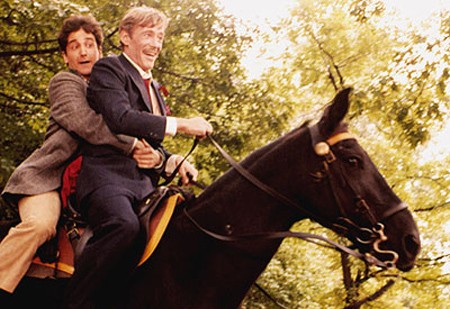
Benjy (Mark Linn-Baker) is in for a wild ride when he babysits Alan Swann (Peter O'Toole) in My Favorite Year.

Tuesday, January 10
Writer-director-producer James L. Brooks (of Terms of Endearment and Broadcast News fame, among many others) is tonight’s Guest Programmer, beginning at 8:00 p.m. with This Is Your Story, which I haven’t seen. I’ve not seen Prince of the City (2:00 a.m.) either. But I love Brooks’ other three choices. My Favorite Year (8:15 p.m.) is about a 1940s radio show writer (Mark Linn-Baker) trying to keep fun-loving actor Alan Swann (Peter O’Toole doing his best Errol Flynn) sober and vertical, at least until Swann can guest star on that week’s broadcast. Dr. Strangelove (10:00 p.m.) and Network (11:45 p.m.) are two of the most prophetic movies ever made — the former foreshadows the increasing dominance of the military-industrial complex, the latter prefigures the rise of reality TV and that medium’s overall “if it bleeds, it leads” ratings-first mentality.

Wednesday, January 11
8:00 p.m. The State of the Union (1948)
***TCM Party***
Frank Capra’s follow-up to the now-beloved flop It’s A Wonderful Life was made as Truman defeated Dewey and the House Un-American Activities Committee investigated Hollywood. It’s about a presidential candidate who gets mixed up in the dirty side of politics. Though Star of the Month Angela Lansbury was in her early twenties when she made this film, she was nonetheless cast as Spencer Tracy’s character’s fortysomething mistress.
Watch and tweet with #TCMParty

Just one frame of the amazingly beautiful Black Narcissus

Thursday, January 12
TCM’s tribute to cinematographer Jack Cardiff continues tonight with my favorite films of his, those he did with Michael Powell and Emeric Pressburger, collectively known as the Archers. Cardiff was the foremost practitioner of Technicolor and an accomplished fine artist who — I can’t think of any other way to say this — painted with light. I don’t think anyone else could have done the beautiful work he did. Put that together with the excellent direction, writing, art direction, acting, etc., and you have some incredibly fascinating and moving films.
8:00 p.m. The Life and Death of Colonel Blimp (1943)
11:00 p.m. Cameraman: The Life and Work of Jack Cardiff (2010)
We are lucky to have this excellent documentary as it seems as if Cardiff passed away not long after it was completed. But if you haven’t seen tonight’s films, my advice is to record this or wait until it’s rerun next Thursday…seriously. You want to experience the magic before you see how it was done.
12:30 a.m. A Matter of Life and Death (1946)
2:30 a.m. The Red Shoes (1948)
5:00 a.m. Black Narcissus (1947)

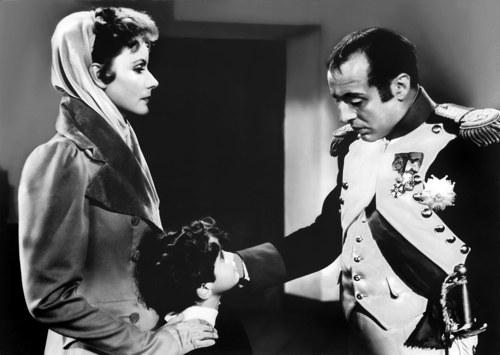
Greta Garbo is a Polish aristocrat and Charles Boyer is Napoleon in Conquest

Friday, January 13
8:00 p.m. Conquest (1937)
Director Clarence Brown guided Greta Garbo from the silents into talkies and was a favorite with the star, apparently because, he said, “I had a special way with her. I never gave her direction in anything louder than a whisper.” This was the last film they made together, the story of a Polish countess (Garbo) who gets involved with Napoleon (Charles Boyer).

Saturday, January 14
10:30 p.m. Adam’s Rib (1949)
I’ll be setting the DVR for this one as I’ve never seen it, but with Spencer Tracy and Katharine Hepburn starring, and George Cukor directing — he also directed Hepburn in my favorite movie of hers, The Philadelphia Story — it should be good.

Sunday, January 15
Abbott and Costello spoof scary monsters and the horror genre beginning at 8:00 p.m., in a block that includes Abbott and Costello Meet FrankensteinAbbott and Costello Meet The Invisible Man, and Abbott and Costello Meet The Mummy.


Video: Angela Lansbury on her first film, Gaslight '44

While I’m under the weather I’m taking a little breather but I wanted to share this video I found of Angela Lansbury recalls making her first film, Gaslight (1944). She earned a Best Supporting Actress Oscar nomination, which is amazing to me, as she was just 17 years old when the movie’s shoot began. Lansbury is TCM”s Star of the Month and this film is tonight’s #TCMParty, beginning at 8:00 p.m. EST. Join the party by watching and tweeting with the hashtag #TCMParty. Hope to see you there!

TCM Week – Jan 2-8

TCM Week spotlights a highly subjective selection of the week’s essential or undiscovered movies on the Turner Classic Movies channel to help plan movie viewing, DVR scheduling or TCM Party attendance. All times are EST.

Monday, January 2
8:00 a.m. A Stolen Life (1946)
Bette Davis is absolutely brilliant at playing twin sisters, one naughty and one nice, in this movie. Both are in love with the same man (Glenn Ford), but the naughty one steals him away from the nice one and the couple marries. When the naughty twin dies accidentally, the nice one takes over her life. Davis relies on attitude and gesture, rather than clothing or hairstyle changes, to differentiate the twins, and later, effectively captures the awkwardness of one twin imitating the other’s completely opposite nature, while avoiding any appearance of acting. To sum up, she is amazing.

Tuesday, January 3
9:45 p.m. Annie Oakley (1935)
Before the musical Annie Get Your Gun, there was this 1935 version of the sharpshooter’s life story, starring one of my favorite movie stars, Barbara Stanwyck, as the title character. It was director George Stevens’ second A-picture, after Alice Adams, and continued his hot streak, one that included Swing Time, Vivacious LadyGunga Din, A Place in the Sun, and Giant, among others.

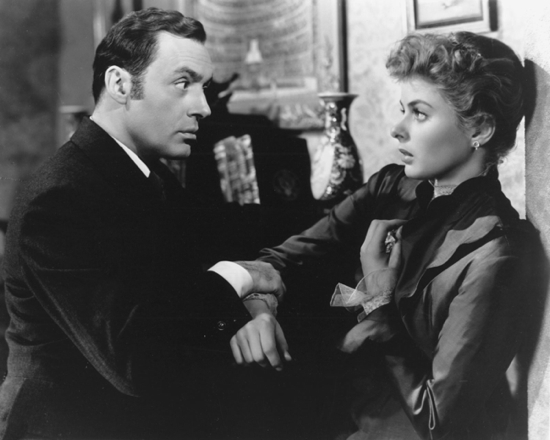
Ingrid Bergman regards Charles Boyer with some suspicion...as she should.

Wednesday, January 4
8:00 p.m. Gaslight (1944)
***TCM Party***
Though multi-talented Angela Lansbury is TCM’s star of the month, she isn’t the star of this movie — Charles Boyer and Ingrid Bergman are — but she did earn an Academy Award nomination for Best Supporting Actress for her work. Bergman also earned a nomination, for Best Actress, and won the award, edging Barbara Stanwyck in Double Indemnity. Watch and tweet with #TCMParty.

Thursday, January 5
9:00 a.m. The Red Danube (1949)
This Cold War movie, made while the HUAC hearings were roiling Hollywood, exemplifies the ideological conflict between the USA and the Soviet Union in the story of a Russian ballerina (Janet Leigh) attempting to defect.

Friday, January 6
11:15 a.m. The Unguarded Hour
The rare starring role for Franchot Tone (Five Graves to Cairo) as the prosecutor whose wife (Loretta Young) could save a condemned man, but only if she reveals information that would humiliate her husband.

Saturday, January 7
10:30 a.m. Counter-Espionage (1942)
During the WWII Blitz, a detective known as the Lone Wolf (Warren William) is on the trail of Nazi spies. This movie interests me because it mines similar territory as Powell & Pressburger’s Contraband.

Sunday, January 8
Today’s schedule features two different movie stars. Beginning at 6:00 a.m., Elvis Presley stars in Clambake, followed by It Happened at the World’s Fair at 8:00 a.m., and Spinout at 10:00 a.m. Then TCM celebrates the 100th anniversary of José Ferrer‘s birth with a block that starts at noon with The Caine Mutiny. Other classic movies featuring Ferrer follow: I Accuse (4:00 p.m.), Deep in My Heart (5:45 p.m.), Cyrano de Bergerac ’50 (8:00 p.m.), and Joan of Arc ’48 (10:00 p.m.).